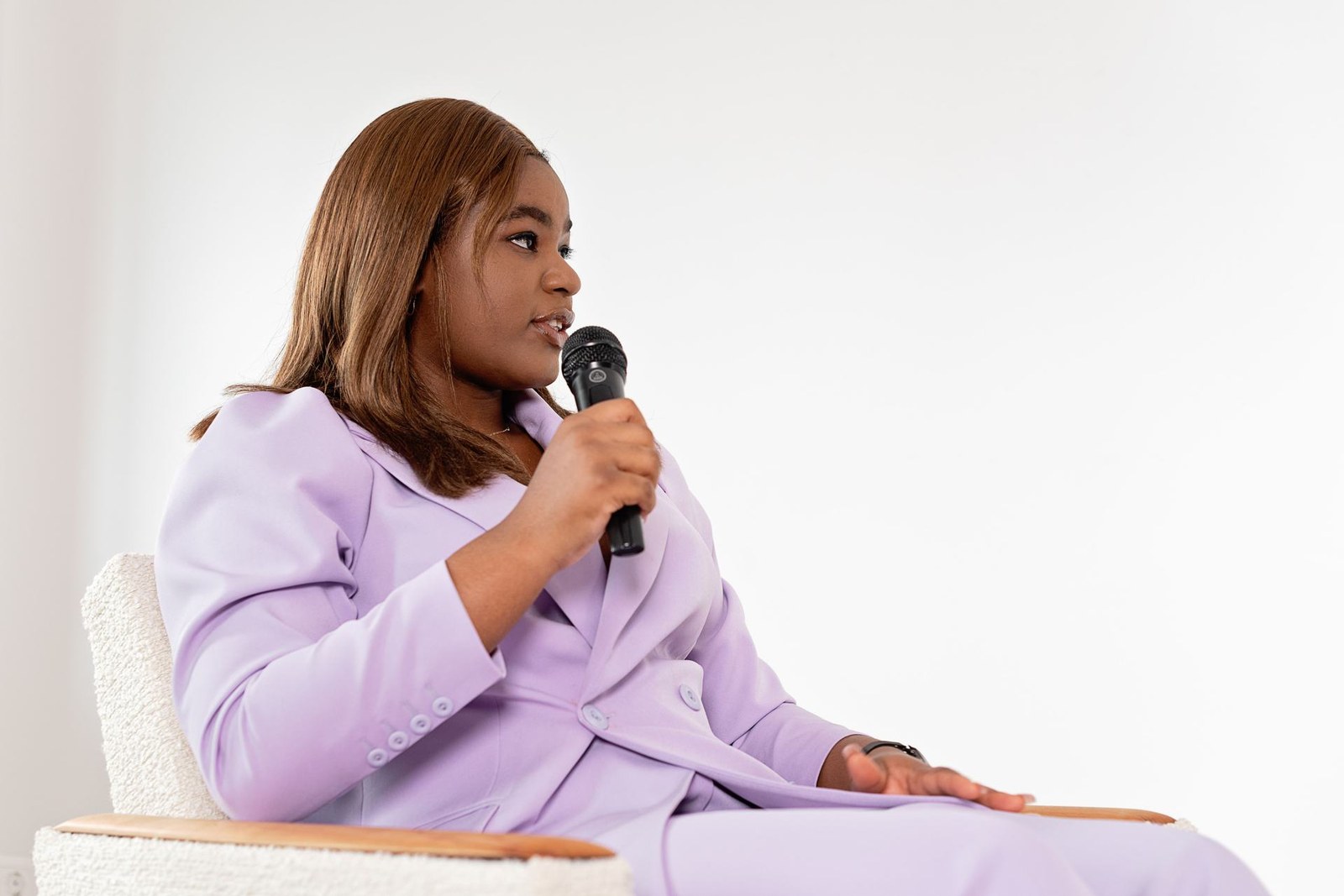

An invitation to be interviewed on a main stage reads like a lighter version of presenting — no slides to build, no forty-five minutes to fill alone, just a conversation. It isn’t lighter, it’s different. A platform talk is a structure you control from the first slide to the last. A fireside-style interview hands that structure to someone else: the host picks the order, decides which thread to pull on, and can follow up on an answer you didn’t expect to be interesting. It shares almost nothing with sharing a panel mic among several speakers or running someone else’s panel either — there’s one guest, one host, and no deck to retreat to when a question runs long.
A fourth job, not a smaller version of the other three
It helps to name what an interview isn’t before preparing for what it is. It isn’t a panel, because there’s no one else’s answer to react to or time to split — the full block is a back-and-forth between two people. It isn’t moderating, because you’re not managing anyone else’s time or keeping a group balanced; someone else is managing yours. And it isn’t a platform talk, because you never hold the floor uninterrupted for more than a sentence or two at a time before the next question arrives. The skill it actually resembles most is the one a good hallway conversation with a regulator already asks for — answering well in real time, on a topic you don’t fully control — except now it’s happening in front of the whole room, on the record.
You don’t control the order
A platform talk can be rehearsed start to finish because the order is fixed by the speaker. An interview can’t be, because the order belongs to the host, and a good host will follow an interesting answer somewhere the run of show didn’t plan for. Prepare accordingly: instead of a script, walk in with three or four things you actually want said out loud by the end of the session, each one able to stand alone regardless of which question surfaces it. If a question doesn’t obviously lead toward one of them, a short, honest answer followed by a bridge — “that connects to something worth saying here” — gets you there without derailing the host’s question. The points that never come up naturally are worth raising directly in the pre-call, not abandoned.
The pre-call is where the real negotiation happens
Almost every interview format includes a short pre-call with the host, and it is worth treating as seriously as the pre-brief a good moderator runs for an entire panel. Use it to find out the actual shape of the conversation: the rough topics the host plans to open with, whether there’s a house rule about what’s off the record versus on it, and how much runway you’ll get to answer before the next question arrives. It’s also the honest place to flag a topic that needs care — a pending regulatory matter, a competitor comparison, anything you’d need to be cleared to speak to before it gets asked live. A host who knows the boundary in advance can work around it gracefully; one who finds it live, on stage, usually can’t.
No slides means no crutch
A platform talk can lean on a chart to carry a dense point the words alone wouldn’t land cleanly. An interview has nothing behind you but a chair and a microphone, which means every answer has to work as spoken language by itself. The tell that separates a strong interview answer from a weak one is almost always concreteness: a specific example, a real number, a sentence that would still make sense transcribed cold, rather than a string of terms of art that reads as fluent in the room but means nothing on the page afterward. Keep answers to the length of a good elevator explanation, not a paragraph — a host running a live conversation will always follow up on something short and clear, rarely on something long and hedged.
Worth a look in the directory
- RAPS Convergence 2026 — a flagship program with a main-stage keynote lineup
- DIA 2027 Global Annual Meeting — another flagship main stage, keynote slots included
More from Save the Date
Essays are editorial: they describe how we plan and attend events, not rules. Event listings on this site are verified against the organizer’s own pages — but confirm dates and pricing with the organizer before booking anything.