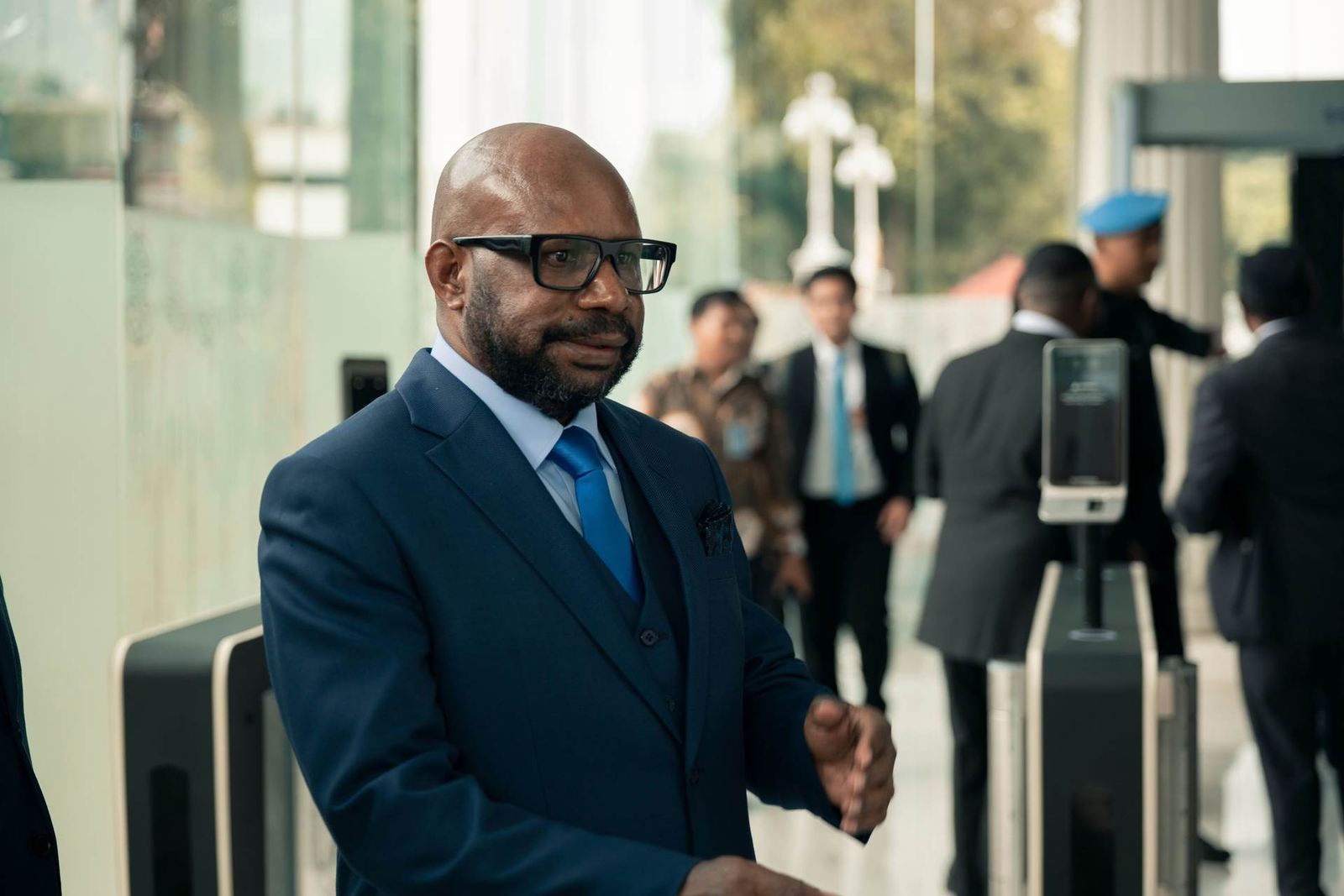

Most regulatory events run out of a hotel or a convention center, and the security at either one amounts to a badge scan and someone checking your registration against a list. A public hearing or an advisory committee meeting held on a regulator's own campus is a different building entirely — a walk-through scanner, a government-ID check against a pre-cleared visitor list, sometimes a rule about what electronics can come inside at all. Nobody puts this on the agenda, because the agenda is written by people who already know it, and the gap between "arrive fifteen minutes early" and "arrive early enough to clear security" is exactly the kind of thing that only becomes obvious once you've missed the first twenty minutes of a session standing in a line.
A hotel ballroom and a federal campus are different buildings
A conference center wants people inside; a government or agency campus is built, first, to control who gets inside at all, and the public meeting or hearing happening there is a guest on someone else's premises rather than the reason the building exists. That distinction shows up physically the moment you walk in: instead of a registration desk handing out a lanyard, there's a walk-through scanner, a staffed checkpoint, and a name that has to match both a photo ID and whatever list the organizer submitted in advance. None of it is unusual or alarming — it's simply a different kind of building doing what it always does, on a day when a public meeting happens to be on the calendar.
What to confirm before you travel
The specific rules — what's allowed through security, whether laptops or bags face extra scrutiny, whether the building publishes an arrival cutoff after which latecomers are turned away — vary by venue and change over time, which is exactly why the organizer's own registration page for that specific listing is the only source worth trusting. A hybrid meeting on a regulator's campus, like an FDA advisory panel's open session or a hybrid meeting held partly at White Oak, will usually publish its own visitor instructions somewhere in the registration flow. Read that page again in the days before you travel, not just when you registered weeks earlier — venue rules on government campuses get updated more often than a hotel's ever do.
The buffer this venue actually needs
The usual first-conference advice about arriving early enough to find the room and grab a coffee still applies, but a security perimeter adds a step that doesn't scale the way a badge scan does — a line moves at the speed of the slowest bag, and you have no way to know how long that line is until you're standing in it. Treat the published start time as the moment you need to already be seated, not the moment you start walking from the checkpoint, and build the morning around that assumption rather than around normal conference math.
What changes once you're inside
The differences don't end at the door. A campus meeting often can't offer the casual come-and-go of a convention hall — leaving the room mid-session to take a call may mean clearing the checkpoint again to get back in, and wandering the building to find a quiet corner usually isn't an option the way it would be in a hotel's open lobby. None of this is a reason to skip a meeting that matters; it's a reason to plan the day around a building that was designed for a different job than the one it's hosting, the same discipline that makes attending a public meeting purely to listen worth doing properly rather than treating it as a lower-stakes version of a conference session.
Worth a look in the directory
- FDA Genetics Panel: GRAIL Galleri PMA Vote — a hybrid open session held on the agency’s own campus
- Patient Voice in Rare Disease Medical Product Development — a hybrid meeting held partly at FDA’s White Oak campus
More from Save the Date
- Your first regulatory conference — the logistics nobody puts on the agenda
- Crossing a border for a conference
- Attending a public meeting you won’t speak at
Essays are editorial: they describe how we plan and attend events, not rules. Event listings on this site are verified against the organizer’s own pages — but confirm dates and pricing with the organizer before booking anything.