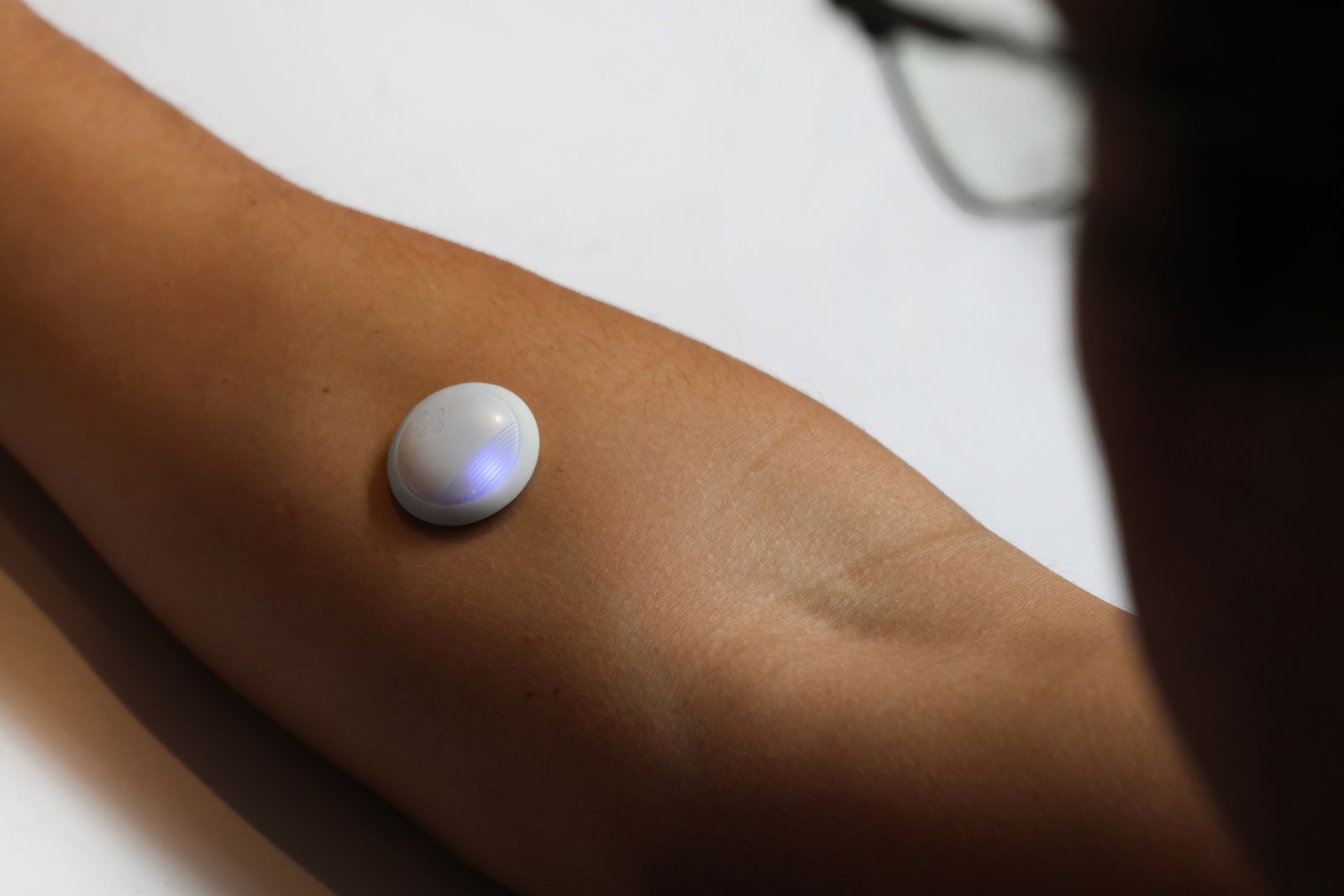


Biolinq has won FDA 510(k) clearance to sell Shine, its intradermal glucose biosensor, over the counter — one year after the device won a De Novo classification as a prescription-only product. The San Diego company announced the clearance on 24 September 2026, making Shine the third glucose biosensor Americans can now buy without a prescription, after Dexcom’s Stelo and Abbott’s Lingo.
From Electrozyme to a drugstore shelf
Fourteen years, two FDA decisions
- 2012
Founded as Electrozyme
Jared Tangney and Joshua Windmiller, both University of California San Diego engineering PhDs, found the company that would become Biolinq.
- April 2025
$100 million Series C
Alpha Wave Ventures leads a Series C round, with RiverVest Venture Partners, AXA IM Alts and other investors participating, funding Shine’s regulatory filings and commercial buildout.
- 23 September 2025
Shine wins De Novo classification
FDA grants Shine a De Novo classification as a prescription-only device for adults 22 and older who are not on insulin — a novel-device pathway reserved for products with no existing predicate.
- 24 September 2026
Shine cleared for OTC sale
A 510(k) clearance removes the prescription requirement for the same device and population, one year after the original grant.
- Ahead
A crowded new aisle
Shine joins Dexcom’s Stelo and Abbott’s Lingo as the third glucose biosensor sold without a prescription in the United States.

Shine keeps its sensor, drops its script
The clearance Biolinq announced on 24 September 2026 changes exactly one thing about Shine: who can buy it. The device itself, its population (adults 22 and older not using insulin) and its intended use (understanding glucose trends, not making insulin-dosing decisions) are unchanged from the prescription-only De Novo classification FDA granted almost exactly a year earlier, on 23 September 2025. What changed is the label: Shine no longer needs a doctor’s prescription to reach a pharmacy shelf.
Biolinq describes Shine as needle-free: rather than the subcutaneous filament that Dexcom’s and Abbott’s continuous glucose monitors thread under the skin, Shine’s semiconductor-manufactured microsensor array sits in the skin’s outer, non-sensate layers, which the company says avoids the introducer needle those filament sensors require. It reads out through a color-changing LED built into the wearable itself, rather than routing every reading through a phone app.
“By making Biolinq Shine available without a prescription, we can help more people understand how daily choices affect metabolic health and inspire a broader shift toward continuous biosensing as a foundation for healthier living.” Rich Yang, Chief Executive Officer, Biolinq — per the company’s 24 September 2026 announcement
Shine’s two FDA decisions in four figures
Figures from Biolinq’s 2025 and 2026 FDA announcements.
A microsensor shallower than a needle
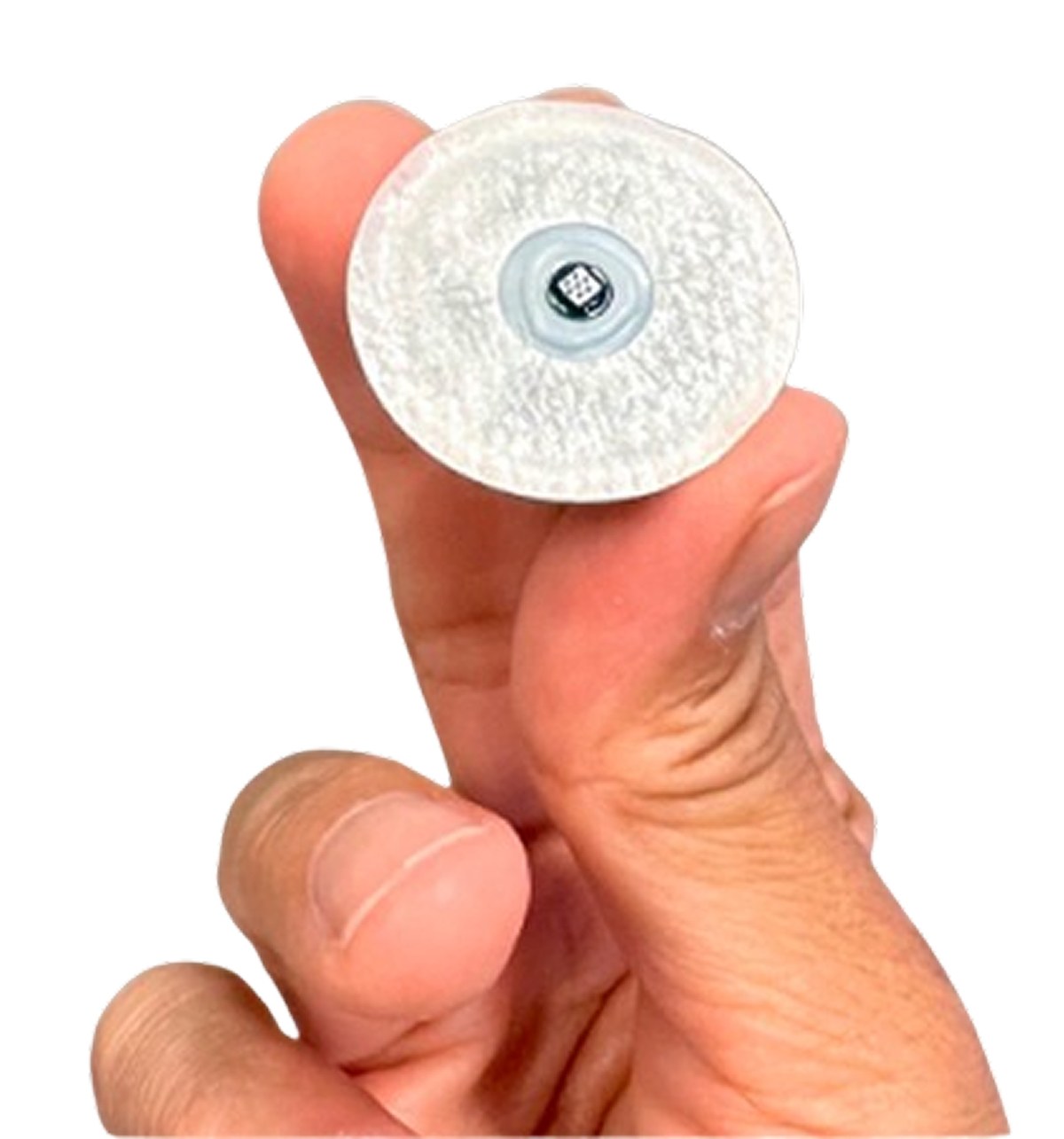
Shine’s De Novo classification described a continuous intradermal glucose sensor with a color-changing indicator light, built around a semiconductor-manufactured microsensor array Biolinq says sits far shallower in the skin than the subcutaneous filaments used by prescription CGMs like Dexcom’s G7 or Abbott’s FreeStyle Libre. The device is explicitly not intended to provide the quantitative glucose values used for acute medical decisions, including insulin dosing — a limitation shared by both Stelo and Lingo, the two OTC biosensors that reached the market before it.
Three things that separate Shine from its shelf-mates
No subcutaneous filament
Where Stelo and Lingo repurpose Dexcom’s and Abbott’s existing filament-based CGM hardware for OTC sale, Shine’s microsensor array was designed from the start to sit in the skin’s outer layers, avoiding the introducer needle filament sensors require.
A light, not just an app
Shine reads out through a color-changing LED on the wearable itself, alongside its app — a second, glanceable display neither Stelo nor Lingo offers.
One device, two labels
Shine reached the market by prescription first, in 2025, and the FDA record for that original De Novo grant still governs the device’s intended use; the 2026 clearance only removed who needs to sign off on the purchase.
The aisle Stelo and Lingo already opened
Shine is not the first glucose biosensor Americans can buy without a prescription. Dexcom’s Stelo, built on the same filament sensor as its prescription G7, won FDA 510(k) clearance in March 2024 for adults 18 and older not using insulin. Abbott’s Lingo followed in June 2024, cleared as a general wellness tool and explicitly not for diabetes management. Shine’s 2026 OTC clearance makes it the third entrant into a shelf category that did not exist before 2024.
Non-invasive monitoring’s next five years
$10.12B → $15.11B
Non-invasive glucose monitoring device market, 2026 to 2031, as forecast by Mordor Intelligence, against GMInsights’ broader continuous glucose monitoring estimate for the same year.
Sources: Mordor Intelligence, Non-Invasive Glucose Monitoring Device Market · GMInsights, Continuous Glucose Monitoring Market
Regulatory News outlook
We’d expect non-invasive biosensors to take a growing bite out of the broader CGM market as three OTC options now compete on the same shelf, rather than staying a small side category.
How we got here: Extending Mordor Intelligence’s own 8.35% forecast compound annual growth rate two years past its 2031 endpoint of $15.11 billion reaches roughly $17.7 billion by 2033, before counting any additional lift from three competing FDA clearances now selling into a segment that had none before March 2024.
Shine against the shelf’s other two entrants
| Product | Sensor type | FDA clearance | Cleared population |
|---|---|---|---|
| Shine (Biolinq) | Intradermal microsensor array, no subcutaneous filament | 510(k) OTC, September 2026 (De Novo Rx-only, September 2025) | Adults 22+, not on insulin |
| Stelo (Dexcom) | Subcutaneous filament sensor, shared with Dexcom G7 | 510(k) OTC, March 2024 | Adults 18+, not on insulin |
| Lingo (Abbott) | Subcutaneous filament sensor | 510(k), June 2024 | General wellness; not for diabetes management |
From FDA clearance records and each company’s own labeling; not a clinical comparison.
What Shine’s OTC year still can’t tell you
A year of prescription-only sales gave Shine a real-world track record before its OTC debut, but Biolinq has not published post-market accuracy or adherence data from that year, and neither Stelo’s nor Lingo’s OTC results settle how a filament-free sensor performs against filament-based rivals at pharmacy scale. The comparison Regulatory News could not find: a head-to-head study of Shine against Stelo or Lingo, on accuracy, wear time or price, run by anyone.
- Price and availability: Biolinq’s 24 September 2026 announcement did not state a retail price or a specific on-shelf date.
- Total funding: Crunchbase lists $254.3 million raised across nine rounds through the April 2025 Series C; other aggregators report different totals Regulatory News could not reconcile.
- Not covered by this clearance: insulin-dosing decisions, use by anyone on insulin, and use by anyone under 22.
Sources & further reading
- Biolinq, “Biolinq Shine Receives FDA 510(k) Clearance for Over-the-Counter Use,” press release, 24 September 2026. globenewswire.com
- Fierce Biotech, “Biolinq’s color-coded glucose sensor patch nets FDA clearance,” 24 September 2026. fiercebiotech.com
- Diabetes Self-Management, “Biolinq Shine Receives FDA Clearance as First Needle-Free Glucose Sensor.” diabetesselfmanagement.com
- Biolinq, “Biolinq Shine™ Granted De Novo Classification by U.S. FDA for the First Fully Autonomous Needle-Free Glucose Sensor,” press release, 25 September 2025. globenewswire.com
- U.S. Food and Drug Administration, De Novo classification decision summary, DEN240080 (Shine), 23 September 2025. accessdata.fda.gov
- HCPLive, “Dexcom Announces Availability, Pricing of Stelo — First OTC Glucose Sensor.” hcplive.com
- MedTech Dive, “Dexcom receives FDA clearance for first OTC glucose sensor.” medtechdive.com
- MedTech Dive, “Abbott and Dexcom are launching the first over-the-counter CGMs. Here are 7 questions on the new tech.” medtechdive.com
- Biolinq, “Biolinq Announces Close of $100M Series C Financing to Advance Its Biowearable Platform for Metabolic Health,” 22 April 2025. businesswire.com
- Mordor Intelligence, Non-Invasive Glucose Monitoring Device Market. mordorintelligence.com
- ClinicalTrials.gov, Shine pivotal study, NCT06229743. clinicaltrials.gov
Regulatory News reports on public regulatory documents. It is not legal advice, and the primary sources above govern. If we have made an error, we will say so in public: see corrections.
Frequently asked questions
What exactly changed for Shine on 24 September 2026?
Only who can buy it. FDA's 510(k) clearance removed the prescription requirement for the same device, population (adults 22 and older not on insulin) and intended use that FDA authorized under a De Novo classification a year earlier, on 23 September 2025.
Is Shine really needle-free?
Biolinq describes Shine as needle-free because its microsensor array sits in the skin's outer layers rather than using the subcutaneous introducer needle that filament-based sensors like Dexcom's and Abbott's require. Regulatory News could not independently verify the device contains no microneedle structure of any kind; the company's own De Novo materials describe an intradermal microsensor array.
How is Shine different from Dexcom's Stelo and Abbott's Lingo?
Stelo and Lingo both use the same subcutaneous filament sensor hardware as their makers' prescription CGMs, repackaged for OTC sale. Shine uses a different, shallower microsensor architecture built for OTC use from the start, and adds an on-device color-changing light.
Can someone on insulin use Shine?
No. The clearance, like the original 2025 authorization, covers only adults 22 and older who are not on insulin, and the device is not intended for insulin-dosing decisions.