
Cyllene Therapeutics has won FDA Regenerative Medicine Advanced Therapy designation for EG110A, an injected gene therapy designed to quiet the overactive bladder nerves that follow spinal cord injury. The Paris company announced the designation on 14 September 2026, citing interim Phase 1b/2a data showing an 88% reduction in incontinence episodes — its third FDA designation for the program in under a year, after Fast Track in October 2025.
Silencing the nerve, not the muscle
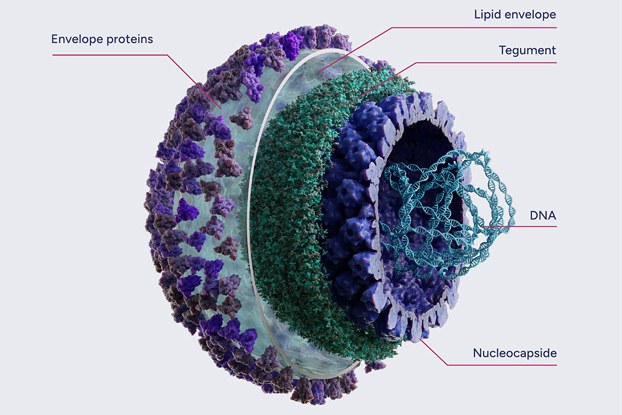
EG110A is built on Cyllene's HERMES platform (HERpes Modular Expression System): a non-replicating HSV-1 vector, injected directly into the bladder wall, engineered to selectively silence the CGRP-positive type C sensory neurons that drive neurogenic detrusor overactivity. Those are the nerves that misfire after spinal cord injury, sending the bladder into involuntary contractions; they are not the muscle fibres that let a bladder empty on command. By targeting the sensory signal rather than the muscle itself, Cyllene is betting it can quiet the overactivity without the retention risk that comes with today’s standard treatment.
Three bets behind the HERMES platform
A sensory target, not a motor one
EG110A is designed to silence CGRP-positive sensory neurons specifically, sparing the motor pathways a patient needs to void — a narrower target than a general nerve block.
One injection, not a repeat cycle
Cyllene is developing EG110A as a single intradetrusor administration, against a standard of care — repeat botulinum toxin injections — that most patients repeat every six to nine months for life.
A patient population that already catheterizes
The Phase 1b/2a study enrolled adults with spinal-cord-injury-related NDO who already perform clean intermittent catheterization, a population for whom incontinence, not voiding itself, is the daily burden EG110A targets.
What FDA saw in sixteen patients
RMAT designation is reserved for regenerative medicine therapies — gene therapies among them — intended for a serious condition, with preliminary clinical evidence indicating the therapy has the potential to address an unmet medical need. Cyllene earned it on interim results from an open-label, dose-escalation Phase 1b/2a study (NCT06596291) enrolling 16 adults with spinal-cord-injury-related NDO across four U.S. sites, each already managing incontinence through clean intermittent catheterization. FDA cited an 88% reduction in urinary incontinence episodes by week 12, an effect the company says was apparent as early as week 4 and held through the 24-week follow-up, alongside a favorable tolerability profile.
The designation follows Fast Track status granted to EG110A in October 2025 and makes RMAT the program's third FDA designation. RMAT carries the practical benefits of Fast Track — more frequent FDA interaction, eligibility for rolling review — plus the option, where the data support it, to seek accelerated approval on a surrogate or intermediate clinical endpoint.
“Receiving RMAT designation from the FDA for EG110A is a key milestone in the history of the company. It recognizes the critical need to provide better therapeutic solutions to patients affected by severe urinary incontinence as well as the encouraging initial clinical results we have achieved to date.” Philippe Chambon, MD, PhD, Co-Founder, Chairman and CEO, Cyllene Therapeutics — 14 September 2026 announcement
EG110A in four numbers
Figures from the 14 September 2026 announcement and Cyllene's clinical-trial registration.
A repeat-injection standard EG110A wants to end
Neurogenic detrusor overactivity is currently managed mainly with intradetrusor injections of onabotulinumtoxinA (Botox), a treatment most patients repeat every six to nine months for the rest of their lives, and which itself carries a risk of urinary retention that can require the very catheterization Cyllene's trial population already performs for other reasons. A therapy that works from a single administration would not be competing with botulinum toxin on price; it would be offering to remove a recurring procedure from a patient's calendar entirely — the case Cyllene is building as it heads toward a larger study.
Neurogenic detrusor overactivity, sized against its incumbent
$1.97B → $2.63B
Global NDO treatment market, 2026 to 2030, as forecast by Research and Markets, compared with the broader botulinum-toxin-in-urology category it currently runs through.
Sources: Research and Markets, Neurogenic Detrusor Overactivity Market Report · Vision Research Reports, Botulinum Toxin in Urology Market
Regulatory News outlook
If EG110A reaches approval and a single injection displaces even a quarter of the repeat botulinum-toxin cycles used in spinal-cord-injury NDO today, we estimate an addressable slice of the category in the low hundreds of millions of dollars a year, priced as a one-time procedure rather than a recurring one.
How we got here: We take the published $1.97 billion 2026 NDO market figure, apply a rough one-third share for the spinal-cord-injury subgroup (the population Cyllene's trial targets, versus other NDO etiologies), and a 25% displacement assumption for a durable single-dose alternative to repeat toxin injections — roughly $1.97B × 33% × 25% ≈ $160M. The subgroup share and displacement rate are our assumptions, not the company's or the cited publisher's.
EG110A against how NDO is treated today
| Approach | Mechanism | Dosing | Stage | What the evidence shows |
|---|---|---|---|---|
| EG110A (Cyllene) | HSV-1 gene therapy silencing CGRP+ sensory neurons | Single intradetrusor injection | Phase 1b/2a; RMAT designation | 88% reduction in incontinence episodes by week 12 (n = 16), sustained to week 24 |
| OnabotulinumtoxinA (Botox) | Blocks acetylcholine release at the neuromuscular junction | Repeat intradetrusor injections, every 6–9 months | Approved, standard of care | Established efficacy; carries a urinary-retention risk |
| Anticholinergics / beta-3 agonists | Oral bladder-relaxant medication | Daily oral dosing | Approved, first-line for milder OAB | Often insufficient for spinal-cord-injury-related NDO; adherence drops with side effects |
| Sacral neuromodulation | Implanted device stimulating sacral nerves | Surgical implant, ongoing device management | Approved for select refractory OAB | Invasive; device-related revision and infection risks over time |
From company announcements and each therapy's own labelling; not a head-to-head clinical comparison.
Thirty million euros across three rounds, no approval yet
From EG 427 to a third FDA designation
- 2019
EG 427 founded
Philippe Chambon co-founds the company in Paris with Alberto Epstein, François Giuliano, Pierre Denys and Charles Joussain.
- July 2023
€18 million Series A
First institutional round to advance the HERMES gene-therapy platform.
- February 2025
€27 million Series B
Co-led by Andera Partners and Bpifrance (via its InnoBio fund), financing the ongoing clinical study and platform development.
- October 2025
FDA Fast Track designation
EG110A's first FDA designation, ahead of the Phase 1b/2a readout.
- July 2026
Rebrand and €33 million Series C
EG 427 becomes Cyllene Therapeutics; Series C co-led by GordonMD Global Investments and Merck KGaA's M Ventures, joined by existing investors Andera Partners, Bpifrance and Lamond Ventures.
- 14 September 2026
RMAT designation
Granted on interim data showing an 88% reduction in incontinence episodes.
- 2027
Pivotal study targeted
Cyllene plans a Phase 2b/3 study, subject to its post-RMAT discussions with FDA.
What a phase 2b/3 needs to answer
An 88% reduction in incontinence episodes in 16 patients is a strong interim signal, not a controlled result: the Phase 1b/2a study is open-label and dose-escalating, without a placebo arm to isolate how much of the effect is EG110A and how much is the natural variability of a small, self-reported endpoint over time. RMAT designation gives Cyllene more frequent access to FDA to design the study that will settle that question — including whether a surrogate or intermediate endpoint can support an accelerated path, one of the designation's specific benefits.
- Next data: Cyllene plans to present interim RIDGE-1-related results at the International Continence Society's annual meeting in Maastricht in October 2026.
- Pivotal study: a Phase 2b/3 trial is targeted for 2027, with its design to be shaped by post-RMAT discussions with FDA.
- Leadership: Cyllene named Dr. Marc Grasso as Executive Vice President and Chief Financial Officer on 17 September 2026, three days after the RMAT grant.
What is not yet public: the specific endpoint FDA and Cyllene will use for a pivotal trial, and whether the company will pursue accelerated approval on a surrogate measure or a traditional approval pathway on incontinence-episode reduction itself. Cyllene has not disclosed a target filing date.
Sources & further reading
- Cyllene Therapeutics, “Cyllene Therapeutics Receives U.S. FDA Regenerative Medicine Advanced Therapy (RMAT) Designation for EG110A in Neurogenic Detrusor Overactivity (NDO),” press release, 14 September 2026. globenewswire.com
- Ryan Smith, “FDA Grants RMAT Designation to EG110A for Neurogenic Detrusor Overactivity,” Urology Times, 14 September 2026. urologytimes.com
- “Cyllene Therapeutics Secures US FDA RMAT Designation for EG110A in Neurogenic Detrusor Overactivity,” PharmaShots, 14 September 2026. pharmashots.com
- EG 427, “EG 427 Receives U.S. FDA Fast Track Designation for EG110A DNA Medicine in Neurogenic Bladder Patients,” press release, 6 October 2025. globenewswire.com
- Cyllene Therapeutics (formerly EG 427), “Cyllene Therapeutics, Formerly Known as EG 427, Raises €33 Million Series C Financing to Advance Clinical Development of EG110A and Pipeline Expansion,” press release, 7 July 2026. globenewswire.com
- EG 427, “EG 427 Raises €27 Million in Successful Series B Co-Led by Andera Partners and Bpifrance,” press release, 20 February 2025. globenewswire.com
- Cyllene Therapeutics, “Cyllene Therapeutics Appoints Seasoned Biotech Executive Dr. Marc Grasso as Chief Financial Officer,” press release, 17 September 2026. globenewswire.com
- ClinicalTrials.gov, “Dose Escalation Study of EG110A, Administered by Intradetrusor Injections to Adults With Neurogenic Detrusor Overactivity-related Incontinence Following Spinal Cord Injury,” NCT06596291. clinicaltrials.gov
- Research and Markets, “Neurogenic Detrusor Overactivity Market Report.” researchandmarkets.com
- Vision Research Reports, “Botulinum Toxin in Urology Market.” visionresearchreports.com
Regulatory News reports on public regulatory documents. It is not legal advice, and the primary sources above govern. If we have made an error, we will say so in public: see corrections.
Frequently asked questions
What is EG110A?
A non-replicating HSV-1 gene therapy vector, injected directly into the bladder wall, that is designed to selectively silence the CGRP-positive sensory neurons responsible for neurogenic detrusor overactivity, while leaving normal bladder muscle function intact.
What does RMAT designation give Cyllene?
More frequent, earlier interaction with FDA on the development program, eligibility for rolling review, and access to surrogate or intermediate endpoints for accelerated approval where appropriate. It is not an approval.
What did the Phase 1b/2a data show?
In an open-label dose-escalation study of 16 adults with spinal-cord-injury-related neurogenic detrusor overactivity (NCT06596291), FDA cited an 88% reduction in urinary incontinence episodes by week 12, an effect apparent by week 4 and maintained through 24 weeks, with a favorable safety profile.
When could EG110A reach a pivotal trial?
Cyllene plans to present additional interim data and is targeting a Phase 2b/3 study in 2027, subject to its discussions with FDA following the RMAT grant.