Dialybrid closed a €15 million Series A on 22 September 2026 and used the same announcement to disclose something harder to buy with money: the first successful implant of Silkothane, its silk-and-polyurethane vascular graft, in a living patient. The Milan company spent roughly a decade in materials research before either milestone arrived.
A decade of silk-and-polyurethane research, then a company
From biomaterials research to a first implant
- ~2017 onward
Silkothane research begins
Dialybrid's own technology page traces Silkothane, the company's silk fibroin and polyurethane hybrid material, to conference presentations on the material as early as 2017.
- Pre-2026
Electrospinning process developed
Dialybrid's technology relies on electrospinning — an electric field drawing the silk-polyurethane solution into a porous scaffold — tuned so the material's stiffness can be set between roughly 4 and 23 megapascals depending on the silk-to-polyurethane ratio, according to the company's own published data.
- 2026
First-in-human pilot trial opens
A pilot study across four Italian sites begins enrolling 18 hemodialysis patients.
- 22 September 2026
First implant and Series A close together
Dialybrid discloses the first successful Silkothane graft implant and closes a €15 million Series A on the same day.
- Ahead
Pilot trial completion
Timing for full enrollment and results has not been disclosed.
Eighteen patients, four Italian hospitals
Dialybrid’s pilot trial is small by design: four sites across Italy, 18 patients, testing whether a graft engineered to gradually take on the body’s own tissue performs as intended in real hemodialysis patients rather than in a lab model. The company says it has now implanted its first patient successfully; it has not disclosed how many of the 18 planned patients have been treated so far, or a target date for full enrollment. Because the underlying EU trial registration could not be independently located in public registries at the time of this article, the trial’s existence and scope are reported here as the company has stated them, corroborated by independent trade coverage, not as an independently verified registry record.
“We are developing Silkothane Arteriovenous Graft to offer physicians and patients a novel vascular access solution for hemodialysis that delivers all these characteristics, ultimately addressing a strong unmet clinical need.” Francesco Giovanni Greco, Chairman and CEO, Dialybrid — 22 September 2026 announcement
The Series A and the graft, in four numbers
Figures from Dialybrid's 22 September 2026 announcement and its published technology data.
A graft designed to dissolve as the body takes over
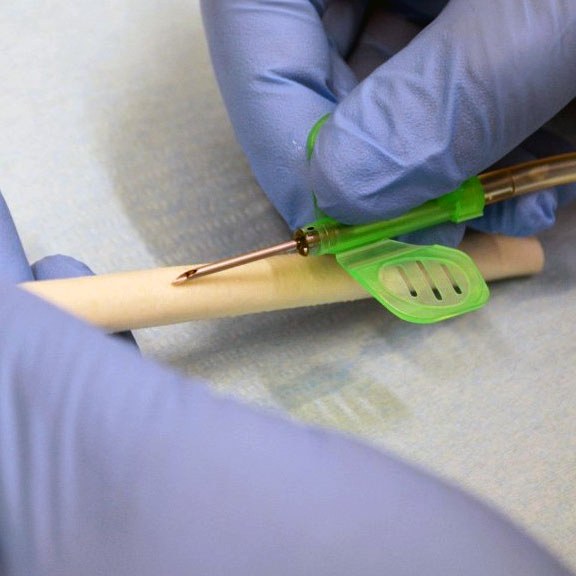
Most patients who need surgically created vascular access for hemodialysis get one of two things: a native arteriovenous fistula, joining an artery directly to a vein, which nephrology guidelines prefer but which can take months to mature and fails to develop usably in a meaningful share of patients, or a synthetic graft — typically expanded polytetrafluoroethylene (ePTFE) — when a fistula isn’t feasible. ePTFE grafts work, but they are biologically inert: the body tolerates them as foreign material indefinitely, which leaves them prone to infection and clotting at the graft-vein junction over years of repeated needle punctures. Dialybrid’s pitch is a graft that behaves differently over time — a three-layered, semi-resorbable structure that the company says gradually integrates into the patient’s own tissue rather than remaining permanently synthetic.
Three claims behind Silkothane's design
A hybrid, not a single material
Silkothane combines silk fibroin, a natural protein with a long record in tissue engineering, with polyurethane, a durable synthetic polymer — aiming for a graft that is neither as fragile as pure silk scaffolding nor as permanently foreign as pure plastic.
Tunable by design
Electrospinning lets Dialybrid vary the ratio of silk to polyurethane, and with it the material's stiffness, across a roughly 4-to-23-megapascal range, according to the company's own published tensile data — potentially matching the graft's mechanical properties to a patient's own vessel.
Semi-resorbable, not permanent
The three-layer structure is designed to gradually integrate into the body over time, the company says, distinguishing it from the inert ePTFE grafts that are today's standard synthetic option when a native fistula isn't possible.
The vascular-access graft market Dialybrid enters
Vascular access for hemodialysis is a recurring, unavoidable need: every dialysis patient requires reliable access to their bloodstream several times a week, for as long as they remain on dialysis. That keeps the graft segment specifically — smaller than the broader vascular-access device category, which also includes catheters and fistula-creation devices — a modest but steady market.
Hemodialysis vascular grafts to 2031
$285M → $357M
Global hemodialysis vascular grafts market, 2026 to 2031, by one published industry estimate; the broader vascular-access device category, which also includes catheters and fistula tools, is sized separately and considerably larger.
Sources: Industry market-research estimate, hemodialysis vascular grafts, 2026
Regulatory News outlook
We expect Silkothane, if its pilot data hold up, to compete for a small single-digit share of the graft segment within its first several years on the market, well behind the entrenched ePTFE incumbents.
How we got here: The published $285 million 2026 total for hemodialysis vascular grafts, compounding at the report's own 4.62% CAGR to roughly $340 million by 2030, leaves little room for a new entrant to take more than a low single-digit share without displacing an established ePTFE supplier outright — a slow process even for a graft with a genuine biological advantage, since vascular surgeons tend to standardize on one graft type per center.
Silkothane against today's AV access options
| Option | Material | Biological behavior | Typical use | Maturation time |
|---|---|---|---|---|
| Silkothane graft (Dialybrid) | Silk fibroin and polyurethane hybrid, electrospun | Designed to gradually integrate into tissue | Pilot trial only, not yet commercially available | Not yet established in human data |
| Native arteriovenous fistula | Patient's own artery and vein | Fully biological, no foreign material | Guideline-preferred first choice where feasible | Weeks to months to mature; fails to develop in some patients |
| ePTFE synthetic graft | Expanded polytetrafluoroethylene | Biologically inert, permanently foreign | Standard when a fistula isn't feasible | Usable within weeks; long-term infection and clotting risk |
From standard nephrology vascular-access guidance and Dialybrid's own published materials; not a clinical comparison.
What the pilot needs to show next
A single successful implant is a proof of feasibility, not a proof of durability. Vascular grafts for dialysis are judged over years, not weeks: the questions that matter are whether Silkothane resists infection and clotting as well as ePTFE over repeated needle punctures, and whether its gradual integration into tissue actually reduces the graft-vein junction failures that shorten an ePTFE graft's usable life. None of that is answerable from one implanted patient.
- Enrollment: Dialybrid has not disclosed how many of the pilot's 18 planned patients have been implanted beyond the first.
- Follow-up data: No durability, infection-rate or patency data have been published yet.
- Regulatory path: The specific EU trial registration and the route to a CE mark have not been detailed in the company's public announcements.
- Capital runway: The €15 million Series A is Dialybrid's first outside institutional round; the company has not disclosed how far it extends the pilot program.
What is not yet public: the trial's formal EU CTIS or EudraCT registration number, and any patency or infection-rate data beyond the fact of one successful implant. Dialybrid's own future disclosures, not this article, will settle both; we will update this page when the company publishes them.
Sources & further reading
- Dialybrid, "Dialybrid secures €15 million Series A round and announces successful first-in-human implant of novel Silkothane® Arteriovenous Graft for vascular access in hemodialysis," press release, 22 September 2026. globenewswire.com
- "Dialybrid Closes €15m Series A As Silkothane Graft Enters Vascular Access Race," Medtech Insight (Citeline), 22 September 2026. insights.citeline.com
- "Italian medtech Dialybrid raises €15M as silk-based vascular graft enters first in-human trial," Tech Funding News, 22 September 2026. techfundingnews.com
- Dialybrid, technology page (Silkothane material and electrospinning process). dialybrid.com
Regulatory News reports on public regulatory documents. It is not legal advice, and the primary sources above govern. If we have made an error, we will say so in public: see corrections.
Frequently asked questions
What did Dialybrid announce?
On 22 September 2026, the Milan-based company announced a €15 million Series A round led by XGEN Venture, with CDP Venture Capital participating, alongside the first successful human implant of its Silkothane® Arteriovenous Graft (SAG) in a pilot clinical trial.
What is the Silkothane Arteriovenous Graft?
A three-layered, semi-resorbable vascular prosthesis for hemodialysis access, built from Silkothane — a hybrid material combining silk fibroin and polyurethane — designed to gradually integrate into the patient's own tissue rather than remain a permanent synthetic implant.
How large is the pilot trial?
Dialybrid describes a pilot study across four Italian sites enrolling 18 patients; the first patient has been implanted. The trial's specific EU registry entry could not be independently located at publication.
Who is Dialybrid?
A privately held Italian medtech company based in Milan, developing biohybrid vascular grafts. Francesco Giovanni Greco is its chairman and chief executive officer.