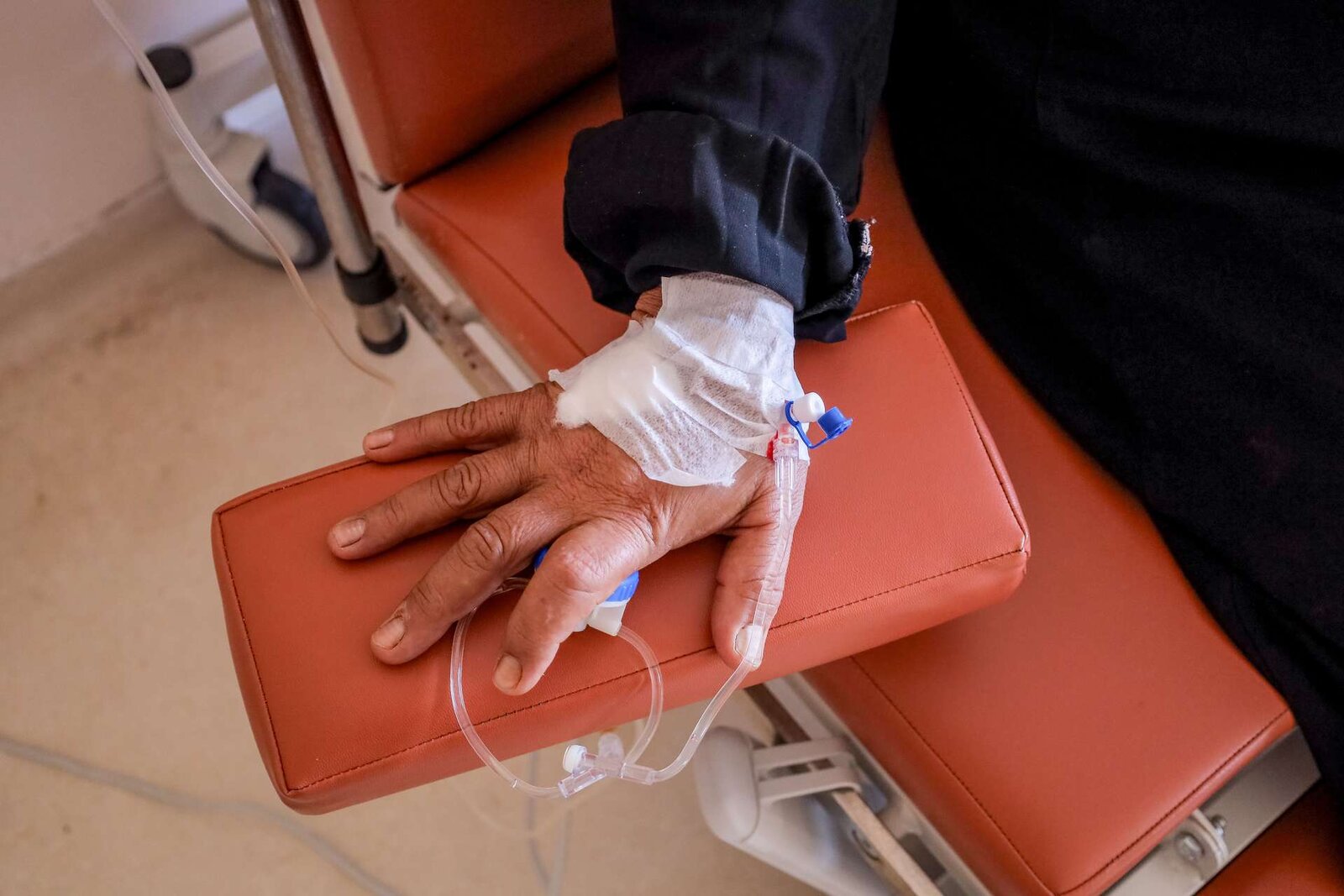

FDA has granted accelerated approval to GSK's Jemperli (dostarlimab) as the first immunotherapy cleared for locally advanced rectal cancer — a curative-intent, non-metastatic setting where every prior checkpoint-inhibitor approval in colorectal disease has targeted metastatic patients instead. The 19 October 2026 decision also arrived roughly four months ahead of its scheduled PDUFA date, cleared through the FDA's Commissioner's National Priority Voucher (CNPV) programme.
A new population for an old drug class
Checkpoint inhibitors have been approved in mismatch repair-deficient and microsatellite instability-high colorectal cancer since 2017, but every prior approval in that biomarker-defined population applied to metastatic disease, where surgery is no longer curative and a drug's job is to extend life or control growth. Jemperli's new indication sits upstream of that: patients with stage II or III locally advanced rectal cancer are, by definition, candidates for potentially curative treatment — historically chemoradiation followed by surgery, an approach that carries its own long-term morbidity (bowel, bladder and sexual dysfunction chief among them). Positioning an immunotherapy as a non-operative option in a population FDA and its advisers have historically treated with caution is the substantive regulatory story here, independent of the voucher mechanics that got it there four months early.
What AZUR-1 actually showed
The approval rests on AZUR-1, a single-arm, open-label Phase 2 trial that enrolled 154 previously untreated patients and dosed dostarlimab at 500 mg intravenously every three weeks for up to nine cycles. GSK's own reporting of the endpoint data — a 12-month sustained clinical complete response rate, or cCR12 — put the figure at 47% among 116 evaluable patients (95% CI: 37% to 56%), with an additional 38 participants still inside their 12-month follow-up window at the time of reporting. GSK said no disease recurrences had been reported among responders at a median follow-up beyond two years, and that primary endpoint data continue to mature as more patients complete follow-up. This outlet found a materially higher response-rate figure (68%) circulating in some secondary trade coverage; absent a clear explanation of what population or analysis produced that number, we have used GSK's own primary-source figure throughout.
The CNPV mechanism, and what it signals
FDA accepted Jemperli's supplemental biologics license application for priority review on 24 August 2026, setting a PDUFA goal date in February 2027. The application separately qualified for the Commissioner's National Priority Voucher programme — a pilot mechanism distinct from the long-running Priority Review Voucher programs for rare pediatric and tropical diseases — which let FDA compress that timeline and clear the application on 19 October 2026, about four months ahead of schedule. For regulatory affairs teams, the operational lesson is less about this specific drug than about the voucher itself: a second FDA-level expedited pathway now exists alongside priority review, breakthrough designation and Project Orbis, and sponsors with CNPV-eligible applications have a concrete, dated example of how much time it can save.
The accelerated-approval obligations attached
Accelerated approval is conditional: GSK must verify Jemperli's clinical benefit in this population through confirmatory trials, or the indication can be withdrawn. That is the standard structure for any approval based on a surrogate or intermediate endpoint — here, sustained clinical complete response rather than a hard outcome such as overall or disease-free survival — and it applies regardless of how the review timeline was compressed. On safety, GSK reported serious adverse reactions in 20% of patients, with fatigue (32%), rash (22%), diarrhoea (18%) and pruritus (17%) the most common adverse reactions overall; the safety profile is otherwise consistent with dostarlimab's existing label in metastatic endometrial and other dMMR/MSI-H cancers. Full data from the AZUR-1 interim analysis are scheduled for presentation at the European Society for Medical Oncology (ESMO) Congress later this month.
Frequently asked questions
What did FDA approve, and when?
On 19 October 2026, FDA granted accelerated approval to dostarlimab-gxly (Jemperli, GSK) for adults with previously untreated, stage II or III dMMR or MSI-H locally advanced rectal cancer — the first immunotherapy approved for this curative-intent, non-metastatic population.
Why was the approval accelerated ahead of its PDUFA date?
FDA accepted the supplemental filing for priority review on 24 August 2026, with a PDUFA date of February 2027. The application was also eligible for the Commissioner's National Priority Voucher (CNPV) programme, which let FDA clear it roughly four months early.
What evidence supported the approval?
The single-arm, open-label AZUR-1 trial (154 previously untreated patients, dosed every three weeks for up to nine cycles) reported a 12-month sustained clinical complete response rate of 47% among evaluable patients, with no recurrences among responders beyond two years of follow-up.
What happens next for this approval?
As an accelerated approval, GSK must verify clinical benefit through confirmatory trials or the indication can be withdrawn. Full AZUR-1 interim data are scheduled for presentation at the ESMO Congress later in October 2026.
Sources & further reading
- GSK, “Jemperli (dostarlimab) approved in the US as first and only immunotherapy for adults with MSI-H/dMMR locally advanced rectal cancer,” 19 October 2026. gsk.com
- “GSK's Jemperli scores FDA approval in rectal cancer, backed by high complete response rate,” FiercePharma, 19 October 2026. fiercepharma.com
- “FDA Approves Dostarlimab for MSI-H/dMMR Locally Advanced Rectal Cancer,” The ASCO Post, October 2026. ascopost.com
- GSK, “Jemperli (dostarlimab-gxly) accepted for priority review by the US FDA,” 24 August 2026. gsk.com
Regulatory News reports on public regulatory documents. It is not legal advice, and the primary sources above govern. If we have made an error, we will say so in public: see corrections.