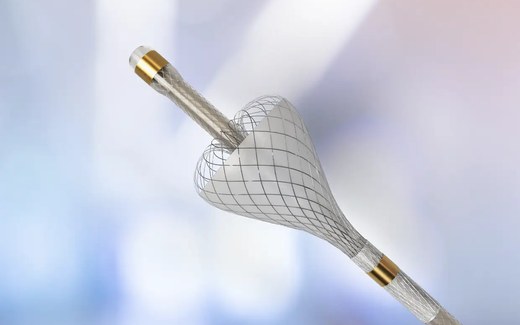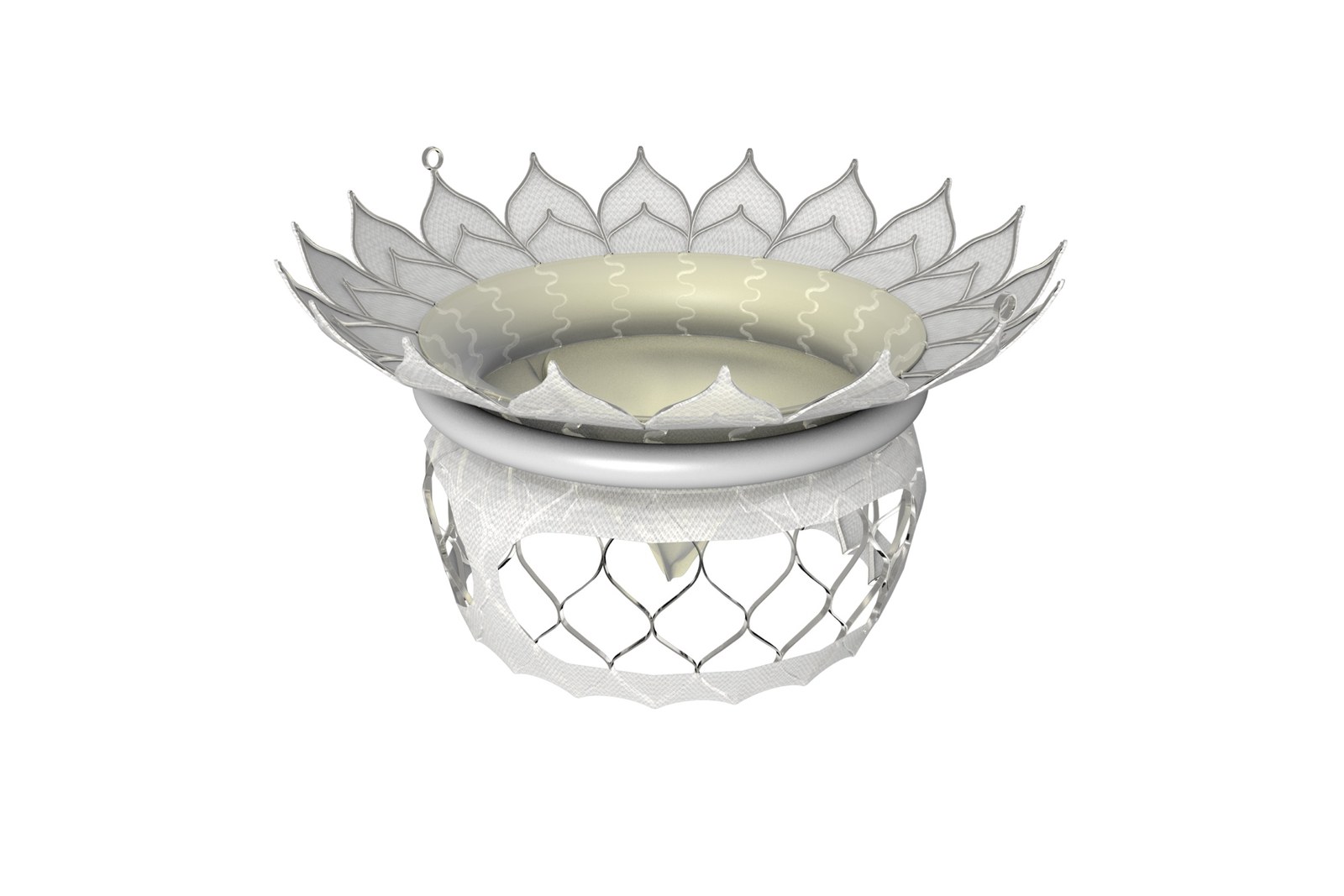
HighLife SAS has raised $90 million (€80 million) to start a U.S. pivotal clinical trial and accelerate commercial expansion across Europe for its transcatheter mitral valve replacement (TMVR) system, the Paris company announced on 22 September 2026. The round, its largest to date, arrives eight months after HighLife earned CE mark for the device and more than two years after FDA cleared the U.S. trial the money is meant to fund.
HighLife's raise in four numbers
Figures from the 22 September 2026 announcement and HighLife's published feasibility-study results.
A mitral valve procedure most patients still can’t get
Moderate-to-severe mitral regurgitation — a leaking mitral valve that lets blood flow backward into the heart — affects roughly 2.5 million people in the United States and a similar share of the population across Europe, rising sharply with age. Many of those patients are too frail for open-heart surgical valve repair or replacement, and until recently had few catheter-based alternatives built specifically for the mitral valve's irregular, saddle-shaped anatomy, which is harder to seal than the aortic valve that transcatheter therapy first targeted.
Structural heart’s next mitral wave
$2.10B → $5.7B
Global transcatheter mitral valve market, 2026 to 2033, as forecast by SNS Insider.
Sources: SNS Insider, Transcatheter Mitral Valve Market
Regulatory News outlook
We expect the transcatheter mitral valve replacement market to keep compounding near its current pace past 2033 as a second and third CE-marked, transseptal system reach more centers than the transapical-only approach did.
How we got here: SNS Insider's own $2.10 billion 2026 and $5.70 billion 2033 figures imply roughly 15–16% annual growth; holding that rate two more years would put the category near $7.6 billion by 2035, before counting any share HighLife's system takes as it moves from CE mark into a wider European rollout.
HighLife against the mitral replacement field
| Product | Company | Delivery route | Mechanism | Status |
|---|---|---|---|---|
| HighLife TMVR System | HighLife SAS | Transseptal, via the femoral vein | Two-step: subannular ring, then valve | CE-marked (January 2026); U.S. pivotal trial underway |
| Tendyne | Abbott | Transapical, through the chest | Single-piece self-expanding valve with epicardial tether | FDA-approved (2025) |
| Sapien M3 | Edwards Lifesciences | Transseptal, via the femoral vein | Spacer plus balloon-expandable valve | FDA-approved (Dec 2025); CE mark (April 2025) |
| Intrepid | Medtronic | Primarily transapical; transfemoral variant in trials | Self-expanding valve | FDA Breakthrough Device Designation; pivotal trial ongoing |
From each company’s own labelling and public announcements; not a clinical comparison.
Two steps, one beating heart
HighLife's system reaches the mitral valve through the femoral vein rather than through the chest wall, the transapical route several earlier mitral devices used. It implants in two stages: a subannular ring is placed first, positioned like a surgical annuloplasty ring around the valve's structure, and a valve is then seated into that ring in a second step, without stopping the heart. The company says covering annulus sizes from 30 to 53 mm — wider than any other CE-marked TMVR device — lets it treat anatomies some competing systems cannot.
Three things that set HighLife’s valve apart
Through the vein, not the chest
Transseptal, transfemoral delivery avoids the surgical chest access that Abbott's Tendyne, a competing approved system, still requires.
A ring first, then a valve
The two-stage implant mimics a surgical annuloplasty ring before seating the valve, a design HighLife credits for its wider treatable anatomy.
A wider annulus range
HighLife says its 30–53 mm range is the broadest of any CE-marked TMVR system, reaching patients other devices are sized out of.
What $90 million actually funds
HighLife's own feasibility study, published in JACC: Cardiovascular Interventions, treated 30 patients with a median Society of Thoracic Surgeons risk score of 5.5% and reported 90% technical success and 83% 30-day device success, with mitral regurgitation reduced to mild or less and no reported paravalvular leak needing closure, hemolysis, valve thrombosis or left-ventricular outflow tract obstruction. FDA granted investigational device exemption approval for a larger U.S. pivotal trial in June 2024, with Mount Sinai's Dr. Gregg W. Stone as principal investigator; this financing is what HighLife says will actually get that trial moving, alongside a push to sell the CE-marked device more widely across Europe.
“This financing represents an important milestone as HighLife continues to build momentum toward establishing its technology as a new treatment option for patients suffering from mitral regurgitation who have limited therapeutic alternatives. It will support HighLife's strategic roadmap, by accelerating commercial expansion across Europe, advancing its pivotal clinical study and strengthening the organization to support long-term growth.” Stefan Pilz, Chief Executive Officer, HighLife — 22 September 2026 announcement
From a Paris startup to a transatlantic trial
HighLife's sixteen years to this round
- 2010
HighLife founded
Established in Paris by Georg Börtlein, a co-founder of CoreValve (acquired by Medtronic in 2009), with Malek Nasr, Prof. Rüdiger Lange and Dr. Nicolo Piazza.
- 2017
First-in-human implants
Early feasibility cases treated, followed by a €12.3 million round led by Sofinnova Partners.
- January 2019
€32 million Series B
Co-led by USVP and Andera Partners, with Sectoral joining the round.
- June 2024
FDA IDE approval
FDA clears HighLife to begin a U.S. pivotal clinical study, with Mount Sinai's Dr. Gregg W. Stone as principal investigator; Stefan Pilz joins as CEO the same year.
- January 2026
CE mark granted
HighLife's TMVR system earns CE mark under EU MDR.
- 22 September 2026
$90 million raised
Financing announced to start the U.S. pivotal trial and expand European commercialization.
- Ahead
U.S. pivotal enrollment
Enrollment in the FDA-cleared pivotal study is expected to begin with this new funding in place.
What is not yet public: an enrollment start date or target size for the U.S. pivotal trial, and how many patients have been treated with HighLife's system commercially in Europe since CE mark. Neither figure appears in the company's own announcement.
- U.S. pivotal trial: FDA-cleared via IDE approval in June 2024; this financing is what the company says will fund its start.
- European rollout: commercial expansion beyond HighLife's initial CE-mark launch sites, funded by the same round.
- Investor syndicate: co-led by Andera Partners, Sofinnova Partners, Supernova Invest and Mérieux Equity Partners, joined by new investors including the European Investment Bank and BNP Paribas Développement.
Sources & further reading
- HighLife, “HighLife Raises $90 Million to Start its US Pivotal Study and Accelerate Commercial Expansion in Europe,” press release, 22 September 2026. globenewswire.com
- BioWorld, “HighLife secures $90M to advance its TMVR system.” bioworld.com
- bioXconomy, “HighLife banks over $90M to launch US study and advance European commercial growth.” bioxconomy.com
- HighLife, “HighLife Receives CE Mark Approval for its TMVR Solution,” press release, 26 January 2026. globenewswire.com
- HighLife, “HighLife Receives IDE Approval to Initiate US Pivotal Clinical Study for Treatment of Mitral Regurgitation,” press release, 3 June 2024. globenewswire.com
- “1-Year Outcomes Following Transfemoral Transseptal TMVR: The HighLife TSMVR Feasibility Study,” JACC: Cardiovascular Interventions, 2023. sciencedirect.com
- ClinicalTrials.gov, HighLife transseptal mitral valve replacement early feasibility study, NCT04029337. clinicaltrials.gov
- SNS Insider, Transcatheter Mitral Valve Market report. snsinsider.com
Regulatory News reports on public regulatory documents. It is not legal advice, and the primary sources above govern. If we have made an error, we will say so in public: see corrections.
Frequently asked questions
What is the financing for?
$90 million (€80 million), announced 22 September 2026, to start HighLife's U.S. pivotal clinical trial and accelerate commercial expansion of its CE-marked transcatheter mitral valve replacement (TMVR) system across Europe.
What makes HighLife's valve different?
It is delivered transseptally through the femoral vein rather than through the chest, and implanted in two steps — a subannular ring placed first, then a valve seated into that ring — which the company says lets it cover a wider range of native mitral annulus sizes than other CE-marked systems.
Has HighLife's device been implanted before?
Yes. A published feasibility study reported technical success in 90% of 30 patients, and CE mark followed in January 2026. FDA granted IDE approval for a separate, larger U.S. pivotal trial in June 2024 — the trial this financing is meant to advance.
Who led the financing round?
Andera Partners, Sofinnova Partners, Supernova Invest and Mérieux Equity Partners co-led, joined by new investors including the European Investment Bank and BNP Paribas Développement, alongside existing investors USVP, Sectoral and VI Partners.