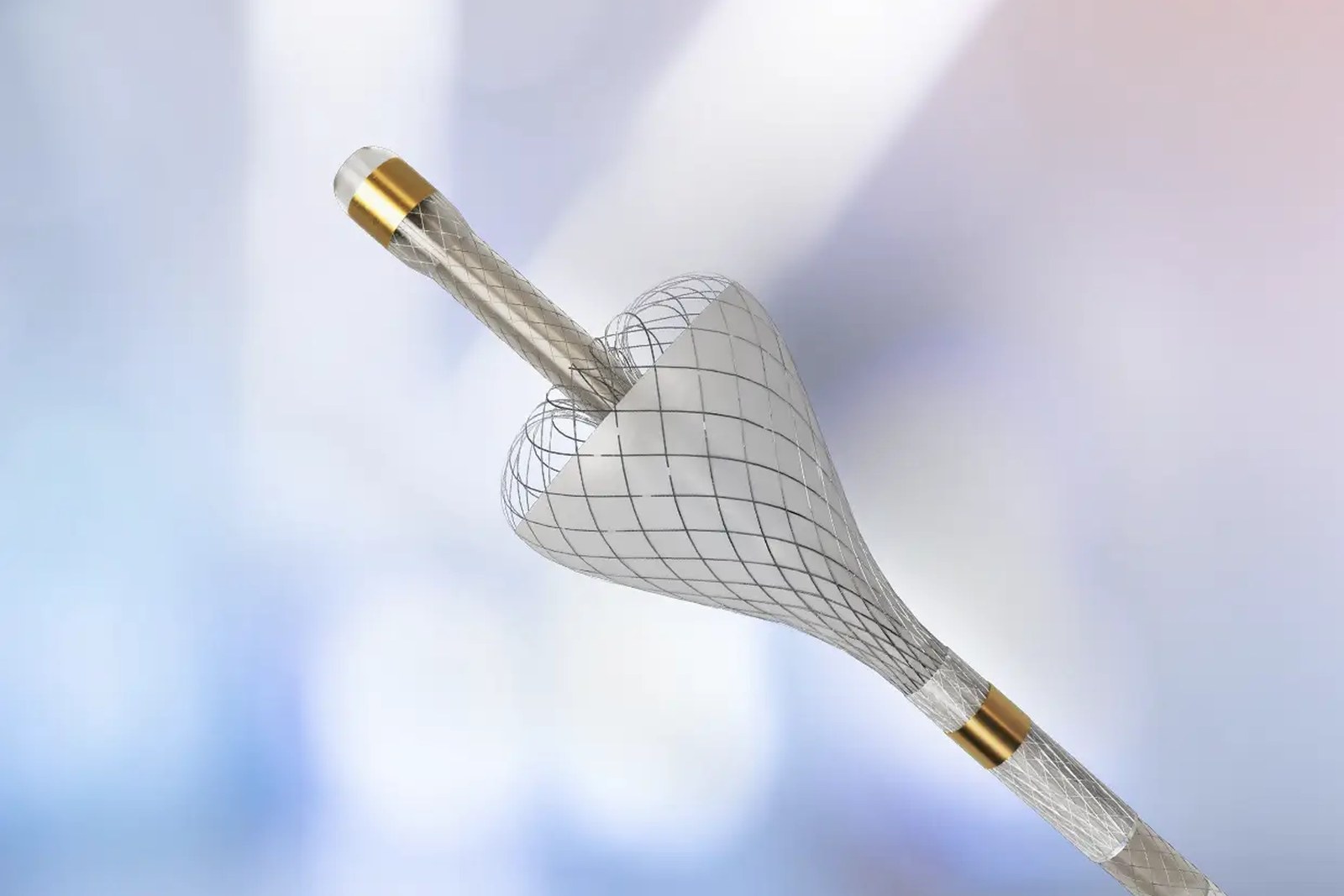
TriSalus Life Sciences has won FDA 510(k) clearance for TriNav Advance, the newest catheter in its Pressure-Enabled Drug Delivery (PEDD) portfolio, giving interventional radiologists two ways to reach small and distal blood vessels without giving up the reflux protection that defines the platform. The Westminster, Colorado company announced the clearance on 22 September 2026 and said it intends to begin a limited market release in the coming weeks.
One catheter, two ways into a vessel
TriSalus Life Sciences built its business on Pressure-Enabled Drug Delivery, an infusion approach designed to push therapy past tumor pressure and limit reflux — the backflow of drug or embolic material into vessels it was never meant to reach. TriNav Advance is the platform’s newest device, and the company says it works two ways: a telescoping mode, in which the physician threads a microcatheter of their choice through TriNav Advance to reach small or distal vessels while the device’s SmartValve sits proximal to the delivery site; and a high-flow mode, which skips the microcatheter and infuses directly through TriNav’s own large lumen.
The company frames the clearance as completing rather than replacing its catheter line: TriNav Advance is meant to sit alongside the earlier TriNav, TriNav LV, TriNav XP and TriNav FLX systems, each aimed at a different combination of vessel size and flow requirement, so an interventional radiologist chooses a mode rather than a separate device.
Three things TriNav Advance adds
Small vessels, same protection
Telescoping mode reaches distal vessels via a physician-chosen microcatheter while keeping PEDD’s SmartValve reflux limiter in the delivery path — a combination the company says its earlier catheters could not offer.
One device, two modes
High-flow mode drops the microcatheter for large-lumen infusion, so a single cleared catheter now covers both ends of the vessel-size range TriSalus sells into.
A fifth catheter in eight years
TriNav Advance is the fifth PEDD-family device cleared since the original TriNav in 2018, following TriNav LV and TriGuide (2024), TriNav FLX (2025) and TriNav XP (2025).
TriNav Advance in four numbers
Figures from the 22 September 2026 announcement and TriSalus's second-quarter 2026 results.
What FDA cleared, mode by mode
TriSalus said the clearance supports “the full range of liver embolization procedures” and, in the company’s telling, a broader set of embolization procedures beyond the liver as well. The 510(k) does not appear yet in FDA’s public device database under a K-number we could confirm; the agency typically indexes a clearance within days of the decision, and this page will be updated once the record appears.
“TriNav® Advance enhances our Pressure-Enabled Drug Delivery™ portfolio in support of the full range of liver embolization procedures.” Mary Szela, President and Chief Executive Officer, TriSalus Life Sciences — 22 September 2026 announcement
TriSalus said it intends to begin a limited market release “over the coming weeks,” the same cautious rollout pattern the company used for TriNav FLX and TriNav XP before each reached broader availability.
A market TriSalus doesn’t own alone
Liver-directed embolization sits inside interventional oncology, a device category built around delivering therapy directly into or near a tumor’s blood supply rather than systemically. TriSalus competes there against catheters and delivery systems from much larger companies: Terumo’s PROGREAT microcatheter is a standard tool in transarterial chemoembolization, Boston Scientific and Merit Medical both sell embolization-adjacent catheters and plugs, and Delcath Systems takes a different approach entirely with HEPZATO KIT, a percutaneous whole-liver perfusion system approved in 2023.
Interventional oncology’s next few billion dollars
$2.70B → $4.38B
Global interventional oncology market, 2024 to 2030, as estimated by Grand View Research, alongside an independent 2029 forecast from a second publisher.
Sources: Grand View Research, Interventional Oncology Market Report · MarketsandMarkets, Interventional Oncology Market
Regulatory News outlook
We expect the vessel-access segment of interventional oncology to track the upper end of these forecasts as pressure-enabled catheters reach vessels earlier devices could not, widening the pool of eligible procedures.
How we got here: Averaging Grand View Research's $4.38 billion 2030 estimate and MarketsandMarkets' $4.24 billion 2029 estimate for the whole interventional-oncology market puts the category at roughly $4.3 billion by decade's end, before counting any incremental procedures TriNav Advance's small-vessel access newly reaches.
TriNav Advance against the vessel-access field
| Product | Company | Delivery mechanism | Reflux protection | Status |
|---|---|---|---|---|
| TriNav Advance | TriSalus Life Sciences | Telescoping (with any microcatheter) or high-flow, single lumen | SmartValve reflux limiter | FDA-cleared, September 2026 |
| PROGREAT | Terumo | Standard microcatheter for TACE | None built in | Long-established, widely used |
| RenovoCath | RenovoRx | Dual-balloon targeted arterial infusion | Balloon isolation of the segment | FDA-cleared |
| HEPZATO KIT | Delcath Systems | Percutaneous whole-liver perfusion with filtration | Systemic filtration, not vessel-level | FDA-approved, 2023 |
From each company’s own labelling and public filings; not a clinical comparison.
Eight years, five catheters
The PEDD portfolio's road to TriNav Advance
- 2009
Founded as Surefire Medical
Incorporated in Westminster, Colorado, to develop pressure-enabled infusion devices for interventional oncology.
- 2018
Original TriNav cleared; company renamed
FDA 510(k) clearance for the Surefire Spark Infusion System, later rebranded TriNav; the company becomes TriSalus Life Sciences.
- January 2020
TriNav launched commercially
Commercial launch of the TriNav Infusion System, alongside CMS transitional pass-through payment status.
- August 2023
Nasdaq listing
Merger with MedTech Acquisition Corporation completes; shares begin trading as TLSI.
- 2024–2025
Portfolio expands
TriNav LV and TriGuide guiding catheters (2024), TriNav FLX (2025) and TriNav XP (2025) each add to the PEDD family.
- 22 September 2026
TriNav Advance cleared
FDA 510(k) clearance for small and distal vessel access, the fifth PEDD-family device.
- Coming weeks
Limited market release
TriSalus said it intends to begin a limited rollout before broader availability.
What the limited launch still needs to prove
TriSalus has now cleared five catheters in the PEDD family without a single approved drug or biologic tied to the platform — the company's business is the delivery device, not the therapy carried through it, which lets it sell into any embolization procedure a physician chooses rather than a single drug label. That also means TriNav Advance's commercial case rests entirely on whether interventional radiologists adopt a fifth option inside a portfolio some may find already crowded.
- Limited market release: TriSalus said it intends to begin one “over the coming weeks”; no date for broader U.S. availability has been disclosed.
- FY2026 guidance: reaffirmed at $54–57 million in revenue, 19–26% growth over 2025.
- Portfolio fit: TriNav Advance is positioned to sit alongside, not replace, TriNav, TriNav LV, TriNav XP and TriNav FLX.
What is not yet public: the cleared 510(k)'s K-number and its specific indication language, which the announcement does not state. FDA's device database typically indexes a clearance within days; we will update this page when the record appears.
Sources & further reading
- TriSalus Life Sciences, “TriSalus Life Sciences Receives FDA Clearance for TriNav Advance, Strengthening Comprehensive Pressure-Enabled Drug Delivery (PEDD) Portfolio for Liver Embolization,” press release filed with the SEC, 22 September 2026. sec.gov
- TriSalus Life Sciences, “TriSalus Life Sciences Receives FDA Clearance for TriNav Advance,” as carried by Yahoo Finance, 22 September 2026. finance.yahoo.com
- TriSalus Life Sciences investor relations — news releases. investors.trisaluslifesci.com
- TriSalus Life Sciences, “TriSalus Life Sciences Reports Second Quarter 2026 Results,” 6 August 2026. sec.gov
- Grand View Research, “Interventional Oncology Market Size, Share & Trends Analysis Report.” grandviewresearch.com
- MarketsandMarkets, “Interventional Oncology Market — Global Forecast.” marketsandmarkets.com
- TriSalus Life Sciences, TriNav Infusion System product information. trinavinfusion.com
Regulatory News reports on public regulatory documents. It is not legal advice, and the primary sources above govern. If we have made an error, we will say so in public: see corrections.
Frequently asked questions
What did FDA clear for TriSalus?
TriNav Advance, the newest catheter in TriSalus's Pressure-Enabled Drug Delivery (PEDD) portfolio, cleared under a 510(k) on 22 September 2026. It adds two delivery modes for liver and other embolization procedures while keeping the platform's SmartValve reflux protection.
Is this TriSalus's first cleared catheter?
No. It is the fifth PEDD-family device FDA has cleared since the original TriNav (then called the Surefire Spark Infusion System) in 2018, following TriNav LV and TriGuide in 2024, TriNav FLX in mid-2025 and TriNav XP later that year.
What does TriNav Advance add?
A telescoping mode that pairs with a physician's own choice of microcatheter to reach small, distal vessels, and a high-flow mode that infuses through TriNav's own large lumen without one — both while preserving PEDD's reflux-limiting design.
When will TriNav Advance be available?
TriSalus said it intends to begin a limited market release in the coming weeks. The company has not disclosed a date for broader U.S. availability.