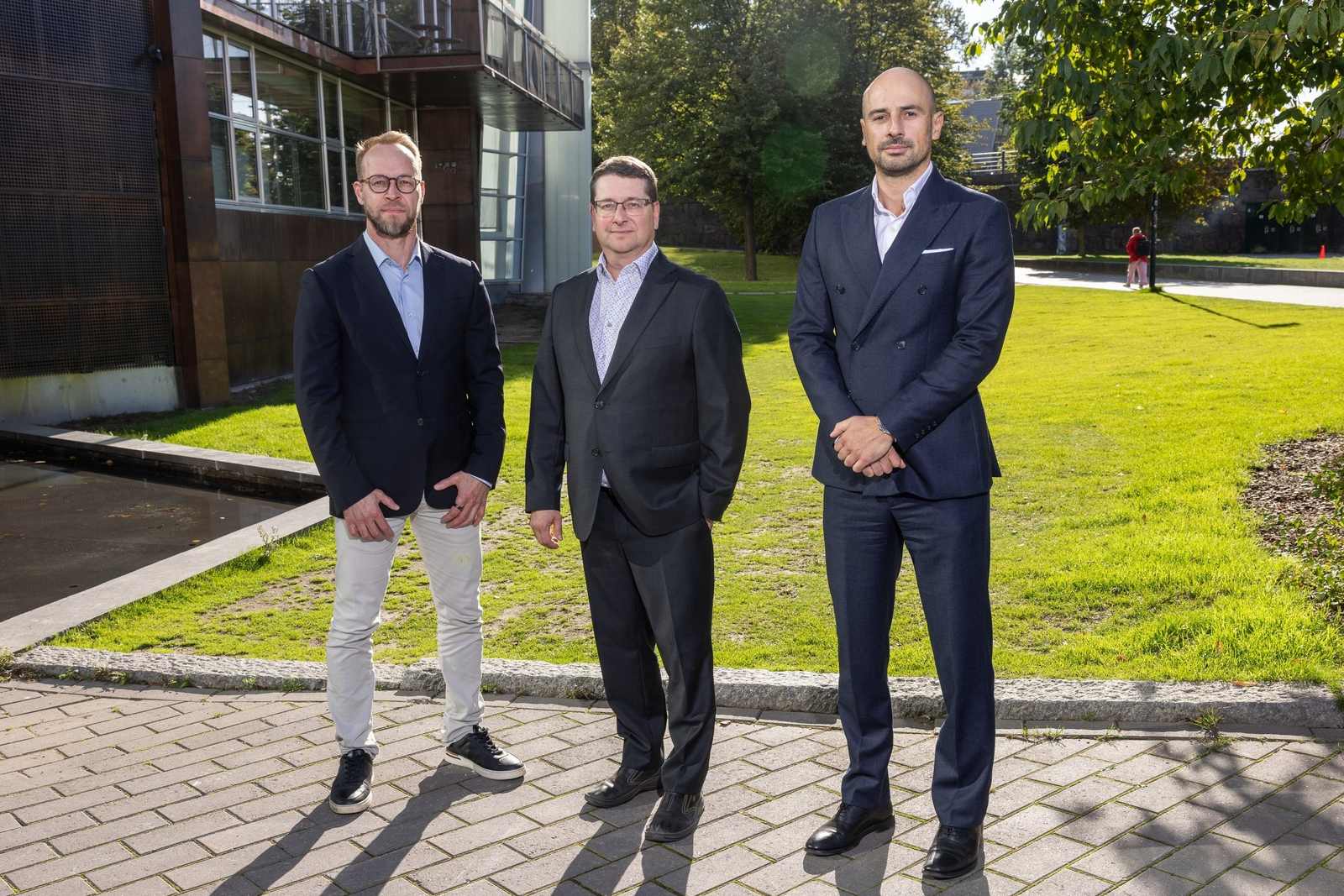


Kasvu Therapeutics has raised a €30 million Series A, its first disclosed institutional financing, to push KTX-0141 — a first-in-class, selective TrkB potentiator the Helsinki, Finland company says works without the hallucinogenic effects of psychedelic-based rivals — through IND- and CTA-enabling studies and into a Phase 1/1b trial for major depressive disorder. Hadean Ventures led the 24 September 2026 round, joined by the Finnish state investment company Tesi and existing investor Innovestor Life Science Fund, among others.
Depression’s four-billion-dollar resistant tail
Kasvu is entering a field crowded with rapid-acting antidepressant candidates that trace their effect back to the same biology: BDNF-TrkB signaling and the structural neuroplasticity it drives. Esketamine (Johnson & Johnson’s Spravato) has been FDA-approved since 2019 and, since January 2025, is the first and only approved monotherapy for treatment-resistant depression — but it carries a REMS program, a black-box warning and a supervised, in-clinic dosing requirement. COMPASS Pathways’ psilocybin candidate COMP360 is further along in Phase 3, with 26-week results from its COMP006 trial reported in July 2026, and shares that same supervised-administration model. Kasvu’s pitch is that KTX-0141 can reach the same biology from a pharmacy shelf instead of a clinic chair.
Treatment-resistant depression, one publisher’s numbers
$1.95B → $4.06B
Global treatment-resistant depression treatment market, 2023 actual to 2030 forecast, per Fortune Business Insights.
Sources: Fortune Business Insights, Treatment-Resistant Depression Treatment Market
Regulatory News outlook
KTX-0141 is years from a launch decision, but a differentiated, non-hallucinogenic oral option reaching even a modest slice of the resistant-depression population Fortune Business Insights sizes at $4.06 billion by 2030 would be a larger commercial opportunity than most Series A biotechs enter with a molecule still in first-in-human planning.
How we got here: 10% of Fortune Business Insights’ $4.06 billion 2030 treatment-resistant-depression forecast is roughly $400 million, an illustrative ceiling for a differentiated late entrant rather than a company-specific projection; KTX-0141 has not yet dosed a human patient.
KTX-0141 against depression’s rapid-acting field
| Product | Mechanism | Stage |
|---|---|---|
| KTX-0141 (Kasvu Therapeutics) | Selective TrkB potentiator, oral, no 5-HT2A engagement (per company) | Preclinical; first-in-human planned H2 2027 |
| Esketamine / Spravato (Johnson & Johnson) | NMDA-receptor/glutamate-pathway nasal spray | FDA-approved 2019 (adjunctive); expanded 2025 to monotherapy for TRD |
| COMP360 psilocybin (COMPASS Pathways) | 5-HT2A agonist, supervised single/repeat dosing | Phase 3; COMP006 26-week results reported July 2026 |
| ACD856 (AlzeCure Pharma) | TrkB/TrkA positive modulator, different indication (Alzheimer’s) | Phase Ib complete; out-licensed to QuantumCell, July 2026 |
From each company’s own announcements and public filings; not a clinical comparison. ACD856 targets Alzheimer’s disease, not depression, and is included only as an adjacent TrkB-pathway comparator.
Potentiating a receptor instead of switching it on
KTX-0141 is described as a selective, small-molecule positive allosteric modulator — a “potentiator” — of TrkB, the receptor BDNF binds to trigger neuroplasticity. Rather than acting as a standalone agonist that switches the receptor on regardless of the body’s own signal, Kasvu says the molecule amplifies TrkB’s response to a person’s own BDNF while preserving the pathway’s normal physiological control. The company’s stated rationale traces directly to co-founder Eero Castrén’s research at the University of Helsinki, which has shown that psychedelics such as LSD and psilocybin bind TrkB directly as part of how they drive rapid neuroplasticity — but those same molecules also engage the serotonin 5-HT2A receptor, which is what makes them hallucinogenic. Kasvu says KTX-0141 does not.
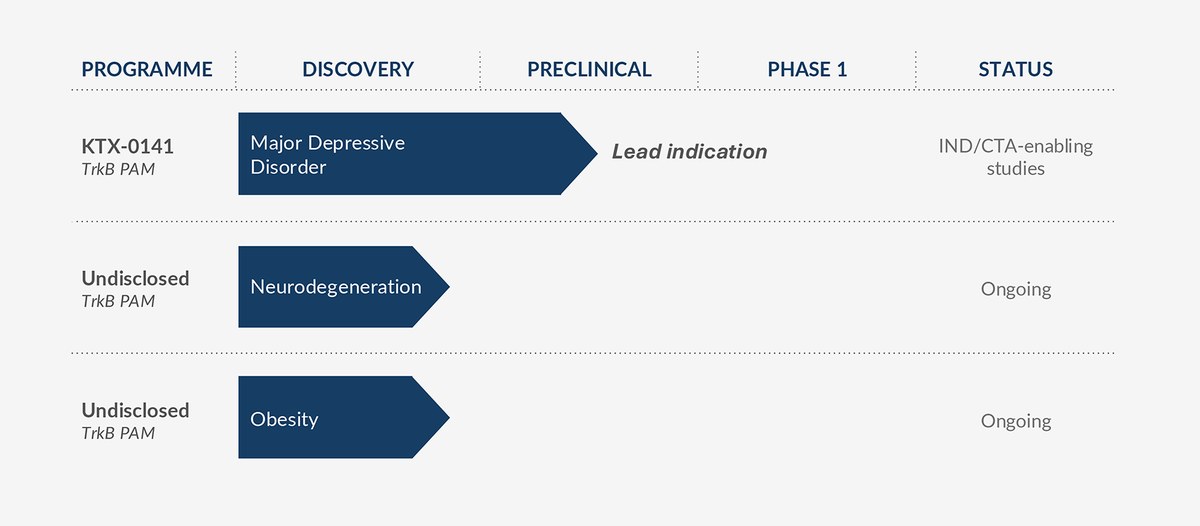
Preclinical data described in the company’s announcement — qualitatively, without published figures Regulatory News could independently review — reportedly show enhanced TrkB signaling, structural and functional neuroplasticity, favorable drug-like properties, and no hallucinogenic activity in what the company calls the industry-standard preclinical model. Kasvu has not disclosed dose-response data, the specific animal model used, or a peer-reviewed publication tied to KTX-0141 itself.
“In just three years, we have advanced from a bold scientific hypothesis to a highly selective, first-in-class TrkB potentiator backed by compelling preclinical evidence. We believe direct and selective potentiation of TrkB offers a promising new approach to address the root-cause biology of depression, anxiety, and other mental health disorders by enhancing neuroplasticity without the hallucinogenic effects.” Jami Mandelin, CEO and Co-founder, Kasvu Therapeutics — 24 September 2026 announcement
The round in four numbers
Figures from Kasvu’s own announcement and trade coverage of the financing (Chemical & Engineering News).
Three things Kasvu is betting the round on
Potentiates, doesn’t replace
KTX-0141 is designed to selectively amplify the brain’s own BDNF-TrkB signaling rather than act as a standalone receptor agonist, aiming to preserve the pathway’s normal physiological control rather than override it.
No 5-HT2A, no supervision
Unlike psychedelics and psychedelic-adjacent candidates that engage the serotonin 5-HT2A receptor responsible for hallucinogenic effects, Kasvu says KTX-0141 does not — aiming at a take-home oral treatment rather than a supervised in-clinic session.
A state investor at the table
Tesi, the Finnish state investment company, joined Hadean Ventures in the round — a distinctly Nordic public-private financing structure for a still-preclinical biotech.
Three years from a Helsinki hypothesis to €30 million
From a university lab to a Series A
- 2023
Kasvu Therapeutics founded
A University of Helsinki spinout built on the TrkB and BDNF neuroplasticity research of Eero Castrén and Ilpo Vattulainen.
- 24 September 2026
€30 million Series A announced
Led by Hadean Ventures, with Tesi, Innovestor Life Science Fund and other investors participating; Hadean’s Georgina Askeland is joining Kasvu’s board as part of the round.
- Second half of 2027
First-in-human dosing planned
The first Phase 1/1b patient is expected to be dosed, per trade coverage of the financing.
- End of 2028 (estimated)
Phase 1b expected to conclude
An estimate from trade coverage, not a company-stated date.

What has to happen before a human takes KTX-0141
Kasvu has not yet filed the IND or CTA that would let KTX-0141 be dosed in a person, and no trial has been registered on ClinicalTrials.gov or in the EU CTIS. Everything the company has said publicly about KTX-0141’s safety and mechanism is qualitative — “enhanced TrkB signalling,” “a highly encouraging preclinical safety profile,” “no hallucinogenic activity” — without a published dataset. That is normal for a company at this stage, and worth stating plainly rather than letting a confident quote stand in for data.
- First-in-human dosing: planned for the second half of 2027, per trade coverage of the round.
- Phase 1b: estimated to conclude around the end of 2028.
- Indication scope: major depressive disorder is the named lead indication; the company’s broader framing — “neuropsychiatric and neurodegenerative disorders” — suggests wider ambitions not yet attached to a second named program.
- Board: Hadean Ventures’ Georgina Askeland is joining Kasvu’s board as part of the financing, per the announcement.
What is not yet public: KTX-0141’s specific preclinical dataset, the amount and date of any earlier seed financing, and named executives beyond CEO Jami Mandelin. Regulatory News will update this page as those details are confirmed.
Sources & further reading
- Kasvu Therapeutics, “Kasvu Therapeutics Raises €30 Million Series A Financing Round Led by Hadean Ventures to Advance Its Novel TrkB Potentiator into Clinical Development Targeting Neuropsychiatric Disorders,” press release, 24 September 2026. globenewswire.com
- Hadean Ventures, “Kasvu Therapeutics Raises €30 Million Series A Financing Round Led by Hadean Ventures.” hadeanventures.com
- Chemical & Engineering News, “Kasvu Therapeutics goes a different way on neuroplasticity,” September 2026. cen.acs.org
- University of Helsinki, “Kasvu Therapeutics develops a novel way to treat depression.” helsinki.fi
- Johnson & Johnson, “Spravato (esketamine) Approved in the U.S. as the First and Only Monotherapy for Adults With Treatment-Resistant Depression,” January 2025. jnj.com
- COMPASS Pathways, COMP006 Part B 26-week results, SEC Form 6-K, 7 July 2026. sec.gov
- News-Medical.Net, “AlzeCure’s Phase Ib clinical study with NeuroRestore ACD856 completes,” April 2026. news-medical.net
- Fortune Business Insights, Treatment-Resistant Depression Treatment Market. fortunebusinessinsights.com
Regulatory News reports on public regulatory documents. It is not legal advice, and the primary sources above govern. If we have made an error, we will say so in public: see corrections.
Frequently asked questions
What did Kasvu Therapeutics announce?
A €30 million Series A financing, announced 24 September 2026 and led by Hadean Ventures, with Finland’s state investment company Tesi and existing investor Innovestor Life Science Fund participating. It is Kasvu’s first disclosed institutional round.
What is KTX-0141?
A first-in-class, selective small-molecule potentiator of TrkB, the receptor for brain-derived neurotrophic factor (BDNF). Kasvu is developing it for major depressive disorder. It has not yet been dosed in a human.
How is this different from psychedelic depression treatments?
Kasvu says KTX-0141 modulates TrkB directly without engaging the 5-HT2A serotonin receptor that gives psychedelics like psilocybin their hallucinogenic effects, aiming at a conventional take-home oral treatment rather than a supervised, in-clinic session.
When will KTX-0141 be tested in people?
First-in-human dosing is expected in the second half of 2027, with the Phase 1b portion of the study estimated to conclude around the end of 2028, according to trade coverage of the financing. No trial has been registered yet.