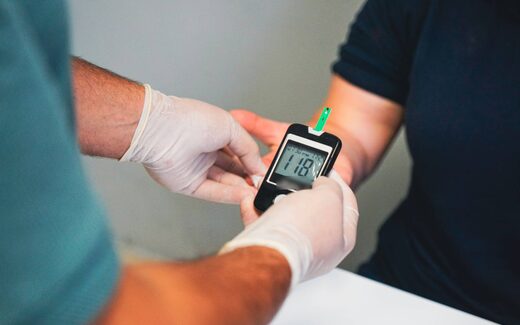


Lucid Diagnostics said on 22 October 2026 that Medicare has begun paying for its EsoGuard Esophageal DNA Test nationwide, at $1,938.01 per test — a reimbursement decision, not an FDA approval, that arrived in the same release as a $15 million financing the company has tied to resolving a default-risk clause on its own convertible notes.
EsoGuard's Medicare news in four figures
Figures from Lucid Diagnostics' 22 October 2026 announcement and published Barrett's Esophagus prevalence estimates; see refs.
What Barrett's Esophagus costs the system
Barrett's Esophagus, a change in the esophagus lining that raises the risk of esophageal adenocarcinoma, is common and most often undiagnosed. Trade and consumer-health estimates commonly put the number of Americans living with the condition at 3 million to 6 million, against roughly 350,000 to 400,000 who have actually been diagnosed — a gap diagnostics companies like Lucid Diagnostics are built to close, one reimbursement decision at a time.
The disease-management market EsoGuard is entering
$4.9B → $6.1B
Global Barrett's Esophagus disease-management market, by drug class, 2024 to 2030, as estimated by a ResearchAndMarkets report; this values drug spending, not diagnostic testing specifically.
Regulatory News outlook
We read Medicare's reimbursement decision as a bigger near-term lever for EsoGuard's test volume than the overall disease-management market's size, since most of the $4.9 billion to $6.1 billion figure is proton-pump-inhibitor and other drug spending, not diagnostic testing; the testing opportunity scales with how many of the estimated 3 million to 6 million undiagnosed Americans get screened, not with drug-market growth.
How we got here: ResearchAndMarkets' published figures put the global Barrett's Esophagus disease-management market, primarily drug spending, at $4.9 billion in 2024, rising to $6.1 billion by 2030, a 3.9% compound annual growth rate; we note this values drug treatment, not an EsoGuard-specific testing-volume figure, which is not separately published by any source we could find.
What EsoGuard is, and what it isn't yet
EsoGuard is a laboratory-developed test (LDT), run under CLIA in Lucid's own certified laboratory in Lake Forest, California — not an FDA-cleared or approved product. It reads DNA methylation at 31 sites across two genes, vimentin (VIM) and cyclin A1 (CCNA1), in esophageal cells collected without endoscopy by EsoCheck, a swallowable balloon-catheter device that is FDA 510(k)-cleared in its own right (K183262, June 2019). A clinician performs the collection in an office visit lasting a few minutes: the patient swallows a thin, deflated balloon catheter, which is withdrawn while inflated to brush cells from the lower esophagus, then sent to Lucid's lab for the DNA methylation assay. EsoGuard separately holds FDA Breakthrough Device designation, which speeds potential future review; Lucid has not disclosed a completed Premarket Approval submission for EsoGuard itself.
Three things this announcement actually changes
A coverage decision, not a clearance
Medicare is now paying for a test it had not reimbursed before; that is a billing and coverage event under CMS's Clinical Laboratory Fee Schedule, separate from and not dependent on any FDA marketing authorization for EsoGuard.
A financing tied to the same news
Lucid has said the Medicare payments helped resolve a default-risk clause tied to its 12% convertible notes due 2029 — linking this week's two announcements financially, not just in the same press release.
One lab, confirmed; a second, unclear
Lucid's Lake Forest, California laboratory is confirmed to run EsoGuard under CLIA; whether a second, Texas-jurisdiction laboratory bills independently or merely ships samples to California is not something this article could independently confirm.
A test nobody's insurance paid for, until now
Lucid Diagnostics said on 22 October 2026 that it has begun receiving actual Medicare payments for EsoGuard, at the Clinical Laboratory Fee Schedule rate of $1,938.01 per test under billing code PLA 0114U — a month after it first said, on 22 September, that it would begin submitting claims. The company frames the news as the first time Medicare beneficiaries nationwide have had reimbursed access to the test.
“For the first time, Medicare beneficiaries nationwide have fully reimbursed access to the groundbreaking EsoGuard test.” Dr. Lishan Aklog, Chairman and Chief Executive Officer, Lucid Diagnostics — 22 October 2026 announcement
The notes clause this payment resolves
The same 22 October release discloses a second piece of news: Lucid closed a $15 million private placement of Series C Convertible Preferred Stock with existing long-term shareholders, including holders of a majority of its 12% senior secured convertible notes due 2029. The company has said the Medicare payments helped resolve a default-risk provision tied to those notes — tying the reimbursement milestone directly to the company's own balance-sheet stability, not only its commercial prospects. Lucid, whose Nasdaq-listed stock traded below $1 for 30 consecutive business days through early October 2026, received a bid-price compliance notice on 9 October; it is not clear from the public record whether California-lab claims now carry the same payment status as the Texas-jurisdiction claims the September announcement described as immediately billable.
EsoGuard against other ways to find Barrett's Esophagus
| Test | Method | US regulatory status | Maker |
|---|---|---|---|
| EsoGuard Esophageal DNA Test | Non-endoscopic cell collection (EsoCheck) plus a DNA methylation lab test | Laboratory-developed test under CLIA; EsoCheck itself is FDA 510(k)-cleared | Lucid Diagnostics |
| Standard endoscopy and biopsy | Sedated upper endoscopy with forceps biopsy | FDA-regulated medical procedure; the clinical standard | Multiple manufacturers |
| WATS3D | Brush sampling added during a standard endoscopy, AI-assisted image analysis | FDA-cleared adjunctive device | CDx Diagnostics |
| TissueCypher Barrett's Esophagus Assay | Tissue biomarker panel run on existing biopsy samples | Laboratory-developed test under CLIA | Castle Biosciences |
From each company's own product descriptions and public regulatory filings; not a clinical comparison.
From a 2018 spinout to a Nasdaq compliance notice
Lucid Diagnostics' road to a Medicare payment
- 8 May 2018
Lucid Diagnostics incorporated
Incorporated in Delaware as a wholly owned subsidiary of PAVmed Inc.; licenses the EsoGuard/EsoCheck technology from Case Western Reserve University days later.
- 21 June 2019
EsoCheck cleared
FDA clears the EsoCheck Cell Collection Device (510(k) K183262), the balloon-catheter device used to collect esophageal cells for EsoGuard.
- February 2020
Breakthrough Device designation
FDA grants EsoGuard, used together with EsoCheck, Breakthrough Device designation.
- 2021
Nasdaq listing
Lucid Diagnostics completes its Nasdaq listing under ticker LUCD, separating its public float from parent PAVmed.
- Early 2022
LucidDx Labs begins operating
Lucid's own CLIA-certified, CAP-accredited laboratory in Lake Forest, California begins running EsoGuard testing in-house.
- 22 September 2026
Medicare billing announced
Lucid says it will begin submitting Medicare claims for EsoGuard under PLA code 0114U.
- 9 October 2026
Nasdaq bid-price notice
Lucid receives a Nasdaq notice that its stock closed below $1.00 for 30 consecutive business days, opening a 180-day compliance period.
- 21 October 2026
$15 million Series C closes
Lucid closes a $15 million private placement of Series C Convertible Preferred Stock with existing long-term shareholders.
- 22 October 2026
Medicare payments begin
Lucid says it has begun receiving actual Medicare payments for EsoGuard at $1,938.01 per test.
- Expected November 2026
CMS final payment determination
CMS is expected to issue final Clinical Laboratory Fee Schedule determinations for 2027 after a September 2026 advisory panel recommended maintaining EsoGuard's current payment basis.
What this announcement does not resolve: whether Medicare payments are now flowing on claims from both of Lucid's billing pathways or only the one its own September release described as immediately payable, and whether $15 million is enough runway given a stock that has spent much of October trading below Nasdaq's $1 minimum. Both are financial-health questions a reimbursement headline does not answer by itself.
- Reimbursement: Medicare began paying for EsoGuard at $1,938.01 per test (PLA 0114U), announced 22 October 2026, a month after Lucid said it would begin submitting claims.
- Financing: a $15 million Series C Convertible Preferred Stock placement with existing shareholders closed the same week, which the company has linked to resolving a default-risk clause on its 2029 convertible notes.
- Regulatory status: EsoGuard is a CLIA laboratory-developed test, not FDA-cleared or approved; only EsoCheck, the sample-collection device, carries its own FDA 510(k) clearance.
- Not yet public: whether California-lab EsoGuard claims are now paid on the same basis as the Texas-jurisdiction claims the September announcement described, and Lucid's cash runway beyond this raise.
Sources & further reading
- CLP Magazine, "Medicare Reimburses Lucid's EsoGuard Test at $1,938," 22 October 2026. clpmag.com
- Placera (wire pickup), "Lucid Diagnostics Begins Receiving Medicare Reimbursement for EsoGuard and Closes $15 Million Financing," 22 October 2026. placera.se
- CLP Magazine, "Lucid Diagnostics Launches Next-Gen Esophageal DNA Test." clpmag.com
- ResearchAndMarkets, via GlobeNewswire, "Trends Shaping the Barrett's Esophagus (BE) Industry, 2025-2030," 23 May 2025. globenewswire.com
- SAGES, technology assessment of WATS3D. sages.org
- Castle Biosciences / Cernostics, TissueCypher Barrett's Esophagus Assay, Geisinger Health Plan coverage announcement. tissuecypher.com
- Lucid Diagnostics, investor relations. ir.luciddx.com
Regulatory News reports on public regulatory documents. It is not legal advice, and the primary sources above govern. If we have made an error, we will say so in public: see corrections.
Frequently asked questions
Did FDA approve EsoGuard?
No. EsoGuard is a laboratory-developed test (LDT), regulated under CLIA and run in Lucid's own certified laboratory, not an FDA-cleared or approved product. Only EsoCheck, the device used to collect esophageal cells without endoscopy, carries its own FDA 510(k) clearance (K183262, June 2019). EsoGuard separately holds FDA Breakthrough Device designation, which speeds potential future review but is not itself a clearance.
What did Medicare actually change on 22 October 2026?
Lucid Diagnostics said it began receiving actual Medicare payments for EsoGuard, at the Clinical Laboratory Fee Schedule rate of $1,938.01 per test under billing code PLA 0114U — a month after it first said, on 22 September, that it would begin submitting claims.
What was the $15 million financing?
A private placement of Series C Convertible Preferred Stock, closed 21 October 2026, with existing long-term shareholders including holders of a majority of Lucid's 12% senior secured convertible notes due 2029. The company has said the Medicare payments helped resolve a default-risk provision tied to those notes.
Is Lucid Diagnostics financially healthy?
Lucid's Nasdaq-listed stock received a bid-price deficiency notice on 9 October 2026 after closing below $1.00 for 30 consecutive business days, opening a 180-day compliance period; the company previously cured a similar notice in February 2025. Lucid is no longer majority-owned by parent PAVmed Inc., which held roughly 25 to 27.5 percent of Lucid's voting interest as of its most recent annual report.