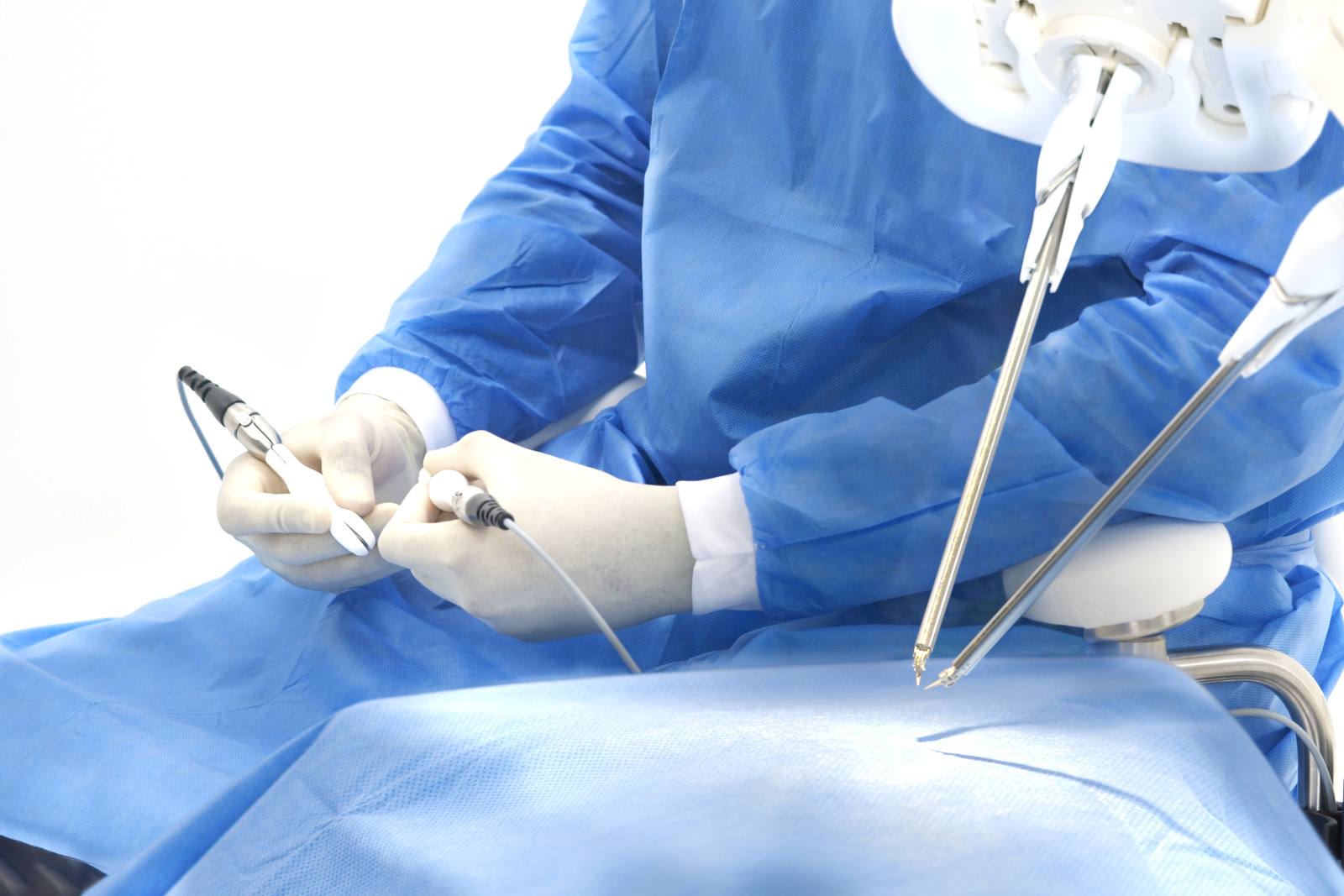


Medical Microinstruments has closed a $125 million Series D, announced 8 October 2026, to scale commercial reach for its Symani Surgical System — the only FDA-cleared robot built specifically for open microsurgery. The Jacksonville, Florida company, with roots in Pisa, Italy, says the round, led by BioStar Capital, will also fund new instruments and clinical trials, including an early feasibility study testing whether Symani-performed microsurgery could help in Alzheimer's disease.
MMI's Series D in four figures
Figures from Medical Microinstruments' 8 October 2026 announcement.
Microsurgery robotics, a rounding error no longer
Robotic surgery has mostly meant Intuitive Surgical's da Vinci, built for the wide movements of general and urologic procedures. Open microsurgery — reconnecting vessels and nerves under a microscope, often a millimeter or less in diameter — has stayed a manual craft, done freehand by a small pool of fellowship-trained microsurgeons. Medical Microinstruments built the Symani Surgical System to put that work under robotic control: two robotic arms carrying wristed NanoWrist instruments, used alongside a surgical microscope rather than replacing it.
Microsurgery robotics against surgical robots at large
$1.4B → $2.9B
Global microsurgery robot market, 2024 to 2030, as forecast by Global Industry Analysts.
Sources: Global Industry Analysts, Microsurgery Robot — Global Market Size report
Regulatory News outlook
We expect Symani's new capital, and its push into non-reconstructive applications such as the REMIND Alzheimer's study, to expand the addressable market for microsurgery robots beyond the reconstructive and transplant procedures the published forecast is built around.
How we got here: Global Industry Analysts' published 12.6% compound annual growth rate on its $1.4 billion 2024 estimate compounds to roughly $2.86 billion by 2030, within rounding of the publisher's own $2.9 billion figure; we treat any revenue from non-reconstructive applications like REMIND as additive to that total, since the published forecast's scope is built around existing reconstructive-microsurgery procedure volumes, not neurological applications.
Symani against microsurgery's other robot
| Product | Target procedures | Regulatory status | Motion scaling |
|---|---|---|---|
| Symani Surgical System (Medical Microinstruments) | Open microsurgery; reconstructive, and under study in Alzheimer's (REMIND) | FDA De Novo cleared, Apr 2024; CE mark since 2019 | 7–20x hand-movement scaling, tremor filtration |
| MUSA-3 (Microsure) | Open super-microsurgery; free flap, lymphatic and nerve surgery | CE mark, May 2026; not FDA cleared | Motion downscaling and stabilization (not independently detailed) |
| Conventional manual microsurgery | The field's standard of care for all of the above | No device clearance required | Surgeon's own hands, aided by loupe or microscope optical magnification only |
From each company’s own labelling, FDA and CE records, and public announcements; not a clinical comparison.
Downscaling a surgeon's hand by up to twenty times
Symani's NanoWrist instruments — which the company describes as among the smallest wristed surgical instruments built — translate a surgeon's hand movements at the console into scaled, tremor-filtered motion at the instrument tip, with MMI citing a 7-to-20-times scaling range. The system is designed to sit alongside, not replace, the operating microscope microsurgeons already use, and MMI has marketed it on evidence that robotic assistance can improve outcomes on the finest anastomoses, down to vessels roughly a millimeter wide, where human hand tremor is a limiting factor.
Three things the new capital is meant to buy
The only FDA-cleared system in its category
Symani received FDA De Novo clearance in April 2024 and additional 510(k) clearances in 2025, which MMI says makes it the only FDA-cleared robot built specifically for open microsurgery in the United States; it also carries a CE mark in Europe since 2019.
A fleet still small enough to double
MMI counts roughly 50 installed Symani systems and about 3,500 completed microsurgery procedures worldwide — a base the company says the Series D is meant to help it expand globally, alongside new instruments and accessories.
A trial reaching past surgery
The FDA-approved REMIND early feasibility study is testing whether Symani-performed microsurgery to reopen lymphatic drainage in the neck could help clear neurotoxins linked to Alzheimer's disease — a use case well outside Symani's original reconstructive-surgery indication, and still investigational.
What demand for Symani has already proven
Mark Toland, MMI's CEO, framed the round around a shift: from proving that demand for a microsurgery robot exists to meeting it at scale. He tied the new capital to expanding the company's commercial reach, accelerating adoption at existing accounts, and continuing to build out Symani's energy-instrument and digital-surgery capabilities.
“We’ve proven there is demand for robotic microsurgery at leading institutions around the world. Now, our focus is translating that adoption into scale.” Mark Toland, Chief Executive Officer, Medical Microinstruments — 8 October 2026 announcement
From a Pisa lab bench to a fourth funding round
Symani's road to a $125 million round
- 2015
Medical Microinstruments founded
Founded near Pisa, Italy, to build a robotic system for open microsurgery, centered on wristed instruments small enough for vessels and nerves.
- 2019
CE mark in Europe
Symani receives its first CE mark, enabling clinical use in the European Union.
- 2021
First commercial installation
University Hospital Salzburg becomes the first hospital to adopt the Symani Surgical System for commercial microsurgery use.
- April 2024
FDA De Novo clearance
Symani receives FDA De Novo clearance for open microsurgery in adults, which MMI says makes it the only FDA-cleared robot built for the category; it is named to TIME's Best Inventions list the same year.
- 2025
Additional FDA clearances; REMIND opens
MMI adds further 510(k) clearances and wins FDA approval for the REMIND early feasibility study of robotic-assisted microsurgery in Alzheimer's disease; the first patient is treated at Baptist Health in Jacksonville, Florida.
- 8 October 2026
$125 million Series D
MMI closes a Series D led by BioStar Capital, with new investors S3 Ventures, Angelini Ventures and an undisclosed strategic corporate investor, to fund global commercial expansion and continued clinical trials.
- Ahead
REMIND enrollment continues
The 15-patient REMIND study continues enrollment toward its 12-month follow-up endpoints; MMI has not disclosed a timeline for a larger pivotal trial.
What the announcement does not resolve: MMI has not disclosed the Series D's valuation, nor broken out Symani-specific revenue from total company results in a way that lets an outside reader size its commercial trajectory independently. The REMIND study's Alzheimer's application remains investigational — FDA has not established the safety or effectiveness of lymphatic microsurgery for brain disease — and MMI has not said when, or whether, that application might reach a pivotal trial.
- Round size and investors: $125 million, led by BioStar Capital, with new investors S3 Ventures, Angelini Ventures and an undisclosed strategic corporate investor, alongside existing backers.
- Installed base: roughly 50 Symani systems and about 3,500 completed microsurgery procedures worldwide, as of the announcement.
- Regulatory status: FDA De Novo clearance (April 2024) plus additional 510(k) clearances in 2025; CE mark in Europe since 2019.
- Not yet public: the round's valuation, a Symani-specific revenue breakout, and a timeline for any pivotal trial of the REMIND Alzheimer's application.
Sources & further reading
- Medical Microinstruments, “MMI Raises $125M in Series D to Accelerate Commercial Growth of the Symani Surgical System Worldwide,” company blog, 8 October 2026. mmimicro.com
- MassDevice, “MMI raises $125M for Symani robotic microsurgery system,” 8 October 2026. massdevice.com
- MD+DI, “MMI Banks $125M Series D to Scale Robotic Microsurgery Technology,” 8 October 2026. mddionline.com
- MedTech Dive, “MMI raises $125M to scale up in robotic microsurgery,” 8 October 2026. medtechdive.com
- MedTech Dive, “MMI to expand study of robotic microsurgery for Alzheimer's,” on the FDA-approved REMIND study. medtechdive.com
- BioSpace, “MMI Receives FDA Approval to Advance to Phase II of Patient Enrollment in Groundbreaking REMIND Microsurgical Study in Alzheimer's Patients.” biospace.com
- HospiMedica International, “Robotic Microsurgery System Gains CE Mark for Clinical Use in Europe,” on Microsure's MUSA-3, May 2026. hospimedica.com
- Global Industry Analysts, Microsurgery Robot — Global Market Size report. giikorea.co.kr
Regulatory News reports on public regulatory documents. It is not legal advice, and the primary sources above govern. If we have made an error, we will say so in public: see corrections.
Frequently asked questions
What did Medical Microinstruments raise, and for what?
A $125 million Series D, announced 8 October 2026, led by BioStar Capital with new investors S3 Ventures, Angelini Ventures and an undisclosed strategic corporate investor, plus existing backers. The company says proceeds will expand commercial reach for its Symani Surgical System, fund new instruments and indications, and support clinical trials including the REMIND study.
Is Symani FDA cleared?
Yes. Symani received FDA De Novo clearance in April 2024 — MMI describes it as the only FDA-cleared robot built for open microsurgery — and the company has said it added further 510(k) clearances in 2025. It also carries a CE mark in Europe, first obtained in 2019.
What is the REMIND study?
An FDA-approved early feasibility trial testing whether Symani can perform microsurgery to reopen lymphatic drainage pathways in the neck, to explore whether this could help clear neurotoxins such as amyloid beta and phosphorylated tau in patients with mild to moderate Alzheimer's disease. It is a 15-patient, multi-center study; its first procedure was performed at Baptist Health in Jacksonville, Florida. Symani remains investigational for this use, and safety and effectiveness for lymphatic reconstruction in brain disease have not been established by FDA.
Who else makes a robot for microsurgery?
Dutch company Microsure makes MUSA, now in its third generation (MUSA-3), which received a CE mark for clinical use in Europe in May 2026. MUSA is not FDA cleared in the United States, where Symani is currently the only cleared system built for open microsurgery.