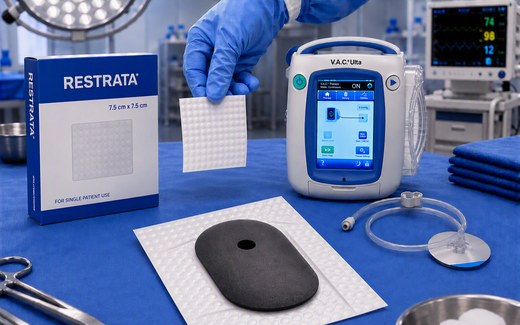

FDA posted two early alerts on 20 October 2026 warning that Cardinal Health's Presource procedure kits — pre-assembled convenience kits bundling components from multiple manufacturers for hospital procedures — may contain BD Alaris pump infusion sets that are already subject to an FDA Class I recall, the agency's most serious category. The alerts do not announce a new device defect. They announce a distribution problem: a recalled component embedded inside another company's kit, where it may not be obvious to the clinician opening it.
Two alerts, two different asks
FDA's two early alerts, both dated 20 October 2026, correspond to two separate Cardinal Health customer letters issued about a month earlier. The first — “Early Alert: Cardinal Health Updates Use Instructions for Presource Packs Containing BD Alaris Pump Infusion Sets” — reflects Cardinal's 23 September 2026 letter telling customers to review BD's own performance disclosures for the affected sets and adjust clinical use: set selection, pump programming, or using an alternative pump entirely where the Alaris pump is not clinically appropriate for the intended infusion. The second — “Early Alert: Cardinal Health Issues Correction for Presource Packs Containing BD Alaris Pump Infusion Sets” — reflects a 24 September 2026 letter with a harder instruction: locate and quarantine affected Presource kits, and affix a warning label directing clinicians to remove and discard any recalled BD Alaris infusion set found inside before use. Read together, the sequence is get-the-word-out first, then physically pull and mark the affected stock.
The recall these kits are carrying
The component at issue is BD's own Class I recall of certain Alaris pump infusion sets used with the Alaris Pump Module model 8100 — a widely deployed hospital infusion platform. BD initiated the recall 8 July 2025 and expanded it 12 September 2025 to cover 15 additional affected infusion set configurations. The defect is a performance deviation tied to the sets' design features, including in-line filters and other components: inaccurate flow rate and loading bolus dose delivery, delayed upstream and downstream occlusion alarms, and over-infusion from post-occlusion bolus volume. BD has said these deviations are most pronounced at low programmed infusion rates — under 1 mL per hour — and small bolus volumes of 5 mL or less, and has specifically warned that the resulting under- or over-infusion can be difficult for clinical staff to recognize, since the deviation may not trigger an alarm and its clinical effects can resemble a patient's underlying condition rather than a device malfunction. BD has said the affected sets carry potential for serious patient harm, with elevated risk for vulnerable populations such as neonates and critically ill patients. As of 19 August 2026, BD had not received reports of serious injury or death specifically tied to this performance issue.
Why a kit, not just a pump set, is the story
Cardinal Health's Presource line assembles custom, pre-packaged procedure kits for hospitals, bundling components from multiple manufacturers — drapes, instruments, tubing, and in this case infusion sets — under a single Cardinal Health catalog number and packaging. That bundling is normally a convenience: one kit, one order, one delivery, instead of sourcing each component separately. It becomes a traceability problem the moment one bundled component is recalled, because the kit's own outer packaging and catalog number do not necessarily flag that a specific internal component carries an active recall. A hospital's supply chain and biomedical engineering teams tracking BD's own recall notices by BD catalog number could reasonably miss that the same recalled sets are also present, unlabeled as such, inside Cardinal Health kits ordered under an entirely different product line.
What this means operationally
- Supply chain and materials management: cross-check Presource kit catalog numbers against Cardinal Health's September 2026 customer letters, not only against BD's own recalled-set list, since the recall may be present in inventory that was never ordered under a BD catalog number.
- Clinical engineering and nursing leadership: implement the label-and-quarantine instruction from Cardinal's correction letter before further use of on-hand Presource stock, and confirm staff know to inspect for and discard any recalled BD Alaris infusion set found inside a kit rather than assuming kit contents are uniformly current.
- Infusion practice: per Cardinal's use-instructions letter, give particular attention to low-rate infusions (under 1 mL/hour) and small boluses (5 mL or less), where BD says the performance deviation is most pronounced and hardest to detect clinically; have an alternative pump pathway ready where the Alaris pump is not appropriate.
- Quality and regulatory affairs: this is a useful case for any internal review of how bundled or kitted devices are tracked against component-level recalls generally — a kit's own catalog number is not a reliable proxy for the recall status of everything inside it.
What is still developing
FDA's early alert pages are explicitly interim: the agency says it will update them as new information becomes available, and the underlying BD Alaris recall itself has already expanded once since its original July 2025 initiation. Hospitals and distributors should treat the current Cardinal Health and BD notices as the floor of required action, not a closed matter, and watch both companies' own recall and alert pages for further updates on affected catalog numbers or expanded scope.
Frequently asked questions
What did FDA post, and when?
On 20 October 2026, FDA posted two early alerts on Cardinal Health's Presource procedure kits, warning they may contain BD Alaris pump infusion sets under an existing FDA Class I recall — one covering a correction (quarantine and label affected kits), the other covering updated use instructions.
What is the underlying recall?
BD's Class I recall of certain Alaris pump infusion sets used with the Alaris Pump Module model 8100, initiated 8 July 2025 and expanded 12 September 2025, for flow-rate and bolus-dose inaccuracy, delayed occlusion alarms, and post-occlusion over-infusion, most pronounced at low rates and small boluses.
Why are Cardinal Health's kits involved?
Presource kits bundle components from multiple manufacturers, including BD Alaris infusion sets, under a single Cardinal Health catalog number — so a hospital can receive an already-recalled infusion set without that being obvious from the kit's own packaging.
What should hospitals and clinicians do?
Per Cardinal Health's September 2026 customer letters: locate and quarantine affected kits, label them to flag the recalled set for removal, review BD's performance disclosures, and use an alternative pump where the Alaris pump is not clinically appropriate.
Sources & further reading
- FDA, “Early Alert: Cardinal Health Issues Correction for Presource Packs Containing BD Alaris Pump Infusion Sets”, 20 October 2026. fda.gov
- FDA, “Early Alert: Cardinal Health Updates Use Instructions for Presource Packs Containing BD Alaris Pump Infusion Sets”, 20 October 2026. fda.gov
- BD, “BD Provides Update on Voluntary Recall of Certain BD Alaris™ Pump Infusion Sets”, 12 September 2025. news.bd.com
- FDA recall database record (BD Alaris pump infusion sets), accessdata.fda.gov. accessdata.fda.gov
- Oncology Nursing Society (ONS) Voice, “BD Continues to Expand Its Recall of Certain Alaris Pump Infusion Sets”, background on the recall's scope and clinical guidance. ons.org
Regulatory News reports on public regulatory documents. It is not legal advice, and the primary sources above govern. If we have made an error, we will say so in public: see corrections.