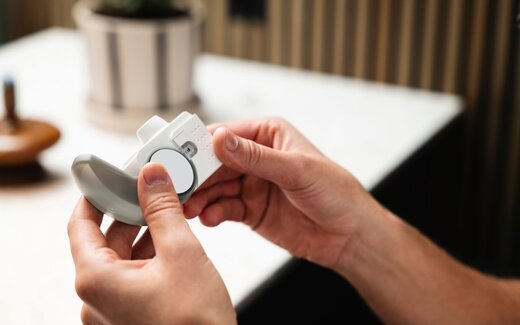


Element Biosciences has commercially launched AVITI Dx, its first CE-marked in vitro diagnostic sequencing platform under the European Union's In Vitro Diagnostic Regulation. The San Diego company announced the launch on 29 October 2026 across ten EU countries, running the same AVITI sequencer hardware it already sells for research use in a dual-boot mode built for regulated clinical labs — entering a field where Illumina and Thermo Fisher already hold CE-marked sequencers.
A $490 million label most sequencers can’t wear
Clinical oncology sequencing is the part of genomics where a CE-IVD label, not just a research-use one, actually changes who can buy a machine. Global Industry Analysts sizes the clinical oncology next-generation sequencing market at about $489.9 million in 2024, rising to roughly $1.2 billion by 2030; a separate report puts the same 2030 endpoint closer to $935 million. The gap between those two numbers is a reminder that this market is still small enough for forecasters to disagree by a quarter of a billion dollars — and specific enough that a CE mark, not a research-use label, is the gate most labs in it require.
A $490 million label most sequencers can’t wear
$489.9M → $1.2B
Clinical oncology next-generation sequencing, 2024 to 2030, as forecast by Global Industry Analysts. A separate 2022–2030 forecast puts 2030 demand closer to $935 million — the two reports disagree by more than a quarter of a billion dollars for the same year.
Sources: Global Industry Analysts, Global Clinical Oncology Next Generation Sequencing Market to Reach US$1.2 Billion by 2030 · Clinical Oncology Next Generation Sequencing Market Size, CAGR, Report 2022-2030, via BioSpace
Regulatory News outlook
Even on the lower of the two published 2030 figures, clinical oncology NGS roughly doubles from its 2024 base; we expect AVITI Dx’s ten-country EU launch to give Element a clinical-oncology foothold while that market is still being sized, rather than a share of a settled one.
How we got here: The $935 million low estimate and the $1.2 billion high estimate both imply the market at least doubling from Global Industry Analysts’ $489.9 million 2024 base; we treat that doubling, not either single dollar figure, as the more durable fact and read Element’s launch timing against it.
AVITI Dx against Europe’s other CE-marked sequencers
| Platform | IVDR status | Mode | Markets live |
|---|---|---|---|
| AVITI Dx (Element Biosciences) | CE-marked, Class A, self-certified | Dual-boot: switches between IVD and research-use modes on the same hardware | 10 EU countries at launch, 29 Oct 2026 |
| NextSeq 550Dx (Illumina) | CE-marked under IVDR (Declaration of Conformity on file) | Dedicated Dx-mode sequencer | Established across the EU |
| Genexus Dx System (Thermo Fisher) | CE-marked under IVDR | Integrated, automated sequencer for IVD assays | Established across the EU since 2022 |
| Lab-developed tests on research-use sequencers | Not CE-IVD; run under lab accreditation, not IVDR | Research-use instrument repurposed for clinical reporting | Widespread today — the status quo AVITI Dx targets |
From each company’s own product pages and announcements; not a clinical or performance comparison.
Ten countries, one quality system
AVITI Dx is not a new instrument; it is Element’s existing AVITI sequencer, already sold for research use, switched into an IVD mode through dedicated IVDR-compliant reagents and software. Element calls it a dual-boot design — the same hardware can run research-use or diagnostic workflows — built under the ISO 13485-certified quality management system the company achieved ahead of this launch specifically to support what it has called “forthcoming diagnostic applications.” The software interface ships in multiple languages, a detail aimed squarely at the ten-country rollout rather than a single national lab market.
“Launching AVITI Dx across ten EU markets reflects years of investment in the quality systems, manufacturing capabilities, and global supply chain needed to support regulated clinical markets.” Jeff Labbadia, Chief Supply Chain Officer, Element Biosciences — 29 October 2026 announcement
Three things the launch leans on
Dual-mode by design
The same AVITI hardware switches between a research-use mode and AVITI Dx’s IVD mode, so Element is not asking labs to buy or qualify a second instrument to add regulated testing.
A quality system built first
Element announced ISO 13485 certification ahead of this launch, explicitly as the foundation for AVITI Dx and future diagnostic applications — infrastructure work that predates the CE mark itself.
Multiple languages, one instrument
The AVITI Dx software interface supports several languages at launch, built for a ten-country rollout rather than retrofitted market by market.
The launch in four figures
Figures from Element Biosciences’ 29 October 2026 launch announcement and its 2024 Series D financing announcement.
What a Class A self-certification means
Under the EU’s In Vitro Diagnostic Regulation, a Class A device — the lowest-risk IVDR tier — can generally be CE marked through the manufacturer’s own conformity assessment and quality system, without a notified body reviewing the specific device, unlike the higher-risk classes that require third-party certification. Element says AVITI Dx was developed and manufactured under its ISO 13485-certified quality management system, which is the infrastructure a self-certification route leans on most heavily. That is a lighter regulatory bar than Class C or D IVDs face, and it is also why building the quality system came before, not after, the product launch.
From a research tool to a regulated one
Element Biosciences has spent most of its eight years as a research-sequencing company, raising a $277 million Series D in 2024 and an investment from Samsung Electronics to fund its AVITI and AVITI24 instrument lines. AVITI Dx is the company’s first move to put that same hardware inside regulated clinical workflows, and the ten-country EU launch is explicitly a first step: Element says it plans to add more European markets next, then select Asia-Pacific markets, rather than a simultaneous global rollout.
From a research sequencer to a regulated one
- 2017
Element Biosciences founded
Incorporated in San Diego to build a lower-cost DNA sequencing platform, later commercialized as AVITI for research use.
- 2024
$277 million Series D
Financing cited toward commercializing the AVITI and AVITI24 instrument lines and funding forthcoming launches, including AVITI Dx.
- Earlier in 2026
ISO 13485 certification
Element announced certification of its quality management system, named explicitly as the foundation for AVITI Dx and future diagnostic applications.
- 29 October 2026
AVITI Dx launches
Commercial launch of Element’s first CE-marked IVD sequencing platform across ten EU countries.
- Ahead
More EU markets, then Asia-Pacific
Element says it plans to expand AVITI Dx to additional European markets next, followed by select Asia-Pacific markets; no dates have been disclosed.
- Launch markets: the Netherlands, Germany, France, Italy, Spain, Austria, the Czech Republic, Latvia, Romania and Poland, per trade coverage of the 29 October 2026 launch.
- Regulatory basis: Class A self-certification under EU IVDR, built on Element’s ISO 13485-certified quality management system.
- What’s next, by the company’s own account: additional European markets, then select Asia-Pacific markets.
- No U.S. claim: this is a CE mark under EU IVDR; the announcement makes no FDA clearance or approval claim for AVITI Dx in the United States.
What is not yet public: which specific IVD assays or test menus will run on AVITI Dx at individual labs, pricing relative to Element’s research-use AVITI instruments, and a timeline for the Asia-Pacific markets the company has said will follow. We will update this page as those become available.
Sources & further reading
- Element Biosciences, “Element Biosciences Launches AVITI Dx™, Bringing CE-Marked IVD Sequencing to Ten EU Countries,” press release, 29 October 2026. elementbiosciences.com
- Labmedica, “CE-Marked IVD Sequencing Platform Launches Across Ten EU Countries,” 29 October 2026. labmedica.com
- Element Biosciences, “Element Biosciences Achieves ISO 13485 Certification, Establishing Quality Foundation for Forthcoming Diagnostic Applications.” elementbiosciences.com
- Fierce Biotech, “Element Biosciences nets $277M ahead of new sequencer launch,” 2024. fiercebiotech.com
- Illumina, NextSeq 550Dx IVDR guidance and resources. illumina.com
- Thermo Fisher Scientific, “Thermo Fisher Scientific Launches CE-IVD Marked Next-Generation Sequencing Instrument for Use in Clinical Labs,” 2022. businesswire.com
- Global Industry Analysts, “Global Clinical Oncology Next Generation Sequencing Market to Reach US$1.2 Billion by 2030.” giikorea.co.kr
- “Clinical Oncology Next Generation Sequencing Market Size, CAGR, Report 2022-2030,” via BioSpace. biospace.com
Regulatory News reports on public regulatory documents. It is not legal advice, and the primary sources above govern. If we have made an error, we will say so in public: see corrections.
Frequently asked questions
What did Element Biosciences launch?
AVITI Dx, its first CE-marked in vitro diagnostic (IVD) sequencing platform under the EU's In Vitro Diagnostic Regulation (IVDR). It launched commercially across ten EU countries on 29 October 2026.
Is this a new instrument?
No. AVITI Dx runs on the same AVITI sequencer hardware Element already sells for research use, switched into a dual-boot IVD mode with IVDR-compliant reagents and software, built under the company's ISO 13485-certified quality system.
Which countries can buy it at launch?
The Netherlands, Germany, France, Italy, Spain, Austria, the Czech Republic, Latvia, Romania and Poland, per trade coverage of the launch. Element says it plans to expand to more European markets, then select Asia-Pacific markets.
Who else sells a CE-marked IVD sequencer?
Illumina's NextSeq 550Dx and Thermo Fisher's Ion Torrent Genexus Dx System are both established CE-marked sequencing platforms in Europe; AVITI Dx enters a field where both already compete.