Emboline has won FDA 510(k) clearance for the Emboliner Embolic Protection System, a filter designed to catch debris dislodged during transcatheter aortic valve replacement (TAVR) before it can reach the brain or other organs. The Santa Cruz, California company announced the clearance on 9 September 2026, becoming only the second embolic protection device cleared for TAVR in the United States — and the first designed to protect more than the brain alone.
PROTECT H2H in four numbers
Figures from the PROTECT H2H late-breaking presentation at ACC.26 and the 9 September 2026 announcement.
A filter across the whole arch
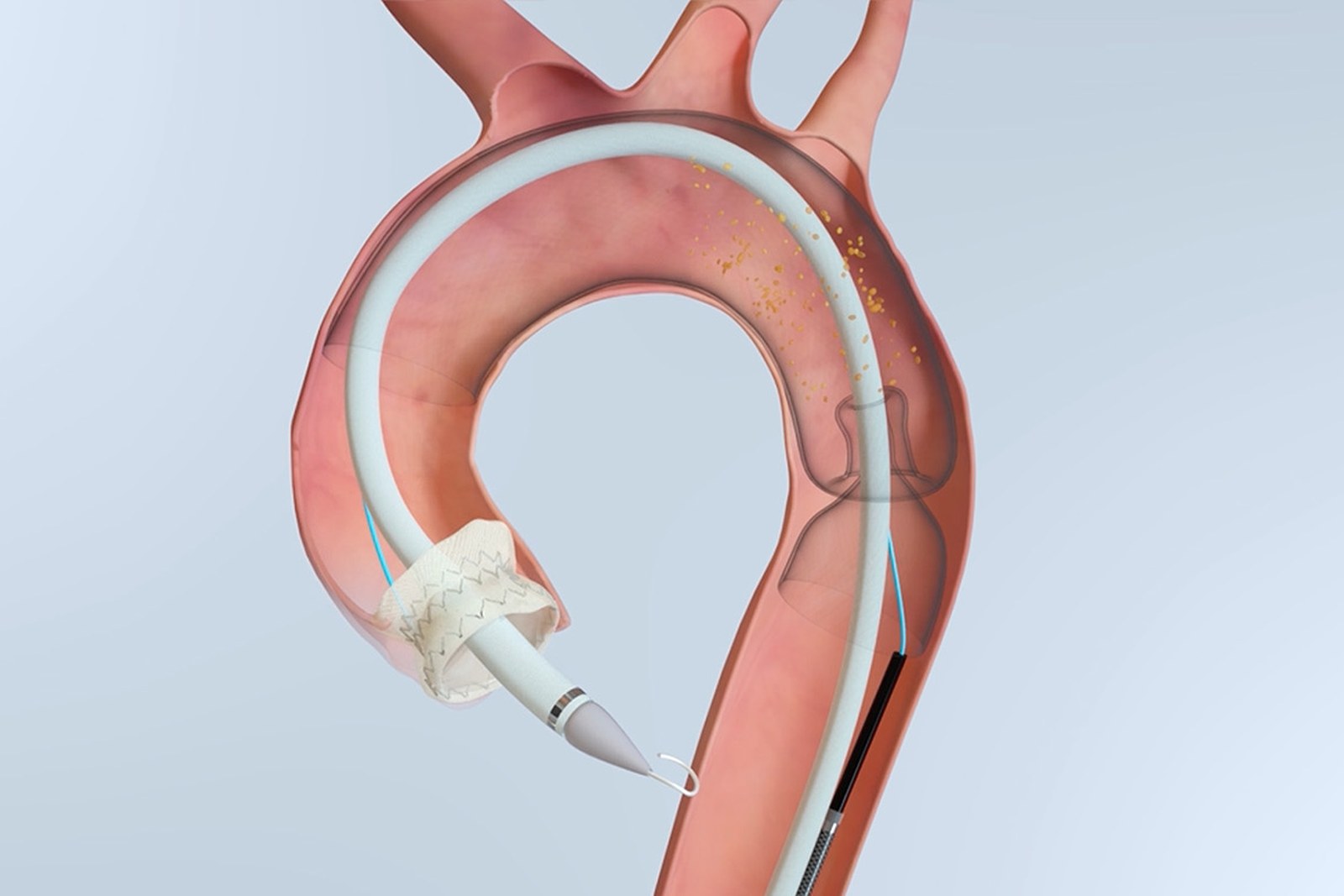
The core design difference from Sentinel is anatomical coverage. Sentinel places two filter baskets in the brachiocephalic and left common carotid arteries, capturing debris headed toward most, but not all, of the brain’s blood supply, and none headed elsewhere in the body. Emboliner instead deploys a circumferential, dual-layer mesh filter across the aortic arch itself, positioned so the TAVR delivery catheter passes through its central working lumen. Emboline says that design captures debris headed toward the brain, the kidneys and the rest of the systemic circulation, not the cerebral vessels alone.
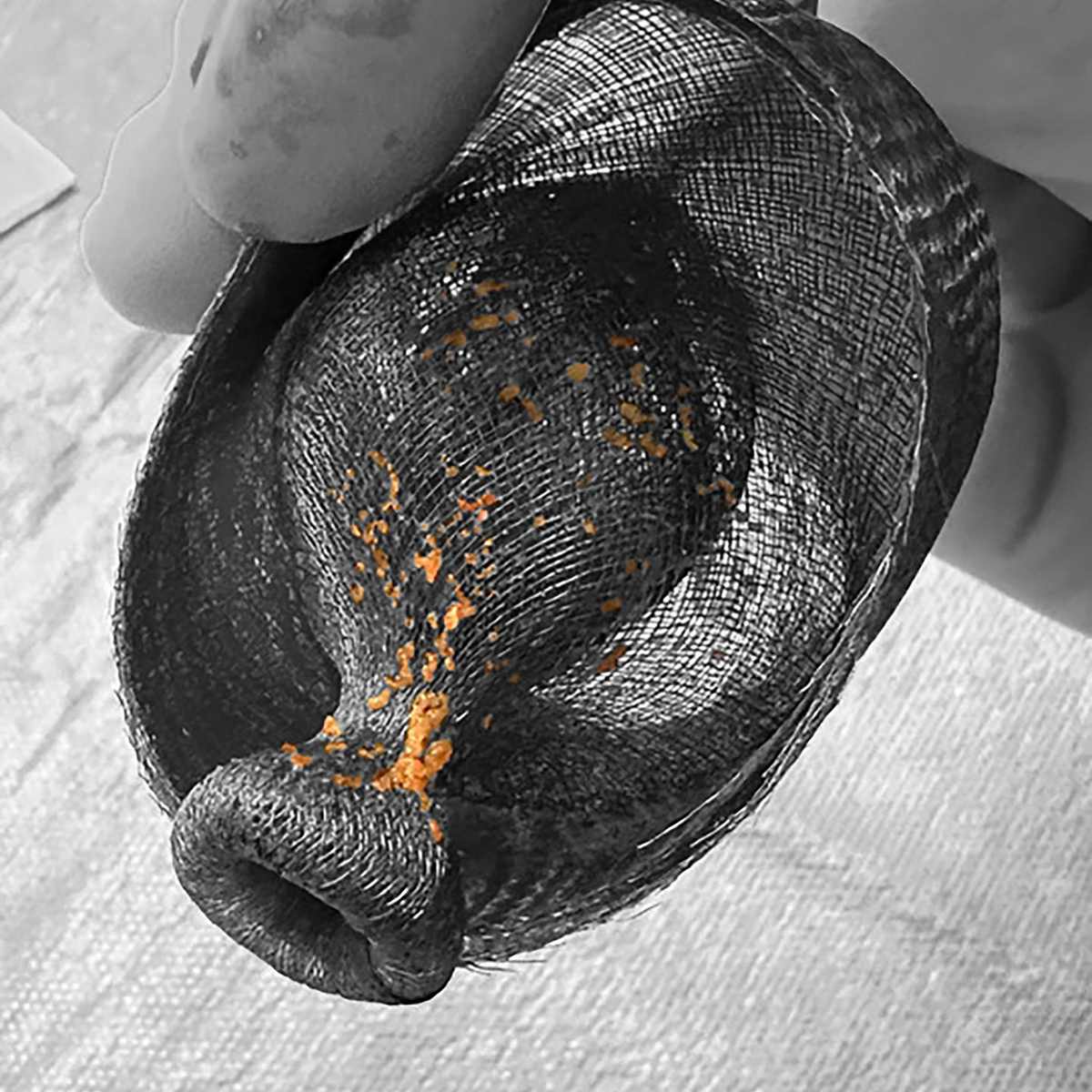
That design was tested directly against Sentinel in PROTECT H2H, a prospective, randomized, 522-patient pivotal trial run at 20 sites in the U.S., Brazil and Germany, with results presented as a late-breaking trial at the American College of Cardiology’s 2026 meeting. Emboliner met its primary 30-day safety endpoint (a composite of death, stroke and Stage 3 acute kidney injury) at 4.5% versus 5.0% for Sentinel, and was non-inferior on 30-day stroke rate (2.0% versus 2.1%). On debris capture, Emboliner recovered roughly three times as many particles larger than 150 microns (93 versus 31) and nearly twice as many particles overall (1,575 versus 801). Technical success — a measure of successful deployment and retrieval — was 95.9% for Emboliner against 87.1% for Sentinel, a figure Emboline describes as the highest technical success rate reported for a TAVR embolic protection device in a pivotal study; we report that as the company’s characterization, not an independently audited record against the full historical literature.
Where Emboliner beats the incumbent
The whole arch, not two arteries
A circumferential dual-layer filter across the aortic arch, built to catch debris bound for the brain, the kidneys and the rest of the circulation. The incumbent covers two of the three cerebral vessels and nothing below the neck.
It beat the incumbent head-to-head
PROTECT H2H randomized 522 patients against Sentinel: technical success 95.9% versus 87.1%, three times the large debris captured, and non-inferior 30-day safety (4.5% versus 5.0% on the composite endpoint).
Through the working lumen
The TAVR delivery system passes through the filter’s central lumen, so protection rides the procedure it protects rather than adding a separate cerebral-vessel deployment.
The second device in a nine-year-old category
Emboline announced FDA 510(k) clearance for the Emboliner Embolic Protection System on 9 September 2026, six months after securing a $20 million growth-capital facility from Trinity Capital to support the device’s commercialization. The clearance makes Emboliner only the second embolic protection device FDA has cleared for use during TAVR, nine years after Boston Scientific’s Sentinel Cerebral Protection System became the first, in June 2017.
We could not locate a public FDA 510(k) database entry naming Emboliner’s clearance number as of publication; the agency’s database can lag a fresh clearance by days. We will update this page when the record appears.
“FDA 510(k) clearance represents a defining moment for Emboline and for the physicians who have supported our vision since the company’s founding. We developed the Emboliner to address important unmet needs with existing embolic protection approaches for TAVR.” Scott Russell, President and Chief Executive Officer, Emboline — 9 September 2026 announcement
Emboliner against Sentinel, TriGUARD 3 and ProtEmbo
Four devices, one arch
| Device | Coverage | U.S. status | Key evidence |
|---|---|---|---|
| Emboliner (Emboline) | Circumferential aortic-arch filter: brain and body | 510(k) cleared, September 2026 | PROTECT H2H, n = 522, randomized vs Sentinel: 95.9% vs 87.1% technical success, 3× large debris, non-inferior safety |
| Sentinel (Boston Scientific) | Two filters: brachiocephalic and left common carotid arteries | Cleared 2017; the incumbent, over 120,000 patients treated | PROTECTED TAVR, n = 3,000: no significant reduction in all stroke; 60% relative reduction in disabling stroke on a secondary endpoint |
| TriGUARD 3 (Keystone Heart) | Deflector across all three cerebral vessels | Investigational | REFLECT II did not meet its efficacy endpoint |
| ProtEmbo (Protembis) | Deflector across all three cerebral vessels, 6 Fr via the left arm | Investigational | PROTEMBO C single-arm study met its safety and performance endpoints |
From company announcements and published trial reports; not a head-to-head clinical comparison except where a randomized trial is named.
A category most TAVR operators skip
Embolic protection has been a one-device category since 2017, and a category most TAVR operators skip: an American Heart Association analysis of 414,649 U.S. procedures found only 12.9% used protection. The reason is well known — Sentinel’s 3,000-patient PROTECTED TAVR trial did not show a significant reduction in all stroke — and it is exactly the opening a full-body filter with a superior capture record is built to take. The analysts disagree on how big the category becomes; both see it growing.
Embolic protection for TAVI, two forecasts
$486M → $942M
Cerebral embolic protection devices for TAVI, 2025 to 2035, as forecast by Spherical Insights (6.84% CAGR); Allied Market Research sees a smaller $405 million market in 2032.
Sources: Spherical Insights, CEP devices for TAVI, 2026–2035 · Allied Market Research, TAVR embolic protection market to 2032 · 2024 Update on Cerebral Embolic Protection After TAVR (PMC)
Regulatory News outlook
We expect embolic protection use in U.S. TAVR to roughly double from its 12.9% share by 2030 — at least 10,000 additional protected procedures a year on 2019 volumes, and more on today’s — because a full-body filter is the first credible reason for centers that skipped Sentinel to adopt protection at all.
How we got here: 12.9% of TAVR patients received protection in the AHA analysis; doubling that share on the 72,991 U.S. procedures the TVT Registry audited for 2019 (the last annual volume we could open) adds about 9,400 procedures, and U.S. volumes have grown every year since. The share and the volume trajectory are our assumptions, not the company’s.
Nine years after Sentinel
From a one-device category to a head-to-head win
- June 2017
Sentinel becomes the first cleared TAVR embolic protection device
The category Emboliner enters is nine years old and has had one product in it.
- September 2022
PROTECTED TAVR reports
Sentinel’s 3,000-patient outcomes trial finds no significant reduction in all stroke — the gap Emboline set out to close.
- March 2026
$20 million growth-capital facility
From Trinity Capital, earmarked for commercialization.
- March 2026
PROTECT H2H presented at ACC.26
Late-breaking trial: primary safety endpoint met, technical success 95.9% versus 87.1%.
- 9 September 2026
FDA 510(k) clearance
- Later in 2026
Phased U.S. launch
Physician training and selected-center rollouts, with clinical experience collected as it goes.
- Not yet dated
Europe
Stated intention; no CE mark date disclosed.

Silent strokes, and a phased launch
Stroke during or shortly after TAVR occurs in roughly 2% to 4% of contemporary procedures, and silent cerebral embolism — new ischemic brain lesions visible on MRI but without obvious symptoms — shows up in an estimated 40% to 84% of cases, according to independent published series. Sentinel’s own large randomized outcomes trial, PROTECTED-TAVR, did not find a statistically significant reduction in overall stroke rate with cerebral protection versus none. A device built to protect the kidneys and broader circulation, not the brain alone, targets a real gap Sentinel’s nine-year run has left unresolved, though PROTECT H2H was designed to show non-inferiority to Sentinel on safety, not superiority.
- U.S. launch: Emboline says it plans a phased commercial rollout later in 2026, paired with physician training at selected centers.
- Europe: the company has stated an intention to launch in Europe as well as the U.S.; we found no confirmed CE mark or European clearance date.
- Financing: the $20 million Trinity Capital growth-capital facility, secured in March 2026, is earmarked for commercialization and continued development of the platform.
What is not yet known: Emboline has not disclosed a specific post-market surveillance or registry study design, and third-party estimates of the company’s total funding to date range from roughly $82 million to $118 million depending on the source — a gap we could not resolve against a single primary filing, so we have not printed a total funding figure above.
Sources & further reading
- Emboline, Inc., “Emboline Receives U.S. FDA 510(k) Clearance for Emboliner® Embolic Protection System,” press release, 9 September 2026. prnewswire.com
- “FDA clears new device for capturing debris during TAVR,” Cardiovascular Business, September 2026. cardiovascularbusiness.com
- “Novel Cerebral Protection Device Matches Up Well With Sentinel in TAVI,” TCTMD, coverage of the PROTECT H2H late-breaking trial, ACC 2026. tctmd.com
- Emboline, Emboliner Embolic Protection System product page. emboline.com
- “Financing Completed to Support Regulatory and Commercialization Progress of Emboline’s Embolic Protection Catheter,” Cardiac Interventions Today, March 2026. citoday.com
- Boston Scientific, PROTECTED TAVR trial results (Sentinel Cerebral Protection System). bostonscientific.com
- “Efficacy Eludes TriGUARD 3 Cerebral Protection Device: REFLECT II,” TCTMD, 2020. tctmd.com
- “Safety and performance of a novel cerebral embolic protection device for transcatheter aortic valve implantation: the PROTEMBO C Trial,” EuroIntervention. eurointervention.pcronline.com
- “2024 Update on Cerebral Embolic Protection After Transcatheter Aortic Valve Replacement” (12.9% of 414,649 TAVR patients treated with embolic protection), PMC. pmc.ncbi.nlm.nih.gov
- Carroll et al., “STS-ACC TVT Registry of Transcatheter Aortic Valve Replacement,” JACC, 2020 (72,991 U.S. TAVRs in 2019). sciencedirect.com
- Spherical Insights, cerebral embolic protection devices for TAVI market, 2025–2035. sphericalinsights.com
- Allied Market Research, “TAVR Embolic Protection Market to Reach $405.4 Million by 2032.” alliedmarketresearch.com
Regulatory News reports on public regulatory documents. It is not legal advice, and the primary sources above govern. If we have made an error, we will say so in public: see corrections.
Frequently asked questions
What did FDA clear for Emboline?
510(k) clearance for the Emboliner Embolic Protection System, a filter deployed over the aortic arch during transcatheter aortic valve replacement (TAVR) to capture debris before it reaches the brain, kidneys or other organs. FDA cleared the device on 9 September 2026.
How is Emboliner different from Sentinel, the other cleared device?
Sentinel, made by Boston Scientific, places two filter baskets in the brachiocephalic and left common carotid arteries, protecting the brain only (and not the left vertebral artery's territory). Emboliner deploys a circumferential filter over the aortic arch, which Emboline says protects both cerebral and systemic circulation.
What did the pivotal trial show?
In PROTECT H2H, a 522-patient randomized trial against Sentinel, Emboliner met its primary 30-day safety endpoint (4.5% vs. 5.0% MACCE) and showed a 95.9% technical success rate versus 87.1% for Sentinel, capturing roughly three times as many debris particles larger than 150 microns.
When will Emboliner be commercially available?
Emboline has said it plans a phased U.S. launch later in 2026, alongside physician training, and has stated an intention to launch in Europe as well. It has not disclosed a confirmed CE mark or European launch date.