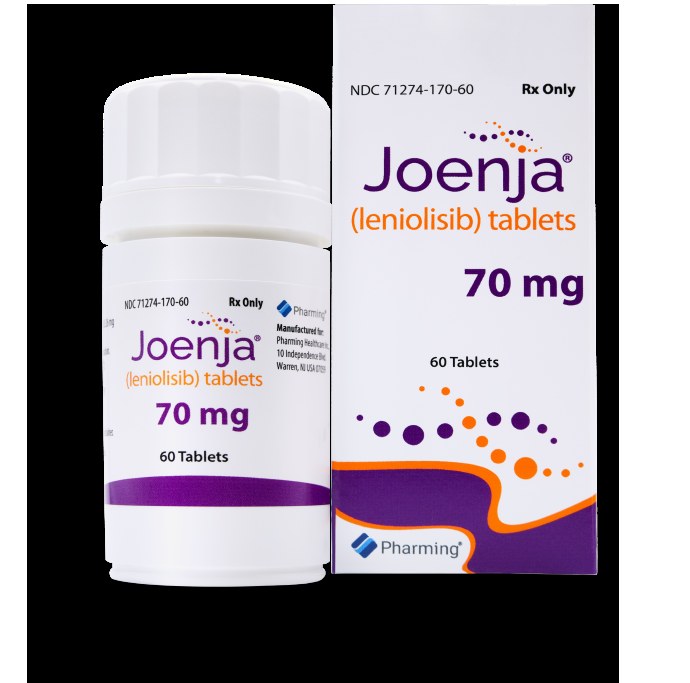
Pharming Group has won FDA approval to extend Joenja (leniolisib) to children ages 4 to 11 who weigh at least 27 kilograms, making it the first FDA-approved treatment for that age group with Activated PI3K-Delta Syndrome (APDS), an ultra-rare primary immunodeficiency. The Leiden, Netherlands company announced the supplemental approval on 11 September 2026 — more than six weeks ahead of the FDA’s own 24 October target action date, and roughly three years after Joenja’s original approval for patients 12 and older.
APDS in four numbers
Figures from the 11 September 2026 announcement and Pharming’s full-year 2025 results.
Six weeks early, eight years younger
Pharming first won FDA approval for Joenja in March 2023, for patients 12 and older — itself the first approved APDS treatment for any age. Extending that approval downward has not been straightforward: FDA issued a Complete Response Letter on Pharming’s original pediatric application around 30 January 2026, the company held a Type A meeting with the agency in late March, and a resubmitted application was accepted for review on 4 June 2026 with an October 24 target action date. The 11 September approval landed six weeks ahead of that date.
The approval covers children 4 to 11 years old weighing at least 27 kilograms, dosed at 40 mg or 50 mg twice daily. A separate supplemental application, filed 30 July 2026, seeks a lower-dose regimen for children weighing 13 kilograms to under 27 kilograms; that filing remains under review, so today’s approval does not yet reach the youngest or smallest patients in the 4-to-11 bracket.
Switching off the pathway, not treating the infections
Joenja’s active ingredient, leniolisib, is an oral, selective inhibitor of the p110δ catalytic subunit of PI3Kδ. In APDS, mutations in the PIK3CD or PIK3R1 genes leave that pathway hyperactive, driving abnormal T-cell and B-cell development. By suppressing PI3Kδ signaling, leniolisib is designed to normalize circulating naive and transitional B cells, reduce senescent T-cell populations, and lower inflammatory markers — effects the company says translate clinically into reduced lymphadenopathy and spleen size.
The pediatric approval was supported by a multinational, open-label, single-arm Phase III study in children 4 to 11, which showed improvement in lymphadenopathy and naive B-cell percentages after 12 weeks of treatment. The company reported only mild-to-moderate treatment-emergent adverse events — most commonly abdominal pain, cough and respiratory tract infection — and no drug-related serious adverse events.
Why leniolisib is the only game in APDS
The only targeted therapy
Leniolisib is the sole approved treatment for APDS anywhere; GeneReviews lists the off-label mTOR inhibitor sirolimus only for patients who cannot get it. This approval extends that monopoly down to age four.
Treats the cause, not the infections
Immunoglobulin replacement and prophylactic antibiotics manage the consequences of APDS. Leniolisib switches off the hyperactive PI3Kδ pathway itself — shrinking lymph nodes and restoring naive B cells in a randomized Phase III, with five-year extension data behind it.
A disease Pharming keeps finding
Pharming discovered APDS as a diagnosis as much as a market: identified patients rose from about 880 to roughly 1,000 in a year, and every label expansion widens the funnel for a condition that takes a median seven years to name.
A market the size of its diagnosis rate
APDS is an ultra-rare market, and Joenja is the whole of it: there is no competing approved product, so the size of the opportunity is set by diagnosis rather than by share. Joenja revenue reached $58.2 million in 2025, up 29%, with the fourth quarter growing 53% to $19.8 million — before this pediatric label, before the August 2026 launch in Japan and before Europe, where CHMP gave a positive opinion in March 2026.
Joenja revenue, 2024 to 2025
$45.0M → $58.2M
Joenja net revenue, 2024 to 2025, from Pharming’s full-year results; Pharming guides to $405–425 million of total 2026 revenue across both products.
Sources: Pharming Group, full-year 2025 results
Regulatory News outlook
We expect Joenja to pass $100 million a year in 2027, with the pediatric label, Japan and Europe adding patients to a franchise that was already growing 29% a year without them.
How we got here: The fourth quarter of 2025 ($19.8 million) annualises to $79 million before any 2026 launch; growth at the 2025 rate of 29% on the $58.2 million base gives $75 million in 2026 and $97 million in 2027, and the three new patient pools push that over the line. The growth-rate carry-forward is our assumption, not the company’s guidance.
Joenja beside what APDS patients had before
| Option | What it is | Status for APDS | Evidence |
|---|---|---|---|
| Joenja / leniolisib (Pharming) | Oral, selective PI3Kδ inhibitor | FDA-approved: ages 12+ since March 2023; ages 4–11 (≥27 kg) since September 2026 | Randomized Phase III: smaller index lymph nodes, more naive B cells; durable to five years in extension |
| Sirolimus | mTOR inhibitor, off-label | Not approved for APDS; recommended when leniolisib is unavailable | Registry and case series for lymphoproliferation |
| Immunoglobulin replacement + antibiotic prophylaxis | Supportive therapy | Standard for antibody deficiency generally | Reduces infections; does not treat lymphoproliferation or the underlying pathway |
| Hematopoietic stem cell transplant | Curative-intent procedure | Reserved for severe or refractory disease | Case series; significant procedural risk |
From FDA labelling, GeneReviews and published reviews; not a head-to-head clinical comparison.
From Leiden to the first pediatric label
Thirty-eight years to a pediatric label
- 1988
Pharming founded in Leiden
- 2019
Leniolisib licensed from Novartis
Pharming takes on the PI3Kδ inhibitor then known as CDZ173.
- March 2023
Joenja approved for ages 12 and up
The first approved treatment for APDS.
- January 2026
Complete Response Letter on the pediatric application
- June 2026
Resubmission accepted
Target action date 24 October 2026.
- August 2026
Japan launch
Adults and children from age four.
- 11 September 2026
FDA approves the 4–11 label
40 mg and 50 mg twice daily for children weighing at least 27 kg.
- October 2026
Pediatric doses available in the U.S.
- Under review
13–27 kg weight band
Supplemental application filed 30 July 2026; no decision date stated.
A seven-year diagnostic delay, and what a label does about it
APDS is an ultra-rare, genetically defined primary immunodeficiency: patients suffer recurrent sinopulmonary infections often beginning in infancy, along with lymphoproliferation, autoimmune cytopenias and an elevated lifetime risk of lymphoma. Because its presentation overlaps with more common antibody deficiencies, it is frequently misdiagnosed as common variable immunodeficiency until genetic testing identifies a PIK3CD or PIK3R1 variant. Before this approval, no FDA-cleared treatment existed for APDS patients younger than 12; children 4 to 11 who weigh enough now have one, closing a meaningful gap in a disease Pharming discovered and has spent a decade turning into a treatable diagnosis rather than a genetic dead end.
“Today’s approval marks an important achievement in our efforts to expand the availability of Joenja to more individuals living with APDS.” Leverne Marsh, Chief Commercial Officer, Pharming Group — 11 September 2026 announcement
October, then the 13-kilogram question
- Availability: the newly approved 40 mg and 50 mg pediatric doses are expected to reach eligible U.S. patients in October 2026.
- Younger children: the pending sNDA for the 13–27 kg weight band remains under FDA review, with no stated decision date.
- Japan: Pharming launched Joenja commercially there in August 2026 for adult and pediatric APDS patients 4 and older — ahead of the equivalent U.S. approval for the youngest patients.
- European Union: CHMP issued a positive opinion in March 2026 recommending approval for adults and children 12 and older; that opinion does not yet extend to the 4-to-11 age group covered by this U.S. approval.
What is not yet public: FDA has not posted an updated Drugs@FDA label reflecting this specific supplement number, and the agency’s prescribing-information archive still shows the most recent posted revision predating this approval. We will update this page when the record appears.
Sources & further reading
- Pharming Group, “FDA approves Pharming’s Joenja® as first treatment for children with APDS in the U.S.,” press release, 11 September 2026. globenewswire.com
- U.S. Food and Drug Administration, “FDA approves first treatment for children aged 4-11 years with APDS, a rare genetic disorder of the immune system.” fda.gov
- Erin Hunter, “FDA Approves Leniolisib for Children 4 to 11 Years With APDS,” Drug Topics, September 2026. drugtopics.com
- Pharming Group investor relations — stock information. usir.pharming.com
- Pharming Group, “Pharming Group reports fourth quarter and full year 2025 financial results,” 12 March 2026. globenewswire.com
- Pharming Group, “FDA approves Pharming’s Joenja® as first treatment for children with APDS in the U.S.” (company newsroom copy, with APDS background). pharming.com
- GeneReviews, “Activated PI3K Delta Syndrome” — targeted treatment table (leniolisib, sirolimus). ncbi.nlm.nih.gov
- Zhu et al., “Activated phosphoinositide 3-kinase delta syndrome: pathogenesis, clinical manifestations, and treatment,” Pediatric Discovery, 2024 (PMC). pmc.ncbi.nlm.nih.gov
Regulatory News reports on public regulatory documents. It is not legal advice, and the primary sources above govern. If we have made an error, we will say so in public: see corrections.
Frequently asked questions
What did FDA approve for Pharming’s Joenja?
A supplemental New Drug Application extending Joenja (leniolisib), dosed at 40 mg or 50 mg twice daily, to children ages 4 to 11 who weigh at least 27 kilograms and have Activated PI3K-Delta Syndrome (APDS). It is the first FDA-approved APDS treatment for that age group, announced 11 September 2026.
What is APDS?
Activated PI3K-Delta Syndrome is an ultra-rare primary immunodeficiency caused by variants in the PIK3CD or PIK3R1 genes. It causes recurrent sinopulmonary infections, lymphoproliferation (enlarged lymph nodes and spleen), autoimmunity and an increased risk of lymphoma, and is often mistaken for common variable immunodeficiency before genetic testing confirms it.
Does this approval cover younger or lighter children too?
No. This approval is limited to children weighing at least 27 kilograms. Pharming submitted a separate supplemental application on 30 July 2026 seeking lower doses for children weighing 13 kilograms to less than 27 kilograms, which remains under FDA review.
When will the newly approved doses be available?
Pharming says the 40 mg and 50 mg pediatric doses are expected to reach eligible U.S. patients in October 2026 through its specialty distribution network.