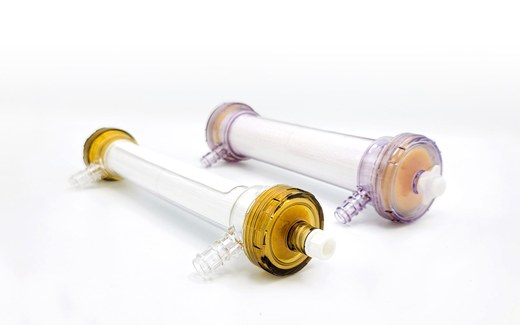


Novocure has won approval from Japan's Ministry of Health, Labour and Welfare for Optune Pax, its Tumor Treating Fields device, for adults with unresectable, locally advanced pancreatic cancer used alongside gemcitabine and nab-paclitaxel chemotherapy. The 1 October 2026 approval is Optune Pax's third major-market authorization in 2026, following the FDA in February and an EU CE Mark in June, for a disease where Japan's five-year survival rate remains around 10%.
Optune Pax's Japan approval, in four figures
Figures from Novocure's 1 October 2026 announcement, its PANOVA-3 trial data (ASCO, 31 May 2025) and published cancer-registry statistics.
A $515 million category gets a third country
Tumor Treating Fields remains a small device category by dollar terms, which makes geographic expansion — rather than price — the main lever for growth. Coherent Market Insights, in an April 2026 report, valued the global TTFields market at about $515.6 million in 2026, rising to roughly $1.43 billion by 2033; Research and Markets, publishing the same month, put 2026 at a close but not identical $483.8 million, rising to about $1.65 billion by 2034. The two estimates disagree by roughly 6% in 2026 and diverge further by the end of each forecast window — a reminder that even narrowly scoped device-category forecasts vary by publisher.
Tumor Treating Fields, two forecasts
$515.6M → $1.43B
Global Tumor Treating Fields device market, 2026 to the early 2030s, as forecast by Coherent Market Insights (April 2026) and Research and Markets (April 2026).
Sources: Coherent Market Insights, Tumor Treating Fields Market, April 2026 · Research and Markets, Tumor Treating Fields Market Outlook, April 2026
Regulatory News outlook
We expect pancreatic cancer to become Novocure's second-largest Optune indication within two to three years of the Japan approval, well short of overtaking the longer-established glioblastoma franchise.
How we got here: Novocure disclosed more than 280 active Optune Pax patients in the EU as of 30 June 2026, about four months after its first EU approval; applying a similar early adoption pace to Japan and the U.S. over the following two to three years plausibly reaches a four-figure global active-patient count, still a fraction of Optune Gio's glioblastoma base built since 2011.
What Japan actually authorized
Japan's Ministry of Health, Labour and Welfare approved Novocure's Optune Pax for adult patients with unresectable, locally advanced pancreatic cancer, for use alongside gemcitabine and nab-paclitaxel chemotherapy — the same indication FDA approved in February and the European Commission's CE Mark covered in June. Hidehito Kotani, Novocure's senior vice president and head of Asia Pacific, described the approval as an important milestone for the company's work on hard-to-treat cancers including pancreatic cancer, and said the device represents a fundamentally different treatment approach for solid tumors. The approval rests on PANOVA-3, a 571-patient randomized trial whose full results were presented at ASCO in May 2025 and simultaneously published in the Journal of Clinical Oncology.
“[Optune Pax] provides a promising new treatment option for locally advanced pancreatic cancer.” Dr. Makoto Ueno, Director of Gastroenterology, Kanagawa Cancer Center — 1 October 2026 announcement
An electric field, not a chemical
Tumor Treating Fields are low-intensity, alternating electric fields delivered non-invasively through arrays worn on the skin, tuned to a frequency the company sets per tumor type (150 kHz for pancreatic cancer and lung cancer, 200 kHz for glioblastoma and ovarian cancer in its trials). Novocure's published science describes the fields as disrupting mitotic spindle formation in rapidly dividing cells during cell division — a physical mechanism distinct from chemotherapy's chemical action — though the company's own materials acknowledge open questions about the exact mechanism.
Three things that set Optune Pax apart
A physical mechanism, not a drug
TTFields are applied non-invasively through skin arrays rather than absorbed systemically, a mechanism Novocure says is non-thermal and targets rapidly dividing cells more than slower-dividing healthy tissue.
Added to chemo, not instead
In PANOVA-3, TTFields were layered onto standard gemcitabine/nab-paclitaxel rather than replacing it, and reporting on the trial found no increase in systemic chemotherapy-related toxicity — the dominant side effect was localized skin reactions under the arrays.
A third market in one year
Optune Pax went from FDA approval in February 2026 to an EU CE Mark in June and Japan's MHLW approval in October — three major-market authorizations inside eight months for the same indication.
Optune Pax against pancreatic cancer's standard regimens
| Approach | Mechanism | Median overall survival | Regulatory status |
|---|---|---|---|
| Optune Pax + gem/nab-paclitaxel (Novocure) | Tumor Treating Fields, added to chemotherapy | 16.2 months (PANOVA-3, HR 0.82, p=0.039) | Approved: U.S. (Feb 2026), EU (Jun 2026), Japan (Oct 2026) |
| Gemcitabine + nab-paclitaxel alone | Chemotherapy | 14.2 months (PANOVA-3 control arm) | Standard regimen, long approved |
| FOLFIRINOX | Four-drug combination chemotherapy | 24.2 months (pooled meta-analysis; not a head-to-head trial) | Standard regimen, long approved |
From each regimen's own trial data and published announcements; FOLFIRINOX's figure comes from a separate pooled analysis, not a trial against Optune Pax, so is not directly comparable.
From a Haifa basement to three continents
From a Technion lab to a third pancreatic cancer approval
- 2000
Founded in Haifa
Technion biophysicist Yoram Palti revisits his own decades-old doctoral research on electric fields in nerve fibers, hypothesizing it could disrupt cancer-cell division.
- 8 April 2011
First TTFields approval
FDA approves the NovoTTF-100A System, later branded Optune, for recurrent glioblastoma.
- 2 October 2015
Lists on Nasdaq
Novocure debuts on the Nasdaq Global Select Market under the ticker NVCR.
- May 2019
Optune Lua approved
FDA approves TTFields for malignant pleural mesothelioma under the Humanitarian Device Exemption pathway.
- 31 May 2025
PANOVA-3 reads out
Full pivotal pancreatic cancer trial results are presented at ASCO and published in the Journal of Clinical Oncology.
- 11 February 2026
FDA approves Optune Pax
The first new approved treatment option for locally advanced pancreatic cancer in nearly 30 years, per Novocure.
- 30 June 2026
EU CE Mark; Germany launch
Optune Pax reaches its first EU market, with more than 280 active patients by the end of the quarter.
- 1 October 2026
Japan's MHLW approves Optune Pax
The device's third major-market authorization for locally advanced pancreatic cancer in 2026.
- Ahead
Further country filings
Novocure has disclosed no confirmed regulatory timeline for additional countries; the company's Q1 2026 filing also described redesigning a separate metastatic lung cancer trial.
What a third approval still leaves open
Pancreatic cancer remains one of the hardest cancers to treat: Japan's National Cancer Center put the five-year survival rate at about 10% in a November 2025 report describing no significant improvement over time, among the lowest of any cancer type the registry tracks. Novocure's own disclosures leave real gaps for regulatory readers to track: no Optune Pax filing status has been found for South Korea, China or Taiwan, and the company's Optune Gio franchise for glioblastoma — approved since 2011 — still dwarfs the newer pancreatic cancer indication in scale.
- Three markets, one indication: Optune Pax is now authorized in the U.S., EU and Japan for locally advanced pancreatic cancer, inside roughly eight months.
- Not yet confirmed: no public filing status was found for South Korea, China or Taiwan.
- Pipeline context: Novocure's earlier-stage PANOVA-4 trial reported a 74% disease control rate versus a 48% historical control for first-line combination use, separate from this approval.
- What is not yet known: Japan-specific pricing, reimbursement and launch timing were not stated in the 1 October 2026 announcement.
Sources & further reading
- Novocure Limited, “Novocure's Optune Pax® Receives Approval in Japan for the Treatment of Unresectable Locally Advanced Pancreatic Cancer,” SEC Form 8-K Exhibit 99.1, 1 October 2026. sec.gov
- OncLive, “Optune Pax Is Approved in Japan for Unresectable Locally Advanced Pancreatic Cancer,” 1 October 2026. onclive.com
- Novocure, “U.S. FDA Approves Novocure's Optune Pax® for the Treatment of Locally Advanced Pancreatic Cancer,” 11 February 2026. businesswire.com
- Novocure, “Novocure's Optune Pax® Receives CE Mark for the Treatment of Locally Advanced Pancreatic Cancer,” 30 June 2026. investor.novocure.com
- Novocure, PANOVA-3 full data presentation and Journal of Clinical Oncology publication, ASCO Annual Meeting, 31 May 2025. sec.gov
- ClinicalTrials.gov, PANOVA-3, NCT03377491. clinicaltrials.gov
- AACR, in memoriam, Yoram Palti. aacr.org
- World Cancer Research Fund, pancreatic cancer statistics (GLOBOCAN 2022, Japan). wcrf.org
- Adnkronos, “Japan 5-Year Pancreatic Cancer Survival Rate at 10.2-10.7 Pct,” citing Japan's National Cancer Center, 19 November 2025. adnkronos.com
- Coherent Market Insights, Tumor Treating Fields Market, April 2026. coherentmarketinsights.com
- Research and Markets, Tumor Treating Fields Market Outlook, April 2026. researchandmarkets.com
Regulatory News reports on public regulatory documents. It is not legal advice, and the primary sources above govern. If we have made an error, we will say so in public: see corrections.
Frequently asked questions
What did Japan approve for Novocure?
Japan's Ministry of Health, Labour and Welfare approved Optune Pax, a Tumor Treating Fields device, for adults with unresectable, locally advanced pancreatic cancer, used alongside gemcitabine and nab-paclitaxel chemotherapy. Approved 1 October 2026.
Is this Optune Pax's first approval?
No. The FDA approved Optune Pax for the same indication on 11 February 2026, and the EU granted a CE Mark on 30 June 2026 (Germany was the first EU launch market). Japan is its third major-market authorization in 2026.
How does Tumor Treating Fields therapy work?
Optune Pax delivers low-intensity, alternating electric fields through arrays worn on the skin. The fields are described as disrupting mitotic spindle formation in rapidly dividing cancer cells, a physical rather than chemical mechanism, used in addition to standard chemotherapy rather than in place of it.
What did the pivotal trial show?
PANOVA-3 reported a median overall survival of 16.2 months for TTFields plus gemcitabine/nab-paclitaxel versus 14.2 months for chemotherapy alone (hazard ratio 0.82, p=0.039), without a reported increase in systemic chemotherapy-related toxicity.