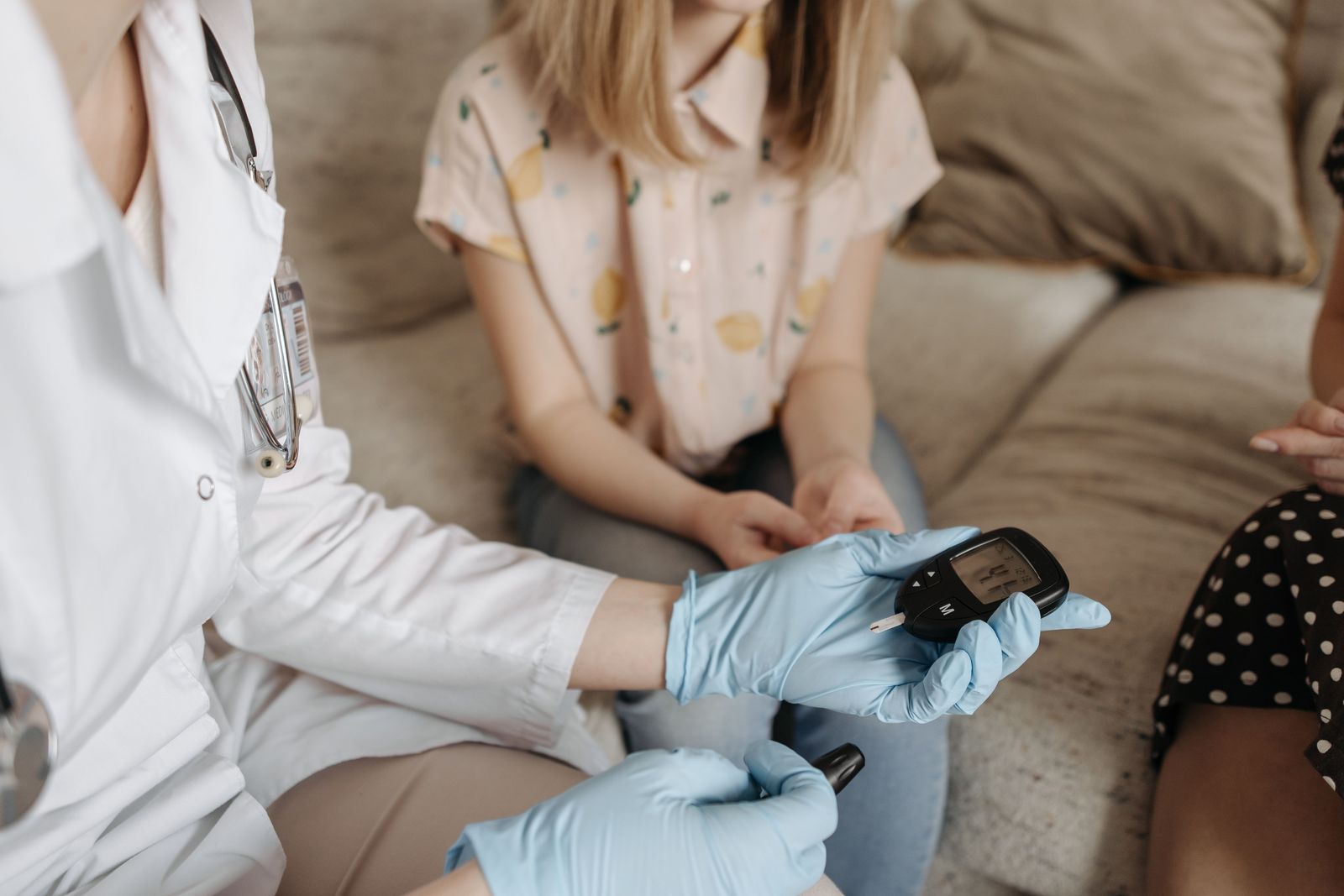

The U.S. Food and Drug Administration approved Onswik (insulin efsitora alfa-gobe) on 24 September 2026 as an adjunct to diet and exercise to improve glycemic control in adults with type 2 diabetes, giving prescribers a second once-weekly basal insulin six months after Novo Nordisk’s Awiqli. Eli Lilly says the Onswik KwikPen will reach U.S. pharmacies “in the coming months.”
Who is a candidate, and who is not
The label is narrow in one direction and broad in another. It excludes type 1 diabetes outright: Onswik is “not recommended” there because the 52-week QWINT-5 trial saw Level 3 (severe) hypoglycemia in 10% of patients on efsitora against 3% on degludec. Within type 2 diabetes, though, the four registration trials covered the full basal-insulin population — adults inadequately controlled on one to three non-insulin agents (metformin, SGLT2 inhibitors, DPP-4 inhibitors, GLP-1 receptor agonists, thiazolidinediones) who were starting insulin, adults already on daily basal insulin, and adults on basal plus mealtime lispro. Baseline A1C ran from 6.5% to 10.5% depending on the trial.
The most natural first patients are insulin-naive adults for whom the daily injection itself is the barrier: the patient who has declined basal insulin twice, the patient whose spouse or home-health aide gives the injections, the patient in assisted living where a weekly visit is easier to organise than a nightly one. The trials were open-label and treat-to-target, so they say nothing about whether weekly dosing improves real-world adherence; they only show that when both regimens are titrated properly, A1C lands in the same place.
How the weekly dose is built
Two pens, two titration paths. The U-500 KwikPen dials in 5-unit steps up to 400 units per injection; the U-1,000 KwikPen dials in 10-unit steps up to 800 units, for patients with substantial insulin resistance. The injection is subcutaneous, once weekly on the same day, into abdomen, upper arm, thigh or buttock. Because the full effect of any dose change takes about four weeks to appear, the label tells prescribers not to adjust during acute illness or short-term changes in diet or activity; manage those with other agents or glucose intake instead.
- Start at 100 units once weekly.
- After at least 4 weeks on a stable dose, if the fasting glucose is still above 130 mg/dL, step to 150, then 250, then 400 units, one step per 4 weeks.
- Withhold any increase if the patient had hypoglycemia in the prior week, until it is explained and resolved.
- If fasting glucose is below 130 mg/dL but the goal is not met, or more than 400 units is needed, titrate by 20 to 40 units per week.
The alternative for insulin-naive patients is a flexible start: a one-time 300-unit dose in week one, 100 units in week two, then 20 to 40 units of adjustment per week. Switching from daily basal insulin uses the same logic scaled to the patient: the first week’s one-time starting dose is the total daily basal dose × 7 × 3, the second week is the daily dose × 7, then 20 to 40 units a week. For patients whose fasting glucose on daily basal is already 120 mg/dL or lower, the label suggests omitting the loading dose and starting at daily dose × 7, accepting four to six weeks of transient hyperglycemia. The first Onswik dose goes in the day after the last daily basal dose, with closer glucose monitoring until stable.
A missed dose can be taken within 4 days without moving the schedule. Beyond 4 days, either skip to the next scheduled dose or take it and reset the weekly day. If a loading dose or a weekly dose is given twice, skip the next week and watch for hypoglycemia. Those rules matter because the drug cannot be withdrawn quickly: a patient admitted for surgery or started on high-dose steroids is carrying up to two weeks of basal insulin that no one can take back.
Four trials, one answer on A1C
The QWINT programme randomised more than 3,400 adults with type 2 diabetes across four open-label, treat-to-target trials, each against a daily basal insulin given per its own label. Every one met its non-inferiority margin of 0.4 percentage points on A1C, and in none did the weekly insulin come out ahead by a clinically meaningful amount. The figures below are the label’s least-squares means.
The registration trials at a glance
From the Onswik prescribing information, Tables 6–9 (least-squares mean change from a baseline A1C of 7.8–8.3%).
Two details from the fixed-ladder trial are worth carrying into clinic. First, the ladder is not a ceiling: by week 52, 23.7% of QWINT-1 patients had been titrated beyond 400 units, and the mean weekly dose was 303 units (about 43 units a day) against 333 units a week of glargine. Second, dose distribution was wide — 18% were still on 100 units and 8.7% on exactly 400 — so a starting dose of 100 units is a starting point, not a prediction.
Where Onswik sits among basal insulins
| Onswik (efsitora) | Awiqli (icodec) | Daily glargine U-100 | |
|---|---|---|---|
| U.S. status | Approved 24 Sep 2026; launch “in the coming months” | Approved March 2026; U.S. launch planned for second half of 2026 | Marketed; biosimilars available |
| Dosing | Once weekly, same day; 52 injections a year | Once weekly, same day; 52 injections a year | Once daily; 365 injections a year |
| Pen and strength | KwikPen U-500 (to 400 U/injection) and U-1,000 (to 800 U) | FlexTouch 700 units/mL | U-100 pens and vials; U-300 (Toujeo) also available |
| Starting in insulin-naive adults | 100 U weekly, fixed steps to 150/250/400 no sooner than every 4 weeks; or 300 U once then 100 U | Per its label (weekly, with a one-time additional starting dose when switching) | Typically 10 U daily, adjusted 3–6 U weekly to a fasting target |
| Evidence in type 2 diabetes | QWINT-1 to -4: 3,400+ adults, A1C non-inferior to glargine and degludec | ONWARDS: about 2,680 adults, A1C reduction vs daily basal insulin | Reference comparator in both programmes |
| Type 1 diabetes | Not recommended (severe hypoglycemia 10% vs 3%) | Not indicated in the U.S. | Indicated |
Awiqli particulars from Novo Nordisk’s 27 March 2026 announcement; glargine particulars from the QWINT-1 comparator arm as described in the Onswik label. Prescribe from the current labels, not this table.
Hypoglycemia is where the trials differ
The A1C story is uniform; the hypoglycemia story is not. In QWINT-1, the fixed ladder produced fewer clinically significant or severe events than daily glargine — 0.50 versus 0.88 per participant-year, an estimated rate ratio of 0.57 — which is the finding most likely to shape primary-care prescribing. In patients switched from daily basal insulin (QWINT-3), the combined rate over 78 weeks ran slightly higher on efsitora, 0.84 versus 0.74 per patient-year. With mealtime lispro on board (QWINT-4), moderate or severe hypoglycemia did not differ (6.6 vs 5.9 per patient-year) but mild episodes were more frequent with efsitora (25.3 vs 19.0). The label’s own table reads the same way: the proportion of patients with at least one Level 2 or Level 3 episode rose from 25.9% in the fixed-ladder trial to 27.9% on the flexible start, 40.9% after a switch, and 55.6% on basal-bolus therapy; severe (Level 3) events stayed at 0.3% to 1.4%.
The warnings are those of any basal insulin plus two that belong to a weekly one. Hypokalemia, fluid retention and heart failure with thiazolidinediones, and hypersensitivity reactions carry over. Specific to Onswik: the label warns of serious hypoglycemia from mix-ups between weekly and daily insulins or weekly GLP-1 agonists, from dialling the pen’s maximum (400 or 800 units) when that is not the dose, from drawing the U-500 or U-1,000 solution into a syringe, and from repeating the one-time starting dose. Prescribers who e-prescribe both strengths should expect that the concentration, not the unit count, is the field that will be transcribed wrongly.
Availability, coverage and cost
Onswik is approved but not yet on sale; Lilly’s only timing is “the coming months,” and neither a list price nor a savings programme has been announced. Coverage is therefore uncertain in every channel. What is settled is the rule that will apply once a Medicare Part D plan lists it: under the Inflation Reduction Act, a one-month supply of any covered insulin product costs the beneficiary no more than $35 with no deductible. Whether Onswik appears on 2026 formularies mid-year or waits for 2027 is a plan-by-plan decision, and commercial payers will decide their own prior-authorization and step-therapy rules against daily basal insulins that are far cheaper. Because it is a self-administered pharmacy-benefit product, there is no procedure code for the physician; the practice’s exposure is prior-authorization time, not billing.
The competitive timing matters for formulary committees. Awiqli, approved in March, is scheduled to launch nationally in the second half of 2026, so two weekly basal insulins will be seeking placement at once. Expect plans to prefer one, and expect the preferred one to change.
What changes in the exam room
- Patient selection. Insulin-naive type 2 diabetes with A1C above goal on oral agents or a GLP-1 agonist, where injection burden or supervised dosing is the obstacle. Patients stable and at goal on a daily basal insulin have no evidence-based reason to switch.
- Titration workload. The fixed ladder replaces weekly 2-unit nudges with a decision every four weeks from a fasting-glucose log; nurse-led protocols can be written around three numbers (130 mg/dL, 4 weeks, 20–40 units).
- Counselling that must happen at the first prescription. Same day each week; the loading dose is once only; what to do at 4 days; that the pen strength and the dose are different things; hypoglycemia recognition, because the exposure lasts.
- Sick days, surgery and steroids. Do not titrate; plan around the fact that a weekly dose cannot be held. Anaesthesia and inpatient teams need the drug name and last dose in the chart.
- Basal-bolus patients. Expect more mild hypoglycemia and more mealtime-insulin adjustment; QWINT-4 is the relevant trial.
- Not for type 1 diabetes, and not studied in pregnancy: the label reports animal data only.
The honest summary is that Onswik does not lower glucose better than the insulins physicians already use. What it changes is the shape of the regimen: one injection a week, a titration schedule that a patient can follow from a card, and a hypoglycemia signal that favours the fixed ladder in insulin-naive patients and cuts the other way once mealtime insulin is added. For a practice, the work is upfront — choosing candidates, teaching the dose rules, and waiting for a formulary answer — rather than in follow-up. Every story on this desk is filed by specialty on the For Physicians front.
How Onswik got here, and what is next
- Jan 2023
QWINT-1 begins
795 insulin-naive adults randomised to weekly efsitora on a fixed ladder or daily glargine.
- Sep 2024
QWINT-2 presented at EASD
Non-inferior A1C versus degludec in 928 insulin-naive adults on a flexible start.
- 2025
QWINT-1, -3 and -4 published
NEJM (QWINT-1) and The Lancet (QWINT-3 and -4) report the full results.
- 27 Mar 2026
Awiqli approved
Novo Nordisk’s insulin icodec becomes the first U.S. weekly basal insulin.
- 24 Sep 2026
FDA approves Onswik
Adults with type 2 diabetes; the fourth global approval after EMA, PMDA and COFEPRIS.
- H2 2026
Awiqli U.S. launch
Two weekly insulins compete for formulary position.
- Coming months
Onswik reaches pharmacies
Price, savings programme and coverage still to be announced.
Sources & further reading
- FDA, “FDA Approves Once-Weekly Insulin for Type 2 Diabetes Mellitus,” Drugs news, 24 September 2026. fda.gov
- Onswik (insulin efsitora alfa-gobe) injection, U.S. prescribing information, Eli Lilly and Company, revised 09/2026 — sections 1, 2, 5, 6.1 (Table 4) and 14 (Tables 6–9). pi.lilly.com
- Eli Lilly and Company, “U.S. Food and Drug Administration (FDA) approves Lilly’s Onswik™ (insulin efsitora alfa-gobe), a once-weekly basal insulin injection treatment for adults living with type 2 diabetes,” 24 September 2026. investor.lilly.com
- Bergenstal RM et al., “Weekly Fixed-Dose Insulin Efsitora in Type 2 Diabetes without Previous Insulin Therapy” (QWINT-1), New England Journal of Medicine, 2025. nejm.org
- “Once-weekly insulin efsitora alfa versus once-daily insulin degludec in adults with type 2 diabetes currently treated with basal insulin (QWINT-3),” The Lancet 2025;405:2279–2289. thelancet.com
- “Once-weekly insulin efsitora alfa versus once-daily insulin glargine U100 in adults with type 2 diabetes treated with basal and prandial insulin (QWINT-4),” The Lancet 2025;405:2290–2301. thelancet.com
- ClinicalTrials.gov NCT05662332, “A Study of Insulin Efsitora Alfa (LY3209590) Compared to Glargine in Adult Participants With Type 2 Diabetes Who Are Starting Basal Insulin for the First Time (QWINT-1).” clinicaltrials.gov
- Novo Nordisk A/S, “Awiqli® approved in the US, the first and only once-weekly basal insulin treatment for adults with type 2 diabetes,” 27 March 2026. globenewswire.com
- Medicare.gov, “Insulin” — the $35 monthly cap and deductible rule for covered insulin products under Part B and Part D. medicare.gov
undefined
Frequently asked questions
Can Onswik be used in type 1 diabetes?
No. The label says it is not recommended in type 1 diabetes because of an increased risk of severe hypoglycemia: in the 52-week type 1 trial, Level 3 (severe) hypoglycemia occurred in 10% of patients on Onswik versus 3% on insulin degludec.
What happens if a patient misses a weekly dose?
Within 4 days, take it and keep the usual day. After more than 4 days, either skip it and take the next dose on the regular day, or take it and restart the weekly schedule one week from that day. Either way, increase glucose monitoring.
Is Onswik covered by Medicare or commercial insurance yet?
Unknown. Lilly has not announced a list price or coverage, and the product is not yet on the market. Once a Part D plan lists it, the federal $35 monthly cap on covered insulin products applies; formulary placement, prior authorization and commercial coverage are undetermined.