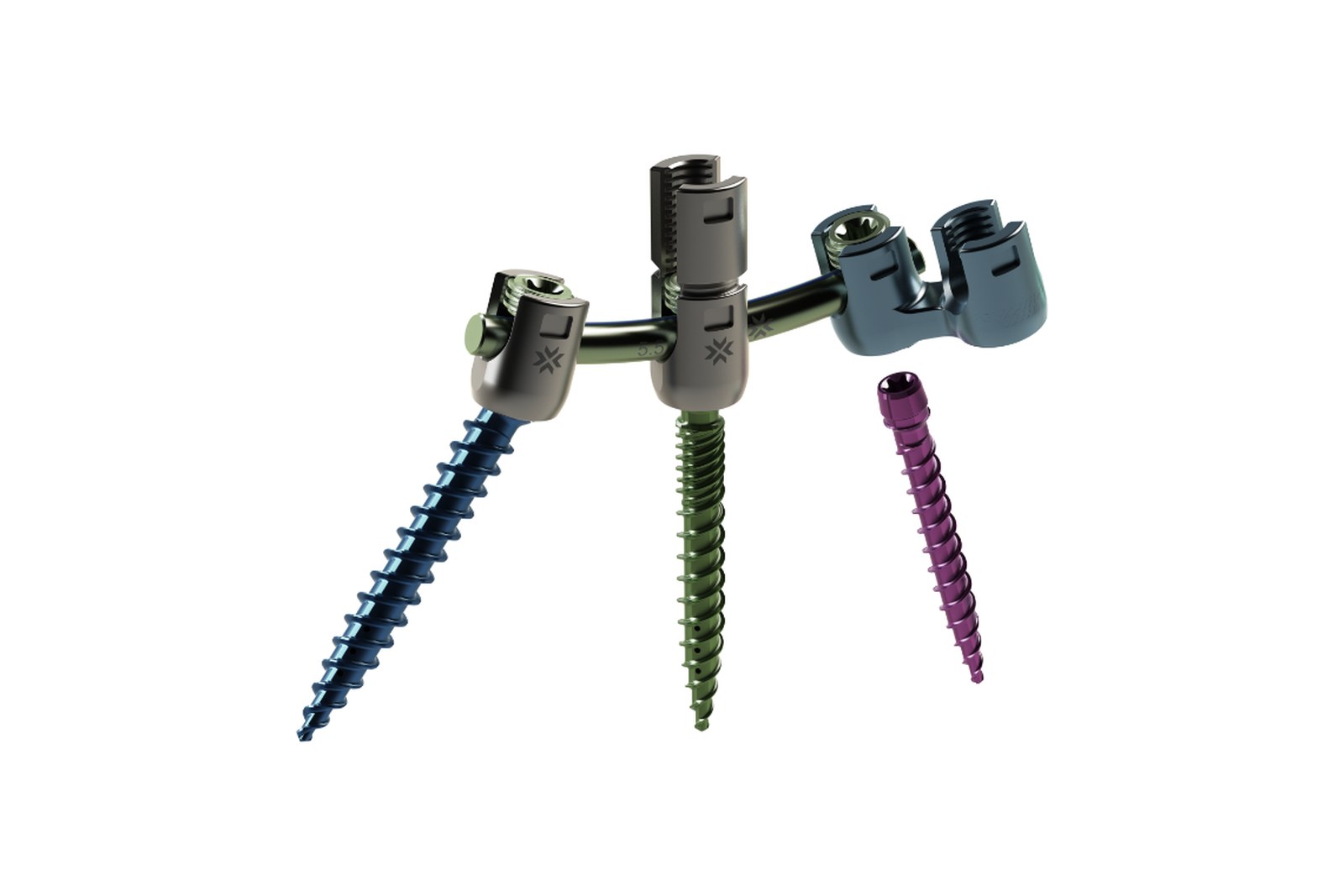


Xenix Medical has won FDA 510(k) clearance for the Riva Anchor Spinopelvic Fixation System, the Orlando, Florida implant maker's third clearance of 2026, the company announced 22 September 2026. Riva Anchor bolts onto Xenix's existing Riva posterior pedicle fixation platform to extend spinal fusion constructs into the sacroiliac joint, and carries NanoACTIV, a nano-scale surface treatment the company says promotes bone growth — a claim resting on Xenix's own description rather than an independently published study.
One surface treatment, a third device
Xenix describes NanoACTIV as a proprietary combination of micro- and nano-scaled surface textures that, in the company's own words, exhibits specific osteogenic differentiation and an endogenous cellular and biochemical response — language that recurs, largely unchanged, across every Xenix announcement that uses it. The surface first won its own FDA clearance in October 2023, applied to the company's neoWave interbody implants. Riva Anchor is its second product line and Xenix's third FDA 510(k) clearance of 2026 alone, after the base Riva Posterior Pedicle Fixation System and the Lux Expandable Lumbar Interbody Fusion System, both cleared in June.
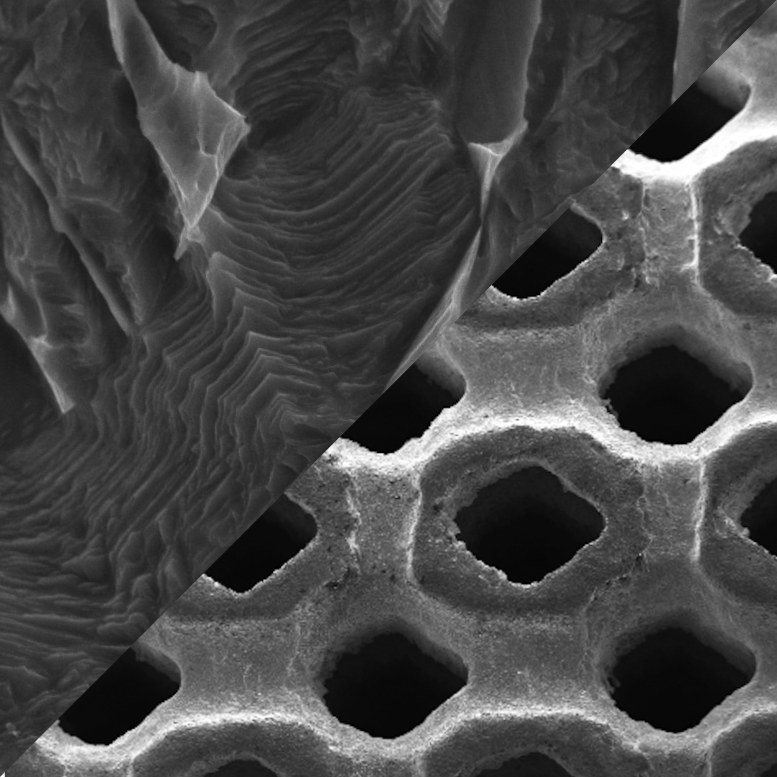
Three things Xenix is betting NanoACTIV proves
A third clearance in one year
Riva Anchor is Xenix's third FDA 510(k) clearance of 2026, following the base Riva Posterior Fixation System and the Lux Expandable Lumbar Interbody System, both cleared in June — an unusually fast cadence for a small, privately held spinal-implant maker.
A surface first proven on interbody devices
NanoACTIV won its first FDA clearance on Xenix's neoWave interbody implants in October 2023. The company says it is the only spinopelvic system FDA-designated to have an osteogenic effect; that description comes from Xenix's own announcements, not a published study Regulatory News could locate.
One implant, two existing systems
Rather than a standalone product, Riva Anchor attaches directly to the Riva posterior pedicle system Xenix cleared in June, extending lumbar and thoracolumbar fusion constructs into the sacroiliac joint without a separate implant platform.
Riva Anchor in four numbers
Figures from Xenix's own announcements; the company has not published independent clinical data behind them.
What 22 September actually cleared
FDA's clearance covers Riva Anchor as a spinopelvic fixation device: a dual-lead, fully threaded implant that Xenix says accommodates 5.5-millimeter and 6.0-millimeter rods and can be placed using navigation, fluoroscopy or an open surgical approach. It attaches to the Riva posterior pedicle system the company cleared and launched in June 2026, letting a surgeon extend a lumbar or thoracolumbar fusion construct into the sacroiliac joint without switching to a separate implant platform. Xenix says it is preparing a limited commercial launch and has invited surgeons to contact the company directly to take part.
“The addition of NanoACTIV surface technology to the rapidly-growing spinopelvic market segment cannot be overstated.” Ryan Phillips, President, Xenix Medical — in the company's 22 September 2026 announcement, as reported by Orthopedics This Week and Ortho Spine News
A joint two device makers have owned since 2008
Sacroiliac joint fusion is not a new category. SI-BONE's iFuse Implant System won its first FDA 510(k) clearance in November 2008 and an expanded indication in June 2016, backed by clinical outcomes data; the company's iFuse Bedrock spinopelvic fixation technology, the closest direct precedent for what Riva Anchor attempts, followed in April 2019. Globus Medical's SI-LOK system has been cleared since July 2011. Xenix is a late entrant into a field two larger competitors have spent a decade and a half building out, offering NanoACTIV's surface technology as its point of difference rather than a new surgical approach.
Riva Anchor against an SI joint field built since 2008
| Product | Approach | U.S. FDA clearance |
|---|---|---|
| Riva Anchor (Xenix Medical) | Dual-lead threaded implant attaching to an existing pedicle-fixation construct, with a nano-scale surface treatment | Cleared September 2026 |
| iFuse (SI-BONE) | Triangular titanium implants placed across the SI joint; expanded indication backed by clinical outcomes data | Cleared 2008; expanded indication 2016 |
| iFuse Bedrock (SI-BONE) | Spinopelvic fixation technology extending long fusion constructs to the pelvis via the SI joint | Cleared 2019 |
| SI-LOK (Globus Medical) | Threaded implant system for SI joint fixation and fusion | Cleared 2011 |
From each company's own labelling and FDA clearance records; not a clinical comparison.
Spinal fusion devices, one slice at a time
$7.03B → $9.75B
Global spinal fusion device market, 2023 actual to 2030 forecast, per Grand View Research (2024).
Sources: Grand View Research, Spinal Fusion Device Market Size, Share & Trends Report
Regulatory News outlook
Sacroiliac joint fusion is a small slice of that broader market, and we don't expect Riva Anchor to change its shape: at an illustrative 10% share of the 2030 spinal-fusion forecast, the whole SI-joint fusion category would be worth well under $1 billion a year, split across at least four cleared systems.
How we got here: 10% of Grand View Research's $9.75 billion 2030 spinal-fusion forecast is $975 million, an upper-bound illustrative estimate for the entire SI-joint fusion niche, not a company-specific projection.
A 2021 rebrand nobody outside orthopedics noticed
From HT Medical to a third 2026 clearance
- 2016
Company founded, as HT Medical
Incorporated in Florida as a spinal-implant maker.
- 7 April 2021
Renamed Xenix Medical
The company describes the change as part of a broader rebranding initiative.
- 10 October 2023
NanoACTIV's first FDA clearance
Applied to Xenix's neoWave interbody implant line.
- 2 June 2026
Riva Posterior Fixation System cleared
FDA clearance and full commercial launch of Xenix's base pedicle-fixation platform.
- 8 June 2026
Lux system cleared
FDA clearance and full commercial launch of the Lux Expandable Lumbar Interbody Fusion System.
- 22 September 2026
Riva Anchor cleared
FDA 510(k) clearance of the Riva Anchor Spinopelvic Fixation System, extending the Riva platform into the sacroiliac joint.
- Ahead
Limited commercial launch
Xenix says it is preparing a limited launch; it has not given a date.
What a private company doesn't have to say
Xenix has not disclosed who leads it day to day beyond company President Ryan Phillips, how it is funded, or how many people it employs — ordinary for a small, privately held device maker with no obligation to say more, but a real gap against the SEC filings and investor disclosures that accompany a listed competitor's product launch. The company has not published a peer-reviewed study behind NanoACTIV's osteogenic claim, and its account of Riva Anchor's specifications comes entirely from its own press materials, repeated near-verbatim across the trade outlets that covered the clearance. Xenix says a limited commercial launch is coming; it has not said when.
Sources & further reading
- Orthopedics This Week, coverage of Xenix Medical's Riva Anchor FDA clearance, 22 September 2026. orthotw.com
- Ortho Spine News, coverage of Xenix Medical's Riva Anchor FDA clearance, 22 September 2026. orthospinenews.com
- Xenix Medical, “Xenix Medical Announces FDA Clearance and Full Commercial Launch of the Riva Posterior Fixation System,” press release, 2 June 2026. businesswire.com
- Xenix Medical, “Xenix Medical Announces FDA Clearance and Full Commercial Launch of the Lux Expandable Lumbar Interbody Fusion System,” press release, 8 June 2026. businesswire.com
- Xenix Medical (as Xnix Medical), neoWave Interbody Systems receive FDA clearance for NANOACTIV nanotechnology surface, press release, 10 October 2023. businesswire.com
- SI-BONE, “iFuse: The Only SI Joint Fusion Implant With an FDA-Cleared Indication Citing Clinical Studies,” investor release. investor.si-bone.com
- SI-BONE, “SI-BONE, Inc. Announces FDA Clearance of iFuse Bedrock, Novel Spinopelvic Fixation Technology,” GlobeNewswire, 15 April 2019. globenewswire.com
- Grand View Research, Spinal Fusion Device Market Size, Share & Trends Report. grandviewresearch.com
Regulatory News reports on public regulatory documents. It is not legal advice, and the primary sources above govern. If we have made an error, we will say so in public: see corrections.
Frequently asked questions
What did FDA clear for Xenix Medical?
The Riva Anchor Spinopelvic Fixation System, a dual-lead threaded implant that attaches to Xenix's existing Riva posterior pedicle fixation platform to extend spinal fusion constructs into the sacroiliac joint, cleared 22 September 2026. It carries Xenix's NanoACTIV nano-scale surface technology, which the company says promotes bone growth.
What is NanoACTIV?
Xenix's proprietary micro- and nano-scale implant surface treatment, which the company describes as exhibiting an osteogenic effect that encourages bone growth. It first won its own FDA clearance in October 2023 on Xenix's neoWave interbody implants. The osteogenic claim rests on Xenix's own description; Regulatory News found no independently published study confirming it.
Is Xenix Medical publicly traded?
No. It is a small, privately held company based in Orlando, Florida, founded in 2016 as HT Medical and renamed Xenix Medical in 2021. It has not disclosed its funding history, leadership beyond company President Ryan Phillips, or headcount.
Who else makes SI joint fusion devices?
SI-BONE, whose iFuse system has been FDA-cleared since 2008 and whose iFuse Bedrock spinopelvic fixation technology has been cleared since 2019, and Globus Medical, whose SI-LOK system has been cleared since 2011, are the established competitors Riva Anchor is entering against.