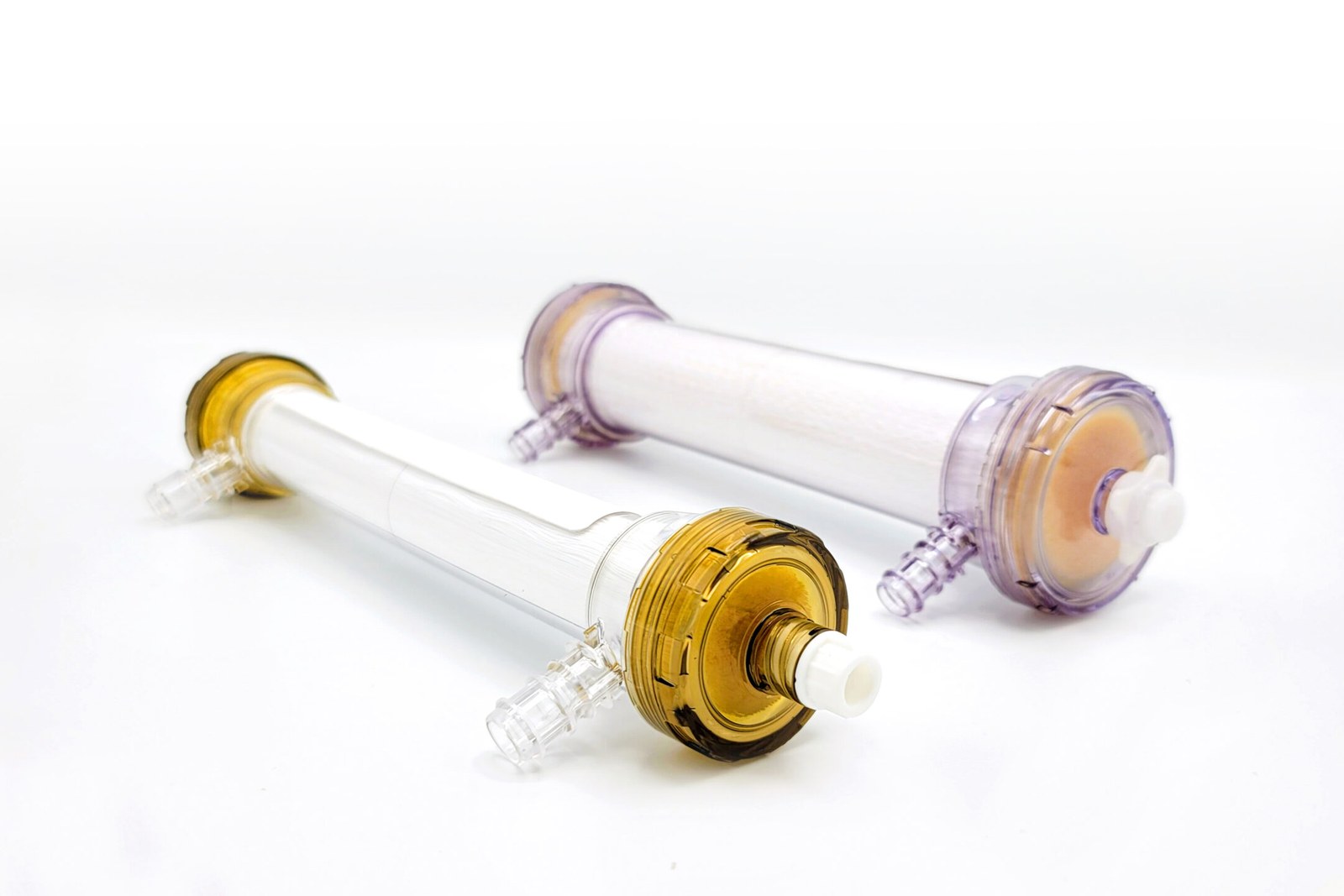


SeaStar Medical has won its seventh FDA Breakthrough Device Designation for the Selective Cytopheretic Device (SCD), this time for treating the hyperinflammation that drives organ failure in adult patients with sepsis or a septic condition. The Denver company announced the designation on 7 October 2026, extending a device platform whose pediatric sepsis version, QUELIMMUNE, has been FDA-approved and commercially available since 2024.
SCD therapy in four numbers
Figures from the 7 October 2026 announcement.
Sepsis still has no approved drug
Sepsis affects about 1.7 million U.S. adults a year and contributes to nearly one in three in-hospital deaths, according to SeaStar Medical's 7 October 2026 announcement — and no FDA-approved therapy today directly targets the dysregulated inflammatory response, the hyperinflammatory cascade of over-activated immune cells, that drives much of that mortality. Antibiotics and supportive care remain the standard of care; the inflammatory cascade itself goes untreated.
Multiple published market forecasts put a number on that gap, and they disagree sharply on its size: Global Industry Analysts estimates the global sepsis therapeutics market at $4.6 billion in 2023, growing to $7.1 billion by 2030, while GlobalData separately forecasts the sepsis and septic shock market across seven major markets reaching $7.5 billion by 2030 from a $3.48 billion 2020 base. Neither forecaster is pricing in a specific approved therapy for the hyperinflammatory mechanism SeaStar Medical's device targets, because none yet exists.
Sepsis therapeutics, sized to 2030
$4.6B → $7.1B
Global sepsis therapeutics market, 2023 to 2030, as forecast by Global Industry Analysts; GlobalData's separate 2030 estimate is shown for comparison.
Sources: Global Industry Analysts, Sepsis Therapeutics Market Size, Share & Trends Analysis and Forecast 2021–2030 · GlobalData, “Global sepsis market set to reach $7.5 billion by 2030 with the launch of new first-in-class products”
Regulatory News outlook
We expect a meaningful share of this forecast growth to depend on whether a hyperinflammation-targeted therapy, SeaStar Medical's SCD included, actually reaches approval: GlobalData explicitly ties its higher $7.5 billion figure to the launch of new first-in-class products, which today includes no approved device or drug for sepsis's inflammatory cascade.
How we got here: No new number computed; we note that GlobalData's $7.5 billion 2030 figure, versus Global Industry Analysts' $7.1 billion, already assumes first-in-class launches that have not yet happened, which is the gap SeaStar Medical's pending adult-sepsis indication would need to fill.
A seventh label for one device
FDA granted SeaStar Medical Breakthrough Device Designation for the Selective Cytopheretic Device, in adult patients with sepsis or a septic condition, on 7 October 2026 — the seventh such designation the agency has granted the SCD platform across its range of indications, including adult acute kidney injury, cardiorenal syndrome and hepatorenal syndrome. A Breakthrough Device Designation is a regulatory pathway intended to speed development, assessment and FDA review; it is not itself an approval or clearance.
“This new Breakthrough Device Designation for our SCD therapy continues to exemplify the importance and critical need for an innovative therapy that can effectively treat the hyperinflammation that destroys organs and takes far too many lives each year.” Eric Schlorff, CEO, SeaStar Medical — 7 October 2026 announcement
Cell-targeting versus broad absorption
The SCD is an extracorporeal, cell-directed device: it integrates into an existing continuous renal replacement system and is designed to selectively target and transition over-activated proinflammatory neutrophils and monocytes toward reparative processes, rather than filtering inflammatory molecules from the bloodstream broadly. That distinguishes it mechanically from the hemoadsorption devices already used off-label or under other regulatory pathways for sepsis-related hyperinflammation, such as CytoSorb (CytoSorbents) and oXiris (Baxter), which work by adsorbing cytokines and other inflammatory mediators directly from blood rather than acting on the cells producing them.
What makes SCD different
Targets cells, not molecules
SCD selectively targets over-activated neutrophils and monocytes; competing hemoadsorption devices work by adsorbing circulating cytokines and inflammatory mediators from blood.
A pediatric approval already on the record
QUELIMMUNE (SCD-PED), the same underlying technology, is FDA-approved for pediatric acute kidney injury due to sepsis — giving the adult sepsis program a related approval, not just a designation, to point to.
Seven designations, one integrated platform
The SCD has now collected Breakthrough Device Designations across adult AKI, cardiorenal syndrome, hepatorenal syndrome, cardiac-surgery-related inflammation (adult and pediatric) and now adult sepsis, all built on the same device integrated into existing CRRT systems.
SCD against hemoadsorption devices
| Product | Maker | Mechanism | U.S. sepsis-related status |
|---|---|---|---|
| Selective Cytopheretic Device (SeaStar Medical) | SeaStar Medical | Cell-directed: targets over-activated neutrophils and monocytes | QUELIMMUNE approved (pediatric); adult sepsis Breakthrough Device Designation, October 2026 |
| CytoSorb | CytoSorbents | Hemoadsorption: broad cytokine removal | Used under FDA emergency authorization pathways in the U.S.; CE marked in Europe |
| oXiris | Baxter | Hemoadsorption and endotoxin removal, integrated CRRT filter | Available in the U.S. as part of CRRT filter sets |
From each company's published descriptions and regulatory status as reported; not a clinical comparison.
What QUELIMMUNE already proved
SeaStar Medical is not starting from zero in sepsis: QUELIMMUNE, the pediatric version of the same SCD technology, became the only FDA-approved product for life-threatening acute kidney injury due to sepsis or a septic condition in critically ill children when it was approved in 2024. The company has been expanding QUELIMMUNE's hospital adoption since, while running the pivotal NEUTRALIZE-AKI trial (NCT05758077) to evaluate the adult SCD-ADULT version in patients with acute kidney injury requiring continuous renal replacement therapy.
The new Breakthrough Device Designation leans directly on that trial: SeaStar Medical says NEUTRALIZE-AKI includes pre-specified subgroup analyses of patients with sepsis or septic conditions, and that it expects to present that subgroup data to FDA for the adult sepsis indication in the near term, rather than running an entirely separate pivotal study.
From a pediatric nod to an adult trial
SeaStar’s seven designations
- 2022
First adult Breakthrough Device Designation
SCD-ADULT receives FDA Breakthrough Device Designation for adult acute kidney injury.
- 2024
QUELIMMUNE approved
FDA approves SCD-PED as QUELIMMUNE, the only approved therapy for pediatric AKI due to sepsis or a septic condition; commercial hospital adoption begins.
- 2024–2025
Cardiorenal and hepatorenal designations
FDA grants additional Breakthrough Device Designations for the SCD in cardiorenal syndrome and hepatorenal syndrome, and for systemic inflammatory response in adult and pediatric cardiac surgery.
- 7 October 2026
Seventh designation: adult sepsis
FDA grants Breakthrough Device Designation for SCD therapy in hyperinflammation from adult sepsis or a septic condition.
- Ahead
NEUTRALIZE-AKI sepsis subgroup data to FDA
SeaStar Medical expects to present sepsis-subgroup data from its pivotal adult AKI trial to FDA for this indication.
What is not yet resolved: whether the NEUTRALIZE-AKI sepsis subgroup data will be sufficient on its own to support approval for the adult sepsis indication, or whether FDA will require a dedicated trial; SeaStar Medical's announcement describes its plan but not FDA's response to it. The company has also not disclosed a target date for an approval submission in this indication.
- Breakthrough Device Designation: granted 7 October 2026, for SCD therapy in adult sepsis-driven hyperinflammation — the seventh across the platform.
- Evidence path: pre-specified sepsis and septic-condition subgroup analysis within the ongoing NEUTRALIZE-AKI pivotal trial (NCT05758077).
- Existing approval: QUELIMMUNE (SCD-PED), FDA-approved 2024 for pediatric AKI due to sepsis, already commercial in U.S. hospitals.
Sources & further reading
- SeaStar Medical, “FDA Grants SeaStar Medical Breakthrough Device Designation for its SCD Therapy for the Treatment of Hyperinflammation in Adult Patients with Sepsis or a Septic Condition,” press release, 7 October 2026. globenewswire.com
- StockTitan, “SeaStar Medical Gets FDA Sepsis Breakthrough Designation.” stocktitan.net
- Investing.com, “FDA grants breakthrough device status to SeaStar for sepsis therapy.” investing.com
- ClinicalTrials.gov, NEUTRALIZE-AKI pivotal trial record, NCT05758077. clinicaltrials.gov
- SeaStar Medical investor relations — news releases. investors.seastarmedical.com
Regulatory News reports on public regulatory documents. It is not legal advice, and the primary sources above govern. If we have made an error, we will say so in public: see corrections.
Frequently asked questions
What did FDA grant SeaStar Medical?
A Breakthrough Device Designation, announced 7 October 2026, for its Selective Cytopheretic Device (SCD) therapy to treat hyperinflammation in adult patients with sepsis or a septic condition. It is the seventh Breakthrough Device Designation FDA has granted the SCD platform across its various indications.
Is this the same device as QUELIMMUNE?
The same underlying Selective Cytopheretic Device technology. QUELIMMUNE (SCD-PED), approved by FDA in 2024, treats pediatric acute kidney injury due to sepsis. The new designation covers hyperinflammation in adult sepsis patients, a separate, not-yet-approved indication.
Does this designation mean the adult sepsis indication is approved?
No. A Breakthrough Device Designation accelerates FDA's review process; it is not an approval or clearance. SeaStar Medical says it expects to present data to FDA for this indication after analyzing sepsis subgroups within its ongoing NEUTRALIZE-AKI pivotal trial.
Is SeaStar Medical publicly traded?
Yes. SeaStar Medical Holding Corporation trades on Nasdaq under the ticker ICU.