

UltraSight has raised a $24 million Series B2 to scale US hospital deployment of its FDA-cleared software, which guides clinicians with no sonography training through diagnostic-quality cardiac ultrasound scans on equipment hospitals already own. The Ness Ziona, Israel-founded company announced the round on 23 September 2026, saying it would fund expansion beyond its current roster of more than ten US hospital sites and new workflows for intensive care and mechanical-circulatory-support settings.
From a Weizmann-linked lab to ten hospitals
UltraSight grew out of research connected to NYU and the Weizmann Institute's technology-transfer arm, Yeda Research and Development, and is based in Ness Ziona, Israel. The company raised a $2 million Series A in March 2019 and a $13 million Series B in May 2021 before this latest round, building toward FDA clearance and, since, commercial deployment at more than ten US hospital sites.
From a 2018 founding to a Series B2
- 2018
UltraSight founded
Grows out of research connected to NYU and the Weizmann Institute's Yeda Research and Development, in Ness Ziona, Israel.
- March 2019
Series A
Raises $2 million.
- May 2021
Series B
Raises $13 million, with Yozma Group Korea and Atain Specialty Insurance among the investors.
- 24 July 2023
First FDA clearance
FDA clears UltraSight AI Guidance (510(k) K223347) to guide acquisition of ten standard transthoracic echocardiography views.
- 17 December 2025
Second FDA clearance
A follow-on clearance (K251416) expands the platform to more handheld, laptop and cart-based ultrasound systems.
- 19 May 2026
New board chairman
Rick Geoffrion, a former cardiovascular device executive at companies including Impella/Abiomed and Mitralign, is appointed chairman of the board.
- August 2026
JAMA Cardiology study published
Novice operators using UltraSight's guidance detect moderate-or-greater aortic stenosis with 93% sensitivity and 96% specificity across 1,302 patients.
- 23 September 2026
Series B2 announced
Raises $24 million to scale US commercial deployment and build intensive-care and mechanical-circulatory-support workflows.
- Ahead
Wider hospital rollout
UltraSight says the new capital will expand deployment beyond its current ten-plus US hospital sites.
What $24 million is meant to buy
UltraSight's pitch is not a new ultrasound machine; it is software that runs on the ones a hospital already owns, guiding a nurse, hospitalist or ICU clinician through the handful of views a cardiologist or sonographer would otherwise need to capture. The company says this round funds exactly that expansion — more hospital sites, and new workflows built specifically for intensive care and mechanical-circulatory-support patients, where a bedside clinician often cannot wait for a formal echocardiogram.
“We are entering this next stage as our FDA-cleared portfolio continues to expand to support broader cardiac imaging workflows. This financing will help our efforts to translate that momentum into wider market adoption, deeper strategic collaborations and greater access to high-quality cardiac ultrasound — expediting care for patients who simply cannot afford to wait.” Davidi Vortman, Chief Executive Officer and co-founder, UltraSight — 23 September 2026 announcement
UltraSight's case, in four figures
Figures from UltraSight's 23 September 2026 financing announcement, its FDA 510(k) clearance record, and a JAMA Cardiology study of the platform.
Teaching a non-expert to find the aortic valve
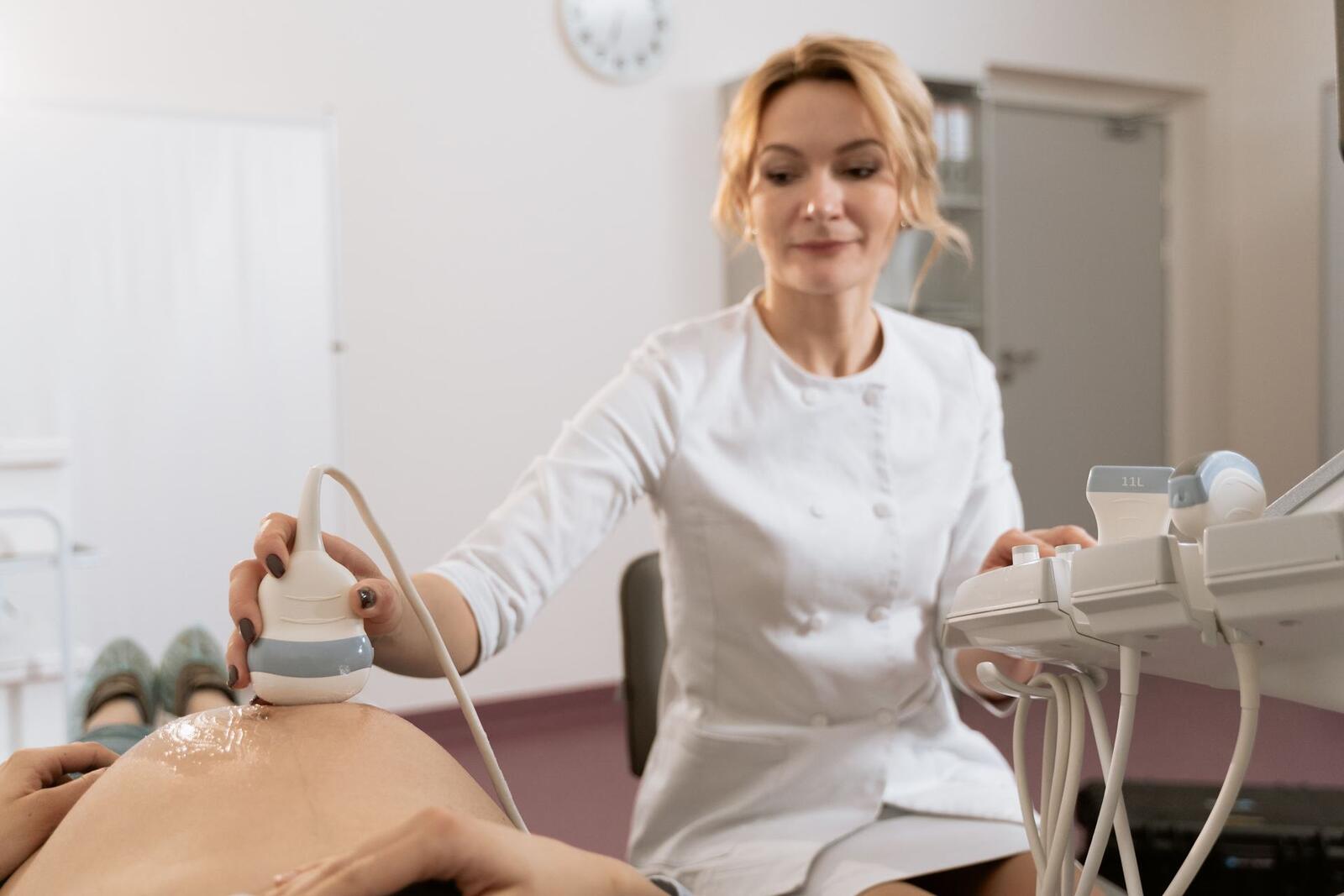
A diagnostic echocardiogram normally requires a trained sonographer to find and hold a handful of precise transducer positions against the chest. UltraSight's software uses computer vision to guide a clinician without that training toward those same standard views in real time, on a handheld, laptop or cart-based ultrasound system the hospital already owns, rather than a proprietary device UltraSight sells itself.
Three things the JAMA data shows
Trained on novices, not experts
In the JAMA Cardiology study, the nine operators were research staff with no prior clinical or sonography experience, given about four hours of training — not cardiologists or sonographers, the population the software is built to extend ultrasound to.
A layer, not a new probe
UltraSight's software runs on ultrasound hardware hospitals already own, an approach FDA recognized by expanding the clearance's device compatibility under K251416 in December 2025.
Funded toward the ICU
This Series B2 is earmarked for workflows in intensive care and mechanical-circulatory-support settings specifically, beyond the general cardiac-screening use the company has sold into its current hospital sites.
Point-of-care ultrasound's crowded AI layer
UltraSight is not the only company teaching AI to guide an ultrasound scan. GE HealthCare's Caption AI, Butterfly Network's Blueprint, EchoNous's Kosmos and Exo's Iris all offer some form of AI-guided image acquisition — but each of those ties its software to its own hardware. UltraSight's bet is that a software-only layer, sold to hospitals that already own compatible machines, is the faster and cheaper path to broader adoption.
Point-of-care ultrasound's climb past $5 billion
$1.7B → $5.56B
Global point-of-care ultrasound (POCUS) market, 2026 to 2034, as forecast by Fortune Business Insights.
Sources: Fortune Business Insights, Point-of-Care Ultrasound Market report
Regulatory News outlook
We expect the AI-guidance layer UltraSight sells to grow faster than the point-of-care hardware market itself, since it extends who can operate machines hospitals already own rather than requiring a new equipment purchase.
How we got here: Fortune Business Insights' published 15.93% compound annual growth rate on its $1.7 billion 2026 point-of-care ultrasound estimate reaches its own $5.56 billion 2034 figure; we treat UltraSight's software-only model as additive to that hardware forecast, since it monetizes systems already installed rather than new unit sales.
UltraSight against ultrasound's other AI guides
| Product | Hardware model | What it guides | US regulatory status |
|---|---|---|---|
| UltraSight (AI Guidance) | Software layer on third-party ultrasound systems (handheld, laptop, cart) | Non-sonographers acquiring 10 standard cardiac views | FDA 510(k) cleared (K223347, K251416) |
| Caption AI (GE HealthCare) | Built into GE's own point-of-care ultrasound hardware | Cardiac image acquisition and interpretation | FDA cleared |
| Butterfly iQ + Blueprint (Butterfly Network) | Butterfly's own handheld whole-body probe | Whole-body imaging, including AI acquisition guidance | Multiple FDA 510(k) clearances |
| Kosmos (EchoNous) | EchoNous's own hand-carried system | Cardiac measurements, labeling, integrated ECG | FDA 510(k) cleared |
| Exo Iris (Exo) | Exo's own handheld probe | On-device AI across cardiac, lung and other indications | FDA 510(k) cleared (multiple indicators) |
From each company's own labelling and FDA clearance records; not a clinical comparison.
What the ICU rollout still has to prove
UltraSight's strongest published evidence so far is a screening study aimed at a single condition, aortic stenosis, performed by research staff rather than working ICU nurses or hospitalists under real clinical pressure. The company has not published data specific to the intensive-care and mechanical-circulatory-support workflows this round is meant to fund, and has not disclosed a reconciled total of all capital raised to date against the individual rounds it has announced.
- The raise: $24 million Series B2, announced 23 September 2026, led by Alive HealthTech Growth Fund.
- The regulatory record: FDA 510(k) clearances K223347 (July 2023) and K251416 (December 2025) for the AI Guidance software.
- The clinical evidence so far: a JAMA Cardiology study showing 93% sensitivity and 96% specificity for novice detection of aortic stenosis — one condition, not yet the ICU workflows this round targets.
- Not yet public: ICU-specific or mechanical-circulatory-support clinical data, and a reconciled total of all capital UltraSight has raised since 2019.
Sources & further reading
- UltraSight, Series B2 financing announcement, distributed via EIN Presswire, 23 September 2026. einpresswire.com
- HLTH, coverage of UltraSight's $24 million Series B2 financing. hlth.com
- MassDevice, "UltraSight raises $24M in Series B2 to scale AI-guided cardiac ultrasound technology." massdevice.com
- AuntMinnie, "UltraSight adds $24 million in new financing." auntminnie.com
- U.S. Food and Drug Administration, 510(k) Premarket Notification database, K223347 (UltraSight AI Guidance). accessdata.fda.gov
- Fortune Business Insights, Point-of-Care Ultrasound Market report. fortunebusinessinsights.com
Regulatory News reports on public regulatory documents. It is not legal advice, and the primary sources above govern. If we have made an error, we will say so in public: see corrections.
Frequently asked questions
What did UltraSight raise, and from whom?
A $24 million Series B2, announced 23 September 2026. Investors named in connection with the round include Alive HealthTech Growth Fund, Deep Insight, Star51 Capital, Connecticut Innovations and eHealth Ventures, alongside returning investors Mayo Clinic Ventures, NYU and Iron Nation.
Is UltraSight's software FDA-cleared?
Yes. FDA cleared UltraSight's AI Guidance software on 24 July 2023 (510(k) number K223347) for guiding acquisition of standard transthoracic echocardiography views. A follow-on clearance (K251416), decided 17 December 2025, expanded the platform to more handheld, laptop and cart-based ultrasound systems. The Series B2 itself is a financing round, not a new FDA action.
What does the JAMA Cardiology study show?
In a study published around August 2026, nine research staff with no prior sonography experience used UltraSight's AI guidance on a handheld ultrasound device to detect moderate-or-greater aortic stenosis with 93% sensitivity and 96% specificity, in a prospective cohort of 1,302 patients undergoing clinically indicated echocardiography.
Does UltraSight sell its own ultrasound machine?
No. UltraSight's software is a guidance layer that runs on general-purpose ultrasound systems — handheld, laptop or cart-based — that a hospital already owns, rather than a proprietary device of its own.